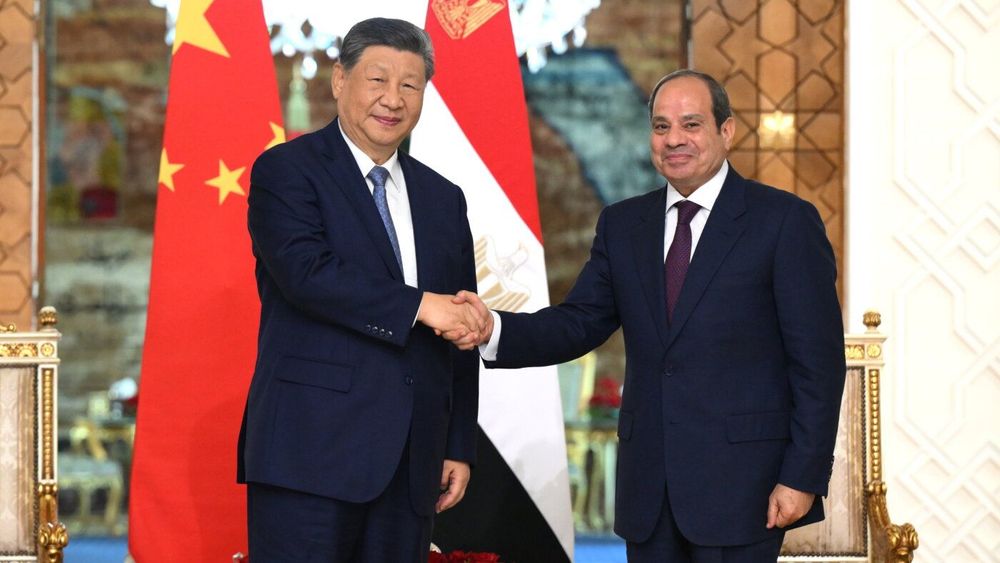
Xi visits Egypt as China seeks deeper influence across the Mideast
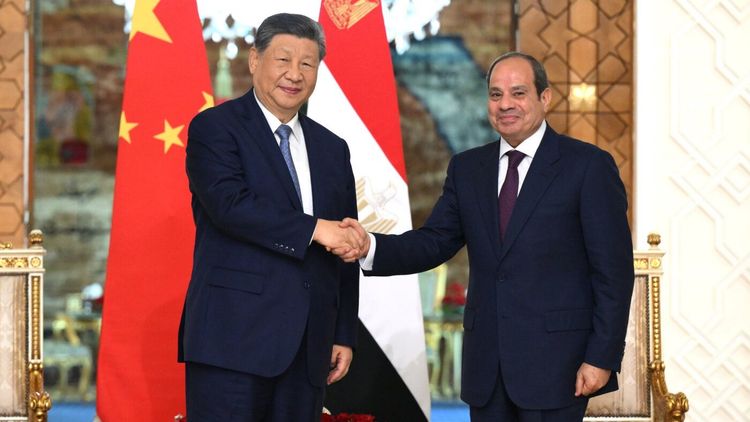
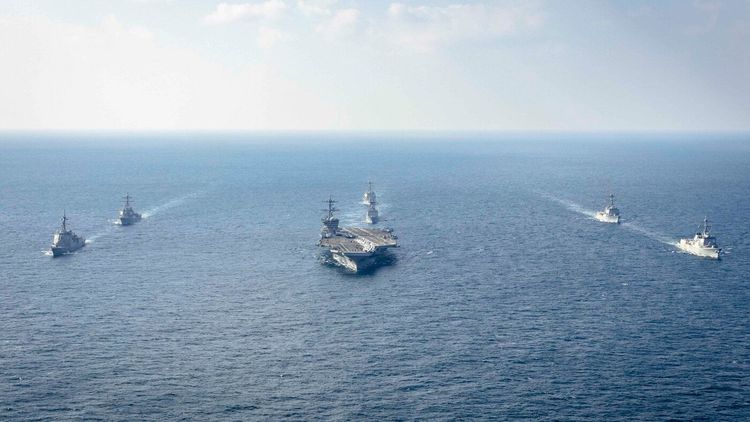
Chinese President Xi Jinping arrived in Cairo on Tuesday for his first visit to Egypt in a decade, underscoring Beijing's ambitions to expand its footprint in the Middle East at a time when American influence faces challenges from its ongoing war with Iran.
The visit, marked by red-carpet ceremonies and Chinese flags adorning Cairo airport, reflects more than routine diplomatic engagement. China is systematically cultivating relationships with America's key regional allies, presenting itself as a stabilizing force in contrast to decades of U.S. military entanglements in the region.
During wide-ranging talks on Wednesday with Egyptian President Abdel Fattah el-Sissi, Xi called for joint opposition to what he termed "unilateralism and acts of bullying," according to China's state-run Xinhua news agency. The Chinese leader also advocated for collaboration toward "a more just and equitable global governance system."
The two leaders commemorated 70 years of diplomatic relations by publishing friendly opinion pieces in Egypt's state-run newspapers on Tuesday. Xi emphasized the need to "expand the scope of pragmatic collaboration" through development initiatives, while el-Sissi praised China's investments and reiterated Cairo's support for Beijing's territorial claim over Taiwan.
Strategic diversification amid economic pressures
Egypt's deepening relationship with China represents a calculated effort to diversify its strategic partnerships. The country faces significant economic pressures, with foreign debt reaching $165 billion by the first quarter of 2023. This economic vulnerability has driven Cairo to seek alternative partnerships beyond its traditional Western allies.
Egypt formally joined the BRICS bloc on January 1, 2024, following an invitation at the August 2023 summit in Johannesburg alongside Iran, Saudi Arabia, the UAE, and Ethiopia. The expanded BRICS grouping now represents over 2.5 billion people and a collective GDP exceeding $16 trillion, positioning it as a counterweight to Western-led institutions such as the G7.
A year after joining BRICS, Egypt signed agreements with China to participate in the Belt and Road Initiative, Xi's signature infrastructure development policy. However, Egypt's connection to the initiative dates back to 2013, when Cairo was among the first countries to join the program upon its announcement, aligning it with Egypt's Vision 2030 development goals.
China has invested more than $10 billion in Egypt, financing projects including a business hub east of Cairo and an electric rail line in the Nile Delta. Annual trade between the two countries stands at approximately $20 billion, according to government figures. China has also emerged as Egypt's fourth-largest creditor, with outstanding debts of nearly $8 billion as of early 2023.
By comparison, U.S.-Egypt trade totaled $15.7 billion in 2025. The United States provides Egypt with approximately $1.3 billion in annual military aid, making Egypt the second-largest recipient of American military assistance after Israel. Egypt remains a crucial partner in U.S. national security priorities in the region, and the countries' leaders maintain close ties.
Suez Canal's strategic importance amplified by regional conflict
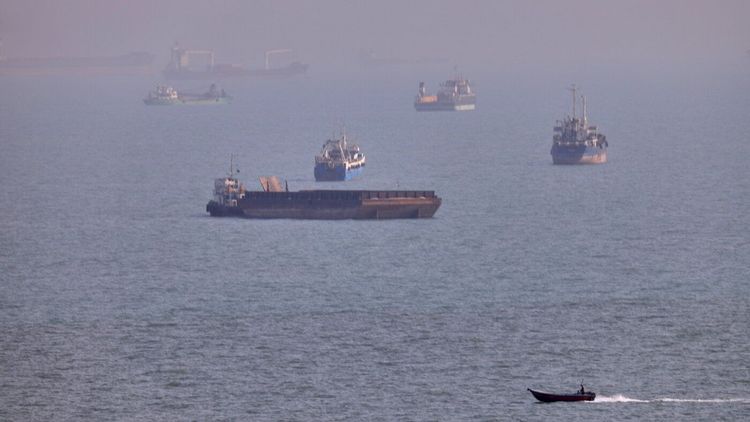
With oil shipments through the Strait of Hormuz heavily disrupted by the Iran war, the Suez Canal has become an increasingly vital alternative route for energy supplies leaving the region. The canal, which handles approximately 12 percent of global trade, represents a critical chokepoint for international commerce.
The waterway's economic importance to Egypt has been dramatically affected by regional instability. In 2024, Suez Canal revenues plummeted to approximately $4 billion from $9.4 billion in 2023 due to Red Sea security disruptions, with vessel traffic dropping by 50 percent. However, revenues have since recovered to $4.67 billion in the 2025/2026 fiscal year, representing a 23 percent increase as regional tensions eased.
"China has good reason to strengthen ties with the country that controls the route still open," said Muhammad Zulfikar Rakhmat, a Middle East expert with Jakarta's Center of Economic and Law Studies. He added that Xi views Egypt "as a base to reach the wider Arab and African world, at a time when the U.S. has less attention to spare there."
China's broader regional engagement
Beijing has been actively positioning itself as a regional mediator beyond its economic investments. In 2023, China brokered a deal to reestablish diplomatic ties between Iran and Saudi Arabia, showcasing its aspirations to compete with the United States for Middle East influence. However, relations between Riyadh and Tehran have since deteriorated, with Iran attacking Saudi Arabia and other Gulf countries as part of its retaliation against the U.S. and Israel following the February 28 war launch.
China has long advocated for a two-state solution to the Israeli-Palestinian conflict, viewed across the Arab world as essential to regional stability. Shortly before Hamas militants attacked Israel in 2023, triggering the Gaza war, Xi hosted Palestinian President Mahmoud Abbas and announced a "strategic partnership" with the Palestinian Authority.
In August, China and Egypt conducted their first-ever joint air combat exercise, featuring multiday operations at several Egyptian bases. The exercise marked the debut combat training for China's J-16 fighter jets alongside Egypt's French-made Rafale fighters.
Xi's Cairo visit follows his attendance at a two-day Shanghai Cooperation Organisation conference in Bishkek, Kyrgyzstan. The 10-member political and security group, which represents approximately 42 percent of the global population and includes China, Russia, India, Pakistan, Iran, Kazakhstan, Kyrgyzstan, Tajikistan, Uzbekistan, and Belarus, positions itself as a counterweight to U.S. global influence.
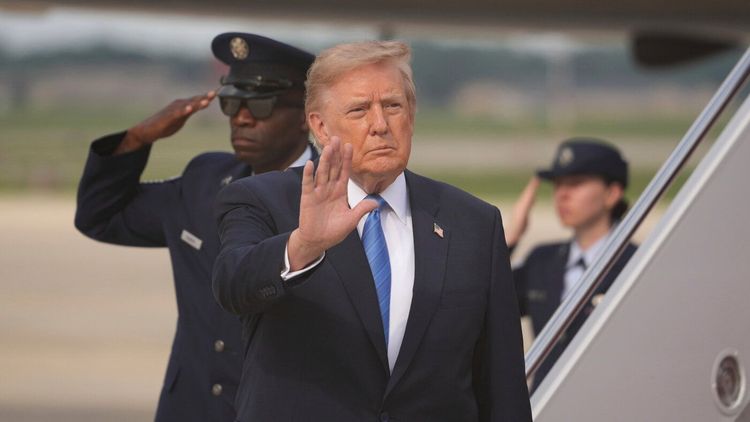
The trip also comes amid the Trump administration's "economic onslaught" on Iran's financial networks worldwide. The sanctions aim to isolate the Islamic Republic from remaining economic partners, including China, which purchases more than 80 percent of Iranian oil shipments, typically through indirect channels. Beijing maintains that its trade with Iran complies with international law.
"China continues to build up its soft power reserves while the United States self-sabotages its own stock," wrote Amr Hamzawy, director of the Washington-based Carnegie Middle East Program, in an earlier analysis with Kathryn Selfe, a former program fellow.