U.S. secures historic oil agreement with Venezuela for 65 billion barrels in reserves
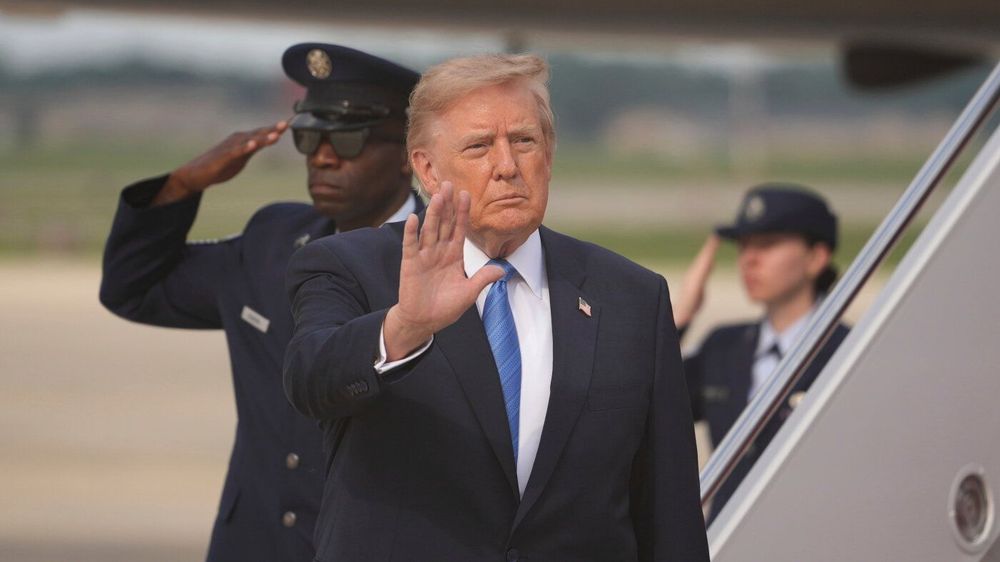
President Donald Trump announced Friday that his administration has secured an agreement with Venezuela that could grant the United States access to 65 billion barrels of oil reserves in what he called "the biggest oil deal in world history."
The deal, negotiated by Secretary of State Marco Rubio, Defense Secretary Pete Hegseth and Venezuela's acting President Delcy Rodríguez, establishes a framework for developing 17 oil fields in the South American nation. According to a U.S. official familiar with the agreement, the arrangement allows the United States to partner with a private operator to create a new company with 100-year rights to develop the fields.
Under the terms, the United States would receive 55% effective output of the new private company, including an ownership stake and rights to purchase oil at cost. The company would become the second largest corporate holder of proven reserves globally, trailing only Saudi Aramco, which controls approximately 259 billion barrels of oil and gas reserves.
Potential economic impact
Venezuela's government projects the deal could attract $100 billion in investment into the country's beleaguered oil sector and generate over $209 billion in tax revenue for Caracas. Rodríguez stated the agreement "will have a significant impact on our nation's revival."
The announcement comes as Trump faces mounting pressure to address elevated fuel costs. The average price of gasoline in the United States stood at approximately $4.09 per gallon on Friday, compared to $3.21 at the same time last year. The U.S. strategic petroleum reserve has fallen below 300 million barrels, down by more than 100 million barrels since early 2026.
The ongoing six-month conflict in Iran has significantly disrupted oil flows through the Strait of Hormuz, one of the world's most critical petroleum chokepoints that historically handled approximately 20-21% of global petroleum and liquid natural gas trade.
Infrastructure challenges ahead
Industry experts caution that immediate relief at the pump should not be expected. Venezuela's oil production capacity has deteriorated dramatically over recent decades. The country once produced approximately 3.5 million barrels per day in the 1970s, representing more than 7% of global output. By 2024, production had plummeted to less than 1 million barrels per day, accounting for roughly 1% of global production.
Most of Venezuela's oil reserves are concentrated in the Orinoco Belt, where deposits consist predominantly of heavy crude that is more expensive to produce and requires specialized infrastructure compared to lighter crude varieties. Of the more than 12,000 oil wells in the Orinoco Belt, analysts estimate fewer than 2,000 are currently functioning.
UBS analysts project that obtaining an additional one million barrels of Venezuelan production would take 5-10 years, while returning to the previous level of three million barrels per day could require approximately 15 years due to decades of infrastructure mismanagement. The state oil company PDVSA reported more than 46,000 oil spills between 2010 and 2016 alone.
Historical context and investor concerns
The deal represents a dramatic reversal in U.S.-Venezuela relations. Trump has argued that Venezuela effectively stole American oil when the country nationalized its petroleum sector in 1975-76 under President Carlos Andrés Pérez, creating the state oil company PDVSA. Foreign companies at that time received compensation of approximately 25% for losing their assets.
In 2007, Hugo Chávez forced foreign oil companies to renegotiate their agreements for majority state control in Orinoco Belt projects. ExxonMobil and ConocoPhillips rejected the new terms and departed Venezuela, triggering protracted legal disputes. ExxonMobil eventually received approximately $1.6 billion through international arbitration for the 2007 expropriation of the Cerro Negro oil project, far less than the $12 billion originally sought, with the first major settlement payment exceeding $1 billion received in 2020.
The loss of technical expertise accelerated following a 2003 strike, when Chávez purged PDVSA of critics, firing over 18,000 employees and replacing experienced managers with political allies.
Days after the ouster of former President Nicolás Maduro earlier this year, Trump gathered oil executives at the White House and urged them to return to Venezuela. While executives expressed interest, Darren Woods, CEO of ExxonMobil, described the country as "un-investable" at that time.
Rubio stated on social media that the agreement would usher in billions in private investment and lead to lower gas prices.
"This deal is a huge win for both the American and Venezuelan people,"he wrote.
Under the agreement, oil purchased from the new company would be directed toward filling the U.S. strategic petroleum reserve and for military use. One of Rodríguez's early actions after assuming power was signing legislation that opened Venezuela's oil sector to privatization, reversing a fundamental principle of the socialist movement that had governed the country for more than two decades.
Venezuela possesses one of the largest oil reserves in the world, with an estimated 303 billion barrels of crude oil, representing approximately 17% of global supply. Unlike other regions where geologists must search for untapped deposits, the reserves beneath Venezuela's soil are largely mapped and documented.
Maduro remains jailed in the United States following a military operation ordered by Trump that captured him nearly nine months ago. He has pleaded not guilty to federal narcoterrorism and drug trafficking charges.