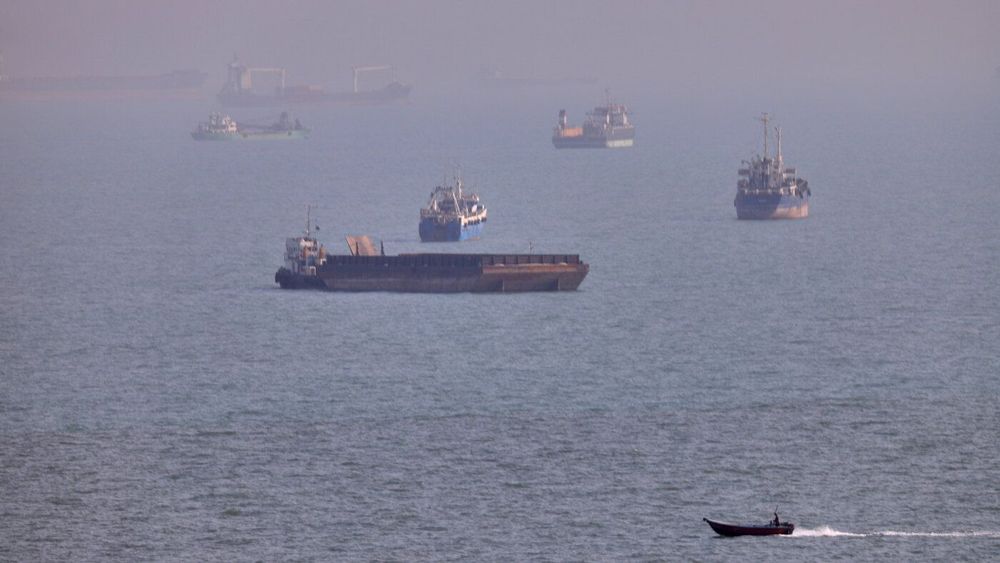
U.S. launches fresh strikes on Iran as Trump warns of escalation amid Tehran's retaliation
The United States military struck Iranian targets on Tuesday evening, hitting air defense sites, radar systems and maritime assets in the latest escalation of a conflict that has persisted for more than six months. Iran responded by launching missiles and drones at multiple locations across the Middle East, including attacks on Jordan and U.S. forces in Bahrain.
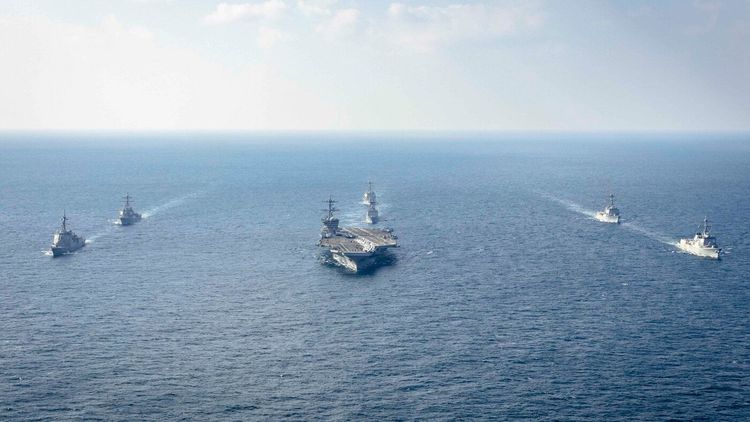
U.S. Central Command, which oversees American military operations across 21 countries in the Middle East, Central and South Asia, said the strikes targeted Iranian military infrastructure in response to Tehran's attempts to attack commercial vessels and American forces in the region. The command maintains significant force presence in the area, including the U.S. 5th Fleet based in Bahrain, which operates destroyer squadrons, coastal patrol ships and mine countermeasure vessels tasked with keeping vital shipping lanes open.
The military action followed similar strikes on Sunday that ended a month-long pause in hostilities. President Donald Trump indicated he would not seek diplomatic negotiations with Iran, writing on social media that he preferred the current situation with American forces controlling access to the Strait of Hormuz while Iran's economy deteriorates.
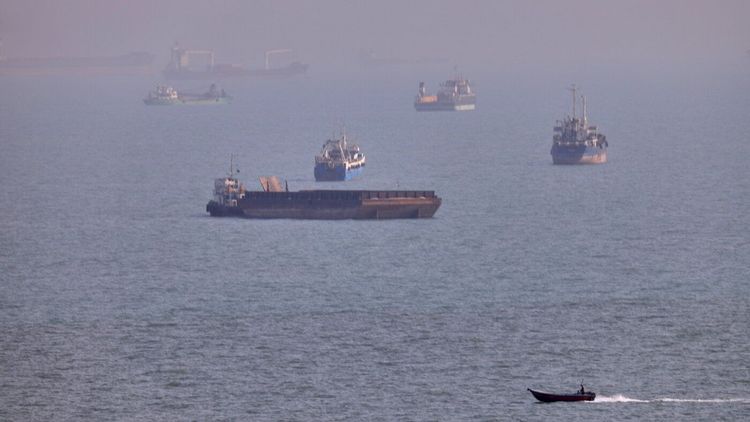
The strait, approximately 21 miles wide at its narrowest point, serves as a critical chokepoint through which about 21 million barrels of oil pass daily, representing roughly one-fifth of global petroleum consumption. Iran effectively closed the waterway after the conflict began, and both nations are now vying for control of this strategic passage.
Civilian casualties reported in southern Iran
Iranian state media reported that U.S. strikes hit civilian locations along Iran's southern coast, including a residential area in Kuhestak where a wedding ceremony was underway. Ahmad Nafisi, Hormozgan Province's deputy governor, told state television that five people were killed, including a child, and at least 68 others were wounded in the strike.
Captain Tim Hawkins, a U.S. Central Command spokesperson, said the military was aware of reports originating from Iranian state media but emphasized that American forces never target civilians, unlike the Islamic Revolutionary Guard Corps. The IRGC, designated as a Foreign Terrorist Organization by the United States in April 2019, was the first time Washington labeled part of another government as a terrorist organization.
Explosions were reported across several southern Iranian coastal areas, including Bandar Abbas, Iran's largest naval base and home to the Iranian Navy's main facilities in the Strait of Hormuz region. The port city serves as headquarters for much of Iran's maritime military operations, including fast attack craft and submarine operations. Witnesses in Bandar Abbas said the explosions were stronger than those on Sunday and reported seeing smoke rising from the eastern part of the city.
Regional targets hit in Iranian counterstrikes
After the American attacks commenced, Iran launched ballistic missiles at Jordan, where approximately 3,000 U.S. military personnel are stationed at installations used for regional operations. The Iranian Revolutionary Guard claimed to have targeted a U.S. base along Jordan's Gulf of Aqaba coast. Jordan's military reported shooting down 10 of the missiles, with three remaining projectiles landing in unpopulated areas.
Iranian forces also targeted Qeshm Island in the Strait of Hormuz, Iran's largest island that hosts significant military installations including naval facilities, missile sites and air defense systems. State television said a fishmeal factory on the island was struck, along with a fishing pier and a Ports and Maritime Organization tower in Sirik.
Kuwait said its air defenses intercepted drone attacks following what it described as criminal Iranian aggression. Iran also claimed to have launched a drone attack at American forces in Bahrain, though Bahraini authorities said all attacks had been intercepted.
Trump threatens further military action
Speaking to Fox News earlier Tuesday, Trump explained that U.S. forces struck Iran's radar installations. He said Iranian forces had attempted to rebuild radar systems because they could not detect incoming threats, and American forces waited until reconstruction was nearly complete before destroying them again.
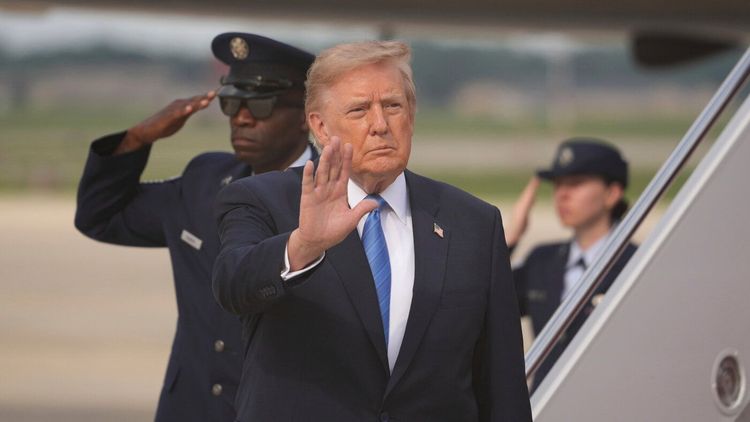
The president warned that if Iran retaliated for the latest strikes, Tehran would face consequences at a much harder and higher level. Late Tuesday, Trump wrote on social media that he had no interest in forcing Iran to sign what he called a worthless agreement, stating he preferred the current strategic position.
Economic and political ramifications
Oil prices have surged approximately 7% this week following the renewed military confrontations, with crude prices jumping more than 50% since the beginning of the year. The cost of regular gasoline in the United States reached $4.10 per gallon, up from $3.19 at the same time last year, according to AAA.
The conflict and rising energy costs pose political challenges for Republicans ahead of November's midterm congressional elections, which will determine control of all 435 House seats and approximately 33-34 Senate seats. The party controlling Congress would significantly impact the president's policy agenda, including military operations and sanctions authority.
Iranian president signals openness to ceasefire
Before Tuesday's strikes, Iranian President Masoud Pezeshkian, elected in July 2024 following his predecessor's death in a helicopter crash, said Tehran was prepared to return to an interim ceasefire agreement reached with Washington in June if the United States did the same. Pezeshkian, considered a relatively reformist candidate compared to hardline opponents, made the statement at the Shanghai Cooperation Organisation summit in Kyrgyzstan.
The Shanghai Cooperation Organisation, a Eurasian political, economic and security alliance founded in 2001, includes China, Russia, India, Pakistan and Iran as full members. Iran joined the organization as a full member in July 2023.
The June interim agreement called for an immediate ceasefire and established a 60-day period for negotiations aimed at reaching a broader settlement, but collapsed shortly afterward.
Ebrahim Azizi, chairperson of the Iranian parliament's National Security and Foreign Policy Committee, vowed on social media that the strikes would not go unpunished. Iran's Armed Forces General Staff warned of crushing and devastating blows against the United States, while the Revolutionary Guard said the attacks had only strengthened Iran's resolve and tightened its effective closure of the Strait of Hormuz.
Iranian state television reported that strikes also hit the civilian Jiroft Airport in Kerman province and several parts of Hormozgan province's power network, causing outages that authorities were working to restore.