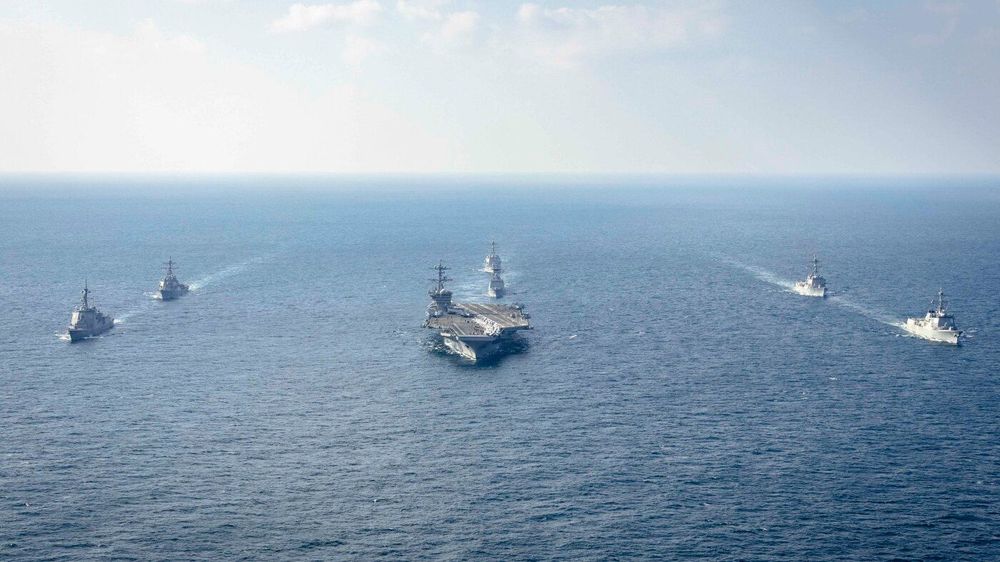
U.S., South Korea and Japan announce trilateral military drill despite North Korean warnings
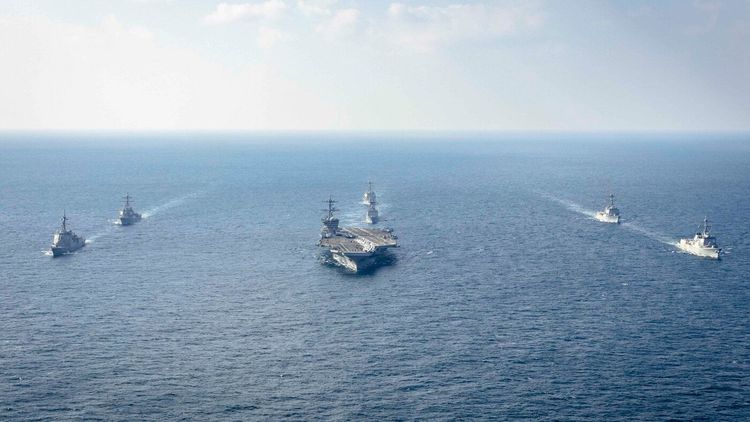
South Korea, the United States and Japan announced Friday they will proceed with a trilateral military exercise next month, defying North Korean threats and signaling continued security cooperation despite recent tensions on the Korean Peninsula.
The Freedom Edge exercise will run for five days starting September 7 in international waters off South Korea's southern Jeju Island, according to South Korea's military. The drill was first launched in June 2024 following an agreement reached at the Camp David Summit in August 2023, establishing a new framework for trilateral defense cooperation.
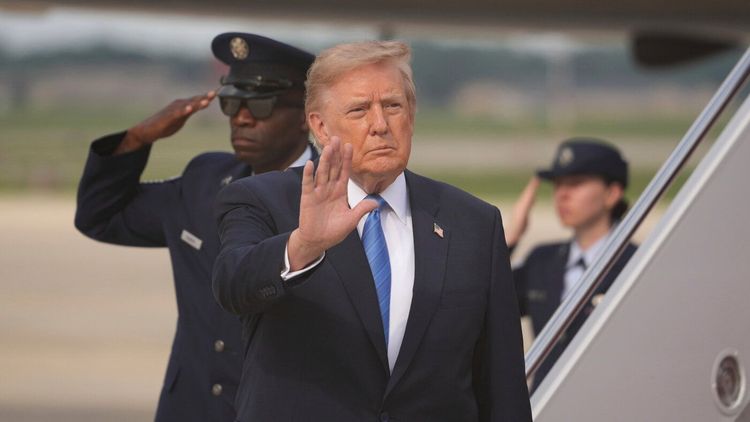
The announcement came just one day after North Korea's Foreign Ministry accused Washington of engaging in hostile acts and vowed a serious and immediate response. The timing further dampens prospects for early resumption of diplomacy between Pyongyang and Washington, even as President Donald Trump has recently attempted goodwill gestures toward North Korean leader Kim Jong Un.
Exercise objectives and North Korean opposition
South Korean military officials emphasized the exercise is defensive in nature, designed to enhance joint capabilities in ballistic missile defense, anti-submarine warfare, and surveillance operations. The drill aims to address growing nuclear and missile threats from North Korea while promoting regional stability.
North Korea has consistently condemned the trilateral exercise as a reckless show of strength and an expression of hostile intent. Pyongyang has also characterized the drill as part of a U.S. strategy to encircle China and pressure Russia.
Trump's scaled-back drills fail to ease tensions
The decision to proceed with Freedom Edge follows Trump's recent order to substantially reduce the annual Ulchi Freedom Shield exercise with South Korea. That bilateral drill, originally scheduled for 11 days from August 17-27, was cut to just five days, ending August 21. The exercise typically involves approximately 18,000 uniformed personnel from the U.S., South Korea, and partner nations, making it the largest annual drill on the Korean Peninsula.
Trump cited his relationship with Kim as the reason for scaling back the bilateral exercise. However, North Korea rejected the gesture, stating that merely shortening the drill does not change its provocative nature. Pyongyang backed up its rhetoric with action, launching short-range ballistic missiles on August 6 and August 12 ahead of the exercise, and firing more than 10 additional missiles on August 20 during the scaled-back drill.
On Thursday, North Korea's Foreign Ministry specifically criticized a possible U.S. sale of air-to-air missiles and related equipment to South Korea, warning of responses across different spheres.
Diplomatic prospects remain dim
The prospects for renewed diplomacy appear increasingly remote. North Korea has stated it will not return to negotiations unless Washington drops its demand for denuclearization as a precondition for talks. The last meaningful engagement between Trump and Kim ended in failure at their February 28, 2019 summit in Hanoi, Vietnam, where negotiations collapsed after Pyongyang demanded all UN-approved sanctions be lifted in exchange for only partial denuclearization steps, specifically the dismantlement of the Yongbyon enrichment facility. Trump and Kim last met in person on June 30, 2019, at the Demilitarized Zone between the two Koreas, with their final correspondence occurring on August 5, 2019.
North Korea strengthens ties with Russia
Since that diplomatic breakdown, Kim has significantly expanded North Korea's nuclear arsenal and deepened ties with Russia. The countries formalized their military alliance in June 2024 when Kim and Russian President Vladimir Putin signed a comprehensive strategic partnership treaty that includes a mutual defense clause. North Korea has provided Russia with large quantities of munitions since 2022, including artillery rounds, rockets, and ballistic missiles, receiving food, energy supplies, and potentially military technology in return. Intelligence assessments indicate North Korea has deployed at least 10,000-12,000 troops to support Russian combat operations in Ukraine's Kursk region, with North Korean forces sustaining over 6,000 casualties according to UK Ministry of Defense intelligence.
With enhanced leverage from his strengthened military capabilities and Russian partnership, analysts believe Kim will likely seek substantial U.S. concessions in any future negotiations, including international recognition of North Korea as a nuclear state and comprehensive sanctions relief, in exchange for only partial disarmament steps.