
U.S. and Iran Exchange Strikes Over Strait of Hormuz as Territorial Dispute Intensifies
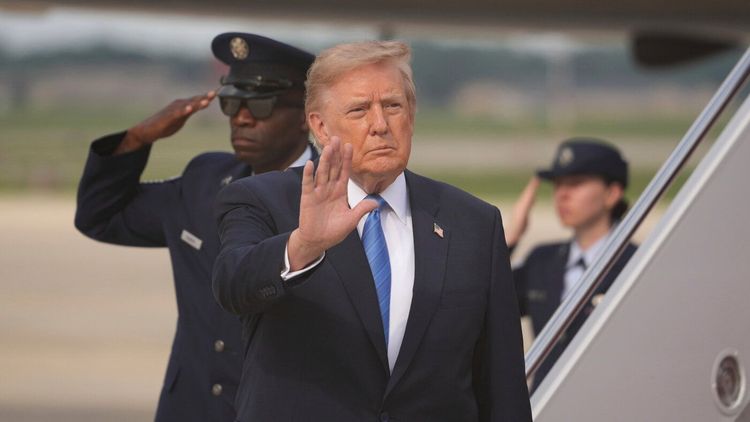
The United States and Iran exchanged military strikes over the weekend in an escalating dispute over control of the Strait of Hormuz, the narrow waterway through which approximately one-fifth of global oil demand and liquefied natural gas exports transit daily. President Trump declared that the U.S. controls the strategic passage, while Iranian officials announced plans to establish new shipping routes through the region.
The weekend exchanges represent the latest flare-up in a conflict that began on February 28, 2026, when the United States and Israel launched Operation Epic Fury, a coordinated military campaign that killed Iranian Supreme Leader Ali Khamenei and targeted the country's nuclear and ballistic missile infrastructure. Iran responded the same day with retaliatory missile strikes on the U.S. Fifth Fleet headquarters in Bahrain, marking the beginning of direct military confrontation between American and Iranian forces.
A Pakistan-mediated ceasefire signed on June 17 temporarily halted large-scale fighting, but the fragile peace collapsed on July 8 when Iran initiated attacks on commercial vessels passing through the strait. Since then, both sides have traded strikes over alleged violations of the ceasefire agreement.
Strategic Significance of the Waterway
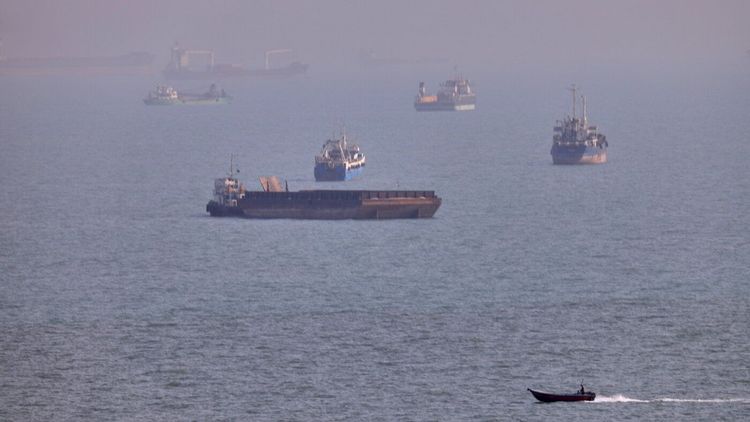
The Strait of Hormuz represents the world's most critical oil chokepoint, with its narrowest point measuring just 21 nautical miles wide. The designated shipping lanes through which massive oil tankers must pass are only two miles wide in each direction, separated by a buffer zone. This geographic constraint makes the waterway particularly vulnerable to disruption.
The shipping lanes run primarily through Omani territorial waters and partially through Iranian waters, but are governed by international maritime law and the United Nations Convention on the Law of the Sea. The legal framework has become a point of contention as both the United States and Iran assert competing claims over control of passage through the strait.
Only Saudi Arabia and the United Arab Emirates possess operating pipelines that can bypass the strait entirely. Saudi Arabia's East-West pipeline has a capacity of 5 million barrels per day, while the UAE's Fujairah pipeline can handle 1.5 million barrels daily. These limited alternatives underscore why disruptions to shipping through the Strait of Hormuz would have severe global economic consequences.
Military Positioning in the Region
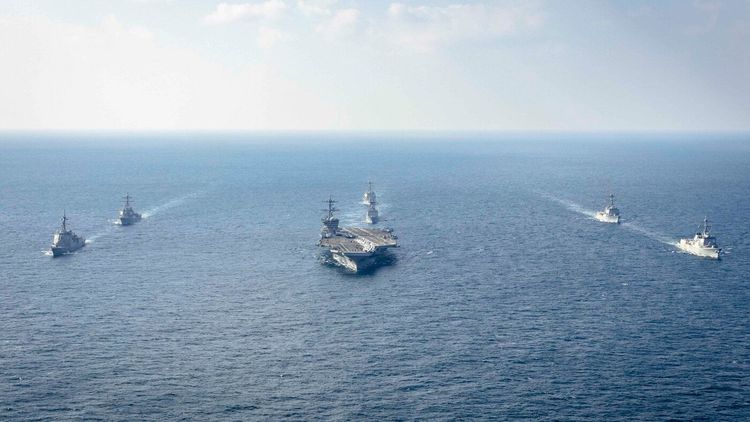
The U.S. Fifth Fleet, headquartered in Bahrain, maintains operational control over approximately 2.5 million square miles encompassing the Persian Gulf, Gulf of Oman, Arabian Sea, and portions of the Indian Ocean. This extensive military presence provides the United States with significant capability to project force throughout the region and respond to Iranian actions.
Iran maintains the largest naval forces in the Persian Gulf with approximately 43,000 personnel, a force larger than the combined naval strength of all Gulf Cooperation Council states. Iran also controls seven of the eight major islands in the Strait of Hormuz, providing strategic positions near critical vessel routes and serving as the basis for Iranian claims of influence over the waterway.
A Congressional Research Service report from August 2026 documented that the February military operations triggered systematic Iranian efforts to assert control over the strait through both threatened and actual attacks on commercial shipping, establishing a pattern that continues with the current weekend strikes.
The competing territorial claims and ongoing military exchanges have raised concerns about the stability of global energy supplies and the potential for further escalation in one of the world's most strategically important maritime passages.