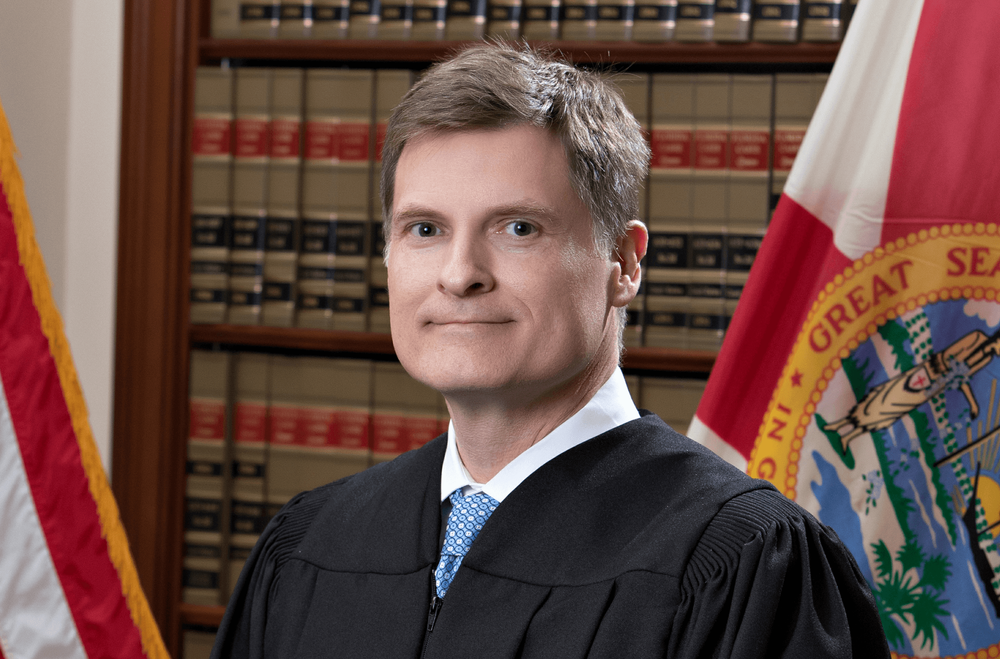
Op-ed: Vote 'No' on retaining Florida Supreme Court Justice Carlos Muñiz
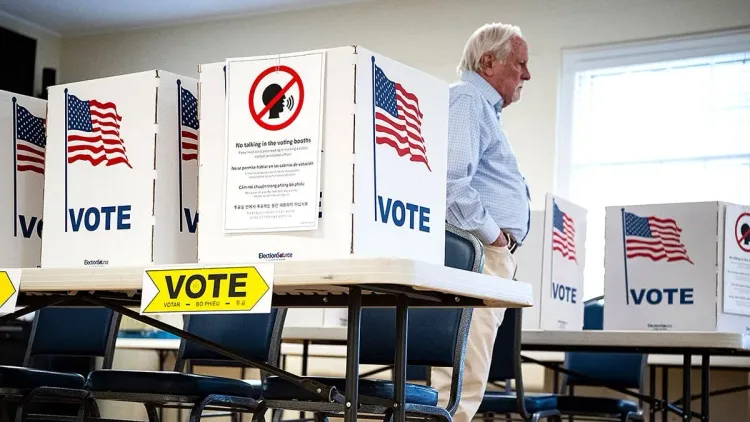
When Florida voters cast their ballots on Nov. 3, they will encounter a question near the bottom that many will overlook: "Shall Justice Carlos G. Muñiz of the Supreme Court be retained in office?" This decision deserves careful attention, and the answer should be no.
This recommendation does not arise from partisan preference. Merit retention is not a referendum on a judge's politics, and treating it as such undermines the judiciary. The question voters must answer is narrower and more fundamental: Has this justice performed the job according to the principles that make courts trustworthy? For Justice Muñiz, the answer turns on a doctrine older than any current controversy.
The Foundation of Legal Stability
That doctrine is stare decisis, the principle that courts stand by their previous decisions unless confronted with overwhelming reasons to reverse them. Nearly a century ago, U.S. Supreme Court Justice Louis Brandeis articulated why this matters: "In most matters, it is more important that the applicable rule of law be settled than that it be settled right."
This may seem counterintuitive. Should courts not always pursue the correct answer? But Brandeis grasped something essential about how law functions in society. Every judge believes their reasoning is sound; disagreement among judges stems from different but equally confident interpretations. If each new court majority could freely overturn its predecessors' work, the law would shift with every change in judicial composition. Families planning their futures, businesses making investments, and doctors treating patients need stable legal ground beneath their feet. Settled law is not surrender to error but the foundation of the rule of law itself—the principle that courts answer to more than the temporary preferences of whoever currently holds power.
The Florida Supreme Court once took this principle seriously, requiring rigorous analysis before overruling precedent. Justices asked whether the existing rule had proved unworkable, whether people had organized their lives around it, and whether changes in facts or law demanded reconsideration. In 2020, shortly after Justice Muñiz joined the court, the majority discarded this framework. The court announced it would now overturn precedent whenever a majority deemed it "clearly erroneous." Considerations of reliance and stability would no longer carry independent weight.
Justice Muñiz arrived on the Florida Supreme Court on January 22, 2019, as Governor Ron DeSantis's appointee, becoming the 89th justice since statehood. He brought no prior judicial experience, having previously served as general counsel for the U.S. Department of Education and as deputy attorney general to Florida Attorney General Pam Bondi. During his first retention election in 2020, he received 65.7 percent of the vote, though more than one-third of voters declined to retain him. He later served two consecutive terms as Chief Justice from July 2022 through June 2026, leading the court during a period of significant doctrinal shifts.
The Privacy Amendment and Abortion Rights
Nowhere has the cost of abandoning stare decisis been clearer than in cases involving reproductive rights. In 1980, Florida voters did something uncommon among states: they added an explicit privacy right to their constitution. Article I, Section 23 declares that "Every natural person has the right to be let alone and free from governmental intrusion into his private life except as otherwise provided herein." Voters approved this amendment on November 4, 1980, with 60.6 percent support.
The amendment's path to approval reveals its context. Initially proposed in 1978 as part of a larger package that voters rejected, the privacy provision returned to the ballot in 1980 as a stand-alone measure, which voters then approved. This occurred seven years after the U.S. Supreme Court decided Roe v. Wade in 1973, when abortion dominated national debate.
In 1989, nine years after the privacy amendment passed, the Florida Supreme Court unanimously held in In re T.W. that this constitutional privacy right protects a woman's decision about ending a pregnancy. That court included justices appointed by governors of both parties, including one member who had helped craft the privacy amendment itself. The ruling was not an isolated decision that went unnoticed. The court reaffirmed it in 1997 and again in 2003. For 35 years, Floridians—their doctors, their legislators, and their families—organized their lives and laws around this understanding. Whatever one's view on abortion, this represents precisely what settled law looks like.
In April 2024, Justice Muñiz joined the majority that swept this precedent away. The court held that the privacy clause had never protected abortion at all. That decision immediately triggered a six-week ban, effective before many women know they are pregnant. The constitutional text had not changed. The facts had not changed. What had changed was the court's membership. Six of the seven current justices were appointed by Governor DeSantis; Justice Jorge Labarga stands as the sole exception.
During oral argument, Justice Muñiz openly questioned whether the court should continue recognizing the right. In a separate opinion, he wrote of a "pre-constitutional, objective moral reality" in the constitution's Declaration of Rights. Abortion opponents read this language as an invitation to bring further challenges. A justice who treats a 35-year precedent as an open question and signals receptiveness to additional restrictions has not settled the law. He has destabilized it.
Justice Labarga, appointed by Republican Governor Charlie Crist in 2009 and the first Cuban-American to serve as Chief Justice, wrote a scathing dissent. Roe v. Wade had dominated public debate for seven years when Floridians adopted their privacy amendment in 1980, he noted. "This dominance makes it inconceivable that in 1980, Florida voters did not associate abortion with the right of privacy." He lamented that the majority had supplanted "Florida voters' understanding—then and now," dissenting "with deep dismay."
Beyond Abortion: Civil Procedure and Jury Rights
The same approach has reached civil litigation. In 2020, the court independently abandoned a summary-judgment standard Florida had followed since 1966. That standard ensured that genuinely disputed cases reached juries. Unable to declare its own precedent clearly erroneous, the court simply rewrote the rule. Justice Muñiz joined the majority. Justice Labarga strongly dissented, warning of the intrusion on the jury trial right the Florida Constitution guarantees.
Professional assessment offers additional context. Before Justice Muñiz's first retention vote in 2020, the Florida Bar conducted its longstanding poll of attorneys. While 71 percent of responding lawyers overall favored retaining him, only 63 percent of those reporting "considerable knowledge" of his work supported retention—the lowest approval rating of any jurist polled that year. The Florida Bar discontinued this 45-year practice in 2023.
The Historic Nature of This Decision
Some will argue that voting no politicizes the judiciary. The opposite is true. Merit retention exists precisely so voters can hold accountable justices they never chose. Yet in nearly 50 years since Florida adopted this system in 1976—following a corruption scandal in which three justices resigned due to cronyism and influence-peddling—no Florida Supreme Court justice or appellate judge has ever failed to win retention. This means the check exists only in theory.
Those who welcomed the court's abortion decision should consider a simple question: Would they accept the next majority reversing it just as easily? A right that lasts only until the next appointment is no right at all. This truth applies to every right, not only those we personally favor.
Better that the law be settled than settled right. Justice Muñiz has chosen a different path, one where precedent yields whenever a new majority finds it wrong. Florida voters should decline to retain him, exercising for the first time in nearly five decades the check the merit retention system was designed to provide.