Two housing proposals with different repayment plans
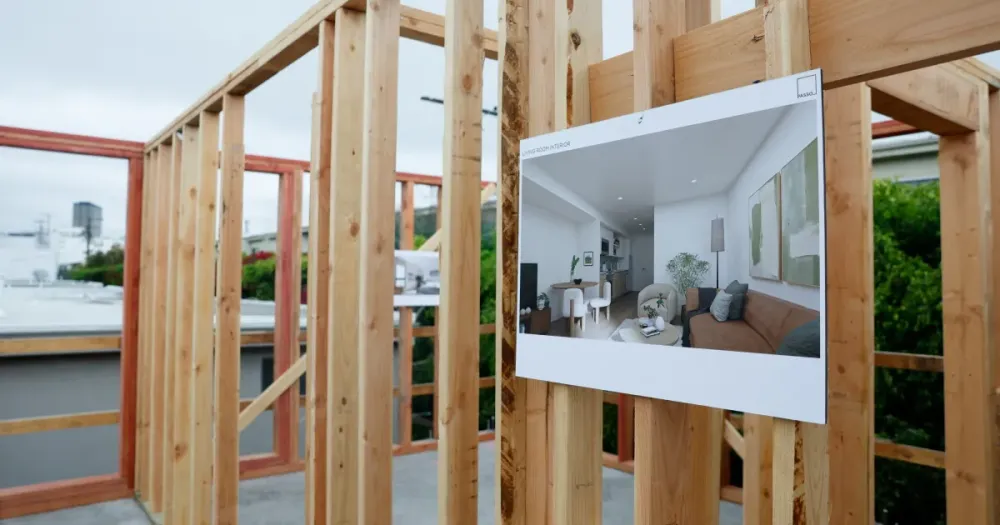
The largest proposal, Proposition 37, would authorize $25 billion in revenue bonds for down payment assistance to middle-income buyers of newly built homes. Sponsored by real estate interests and labor unions, it would allow the California Housing Finance Agency to issue the debt. Participating homeowners' mortgage payments would cover repayment, with no direct cost to general taxpayers.
Proposition 1 would authorize $11.25 billion in general obligation bonds: $10 billion for affordable rental housing and $1.25 billion for veterans' homeownership programs. The Legislative Analyst's Office estimates that the rental funding would support roughly 40,000 units. That portion would require annual General Fund payments of $500 million to $600 million for 25 years; the veterans' program is designed to pay for itself.
Borrowing would also raise the cost of the $10 billion housing component. After accounting for inflation, the LAO estimates that interest would make it about 15% more expensive than funding the projects upfront with existing money.
Gov. Gavin Newsom, labor unions and big-city mayors support Proposition 1, arguing that state money is needed to close financing gaps for projects ready to begin construction. California mayors have repeatedly sought sustained housing and homelessness funding during state budget negotiations.
The measure's presentation has drawn criticism. At a June hearing, state Sen. Tony Strickland, R-Huntington Beach, said supporters emphasized veterans even though their home loan program accounts for $1.25 billion, or 11.1%, of the total.
That label has a strong electoral history. Roderick Kiewiet, a California Institute of Technology political science professor who studied state ballot measures from 1946 through 2024, found that all 26 veterans' bond measures passed. Generically labeled housing bonds had a 50% passage rate, while 96.4% of 28 K-12 school bond measures won approval.
Research funding and early voter support
Proposition 38 would authorize $8.4 billion in general obligation bonds for immunology research. Supporters say the money would offset federal research cuts. Critics point to the roughly half of the proceeds that would go to a laboratory backed by billionaire Gary Michelson, who has put more than $50 million into the campaign, according to California campaign finance reports.
A Public Policy Institute of California survey found support above 60% among likely voters for both housing measures and at 57% for Proposition 38. The survey interviewed 1,728 California adults from Oct. 16 through Oct. 22, 2026; the margin of error for likely voters was plus or minus 3.8 percentage points.
The California Fair Political Practices Commission's Oct. 29 top-contributor list reported $81.4 million raised by Proposition 38 supporters and $8.3 million by Proposition 1 supporters.
Investors focus on borrowing over time
For municipal bond investors, approval would create borrowing authority rather than an immediate wave of issuance. Joe Gotelli, a senior portfolio manager at American Century Investments, said the firm considers large ballot packages manageable, while watching whether additional debt compounds California's revenue volatility.
"The $44.5 billion on this ballot is nominally a lot of debt, but it won't be issued all at once," Gotelli said.
California already had $69.9 billion in outstanding general fund-supported general obligation bonds as of Oct. 1, according to the State Treasurer's Office. Another $36.9 billion was authorized but had not been issued. Kiewiet said the state's actual borrowing compares favorably with other states, despite its substantial unused authority.
BlackRock's May credit outlook highlighted the budget swings associated with California's reliance on capital gains taxes. Strong retail demand, supported by high marginal state income tax rates, has kept bond yields low. Some portfolio managers question whether those yields adequately compensate for general obligation risk and favor local revenue bonds supported by regional sales taxes.
Gotelli said credit analysts will watch the pace at which California uses its borrowing capacity alongside those revenue fluctuations.
School districts scale back local requests
Local school borrowing requests are substantially smaller than in the previous election cycle. Michael Coleman, creator of CaliforniaCityFinance.com, counted 95 school bond measures seeking $18 billion, compared with a record 266 measures totaling $50 billion in November 2024. He attributed the earlier surge to demand delayed during the pandemic and said the current totals are closer to historical norms.
Many districts are asking voters to extend expiring 30-year measures, Coleman said, allowing building upgrades without increasing property owners' overall tax rates. Districts also often time local requests to coincide with statewide school construction measures so they can obtain matching funds.
Some districts have decided not to ask at all. Adam Bauer, chief executive officer of municipal adviser Fieldman, Rolapp & Associates, said about one-third of his firm's school district clients stayed off this ballot after surveys showed greater polarization over taxes. Many that proceeded are concentrating on existing facilities as enrollment declines and demographics change.
"When voters are divided and increasingly concerned about additional taxes, it becomes more difficult to build the broad level of support necessary for a successful bond measure," Bauer said.
Coleman said local outcomes often depend more on confidence in the district or government than on national economic sentiment or statewide politics. "If the local school district or government has done a good job of presenting its case or voters have confidence in the local government, these things tend to pass regardless," he said.
Tax proposals could reshape state finances
Voters will also decide several tax measures. Proposition 40 would levy a one-time tax of 5% on billionaires' net worth. A statewide nurses' union and other supporters proposed it to help fill an expected MediCal funding shortfall resulting from federal cuts under the One Big Beautiful Bill Act. Gotelli said passage could encourage similar proposals elsewhere.
The PPIC survey showed Proposition 40 losing ground, with support declining from 52% in September to 46% in October. Opponents had raised $150.7 million, according to the FPPC list, compared with $32.4 million for supporters. The opposition was led by Building a Better California, a committee backed by Sergey Brin and John Doerr.
Propositions 41 and 42 present another obstacle: both are designed to counter the billionaire tax and could effectively nullify it even if it passes. Both polled better than Proposition 40 in the PPIC survey.
Proposition 3, which would permanently extend an existing state income tax surtax on high earners, had majority support. Its backers had raised $78.1 million, including $60.3 million from the California Teachers Association. Separately, nearly 60% of likely voters in the survey opposed Proposition 39, the voter ID measure.
Gotelli said state and local elections have greater significance for the municipal bond market than federal contests. Another proposal, Proposition 2, addresses the state's fiscal volatility directly: it would require rainy day fund deposits until reserves reach 20% of General Fund taxes, double the current 10% target.