
Democrats Want To Wreck America With Third-World Immigration
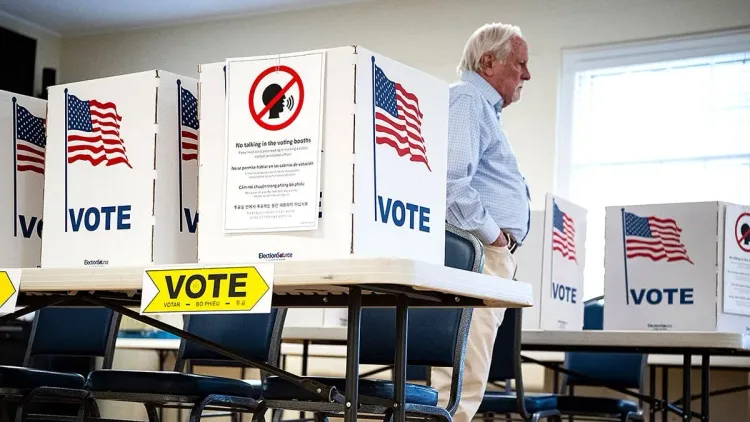
Early voting has begun across multiple states for the midterm elections, and immigration policy has emerged as a defining issue separating the two major parties. Republican strategists argue that Democratic control of even one congressional chamber would restart what they characterize as an open-border agenda, culminating in mass amnesty for millions currently in the country illegally.
According to a Council of Economic Advisers analysis cited by immigration control advocates, the lifetime net cost of each person currently residing illegally in the United States is estimated at $166,716. Applied across the existing population, this represents an aggregate burden between $1.4 trillion and $1.9 trillion. The conversion of temporary, restricted welfare access into full program eligibility through amnesty would substantially increase these costs.
The analysis projects that annual federal spending would rise significantly across major programs. The Supplemental Nutrition Assistance Program would see increases of $3.6 billion to $4.7 billion yearly. Housing assistance administered by the Department of Housing and Urban Development would add $2.3 billion to $3 billion annually. Medicaid expenditures would jump by $30 billion to $40 billion each year. Combined, these three programs alone would generate $36 billion to $47 billion in new federal spending annually, totaling $361 billion to $475 billion over a decade.
The same economic assessment estimates that comprehensive immigration policy changes, including expanded legal immigration and amnesty provisions, could impose approximately $49 trillion in costs over ten years. This translates to more than $350,000 per American household, representing direct resource transfers from working citizens to those who entered or remained illegally, plus their newly legalized dependents and associated administrative costs.
Enforcement Record Under Current Administration
The Trump administration has implemented strict border enforcement measures. Southwest border apprehensions in August stood 94% below the monthly average of the previous four years. Customs and Border Protection reports 16 consecutive months with zero releases of unauthorized border crossers into the interior. More than three million individuals have departed the country since the current administration took office. Drug seizures increased 73% compared with the corresponding period under the Biden-Harris administration, while overdose deaths have declined.
Immigration and Customs Enforcement has arrested over 10,000 gang members and more than 2,100 individuals identified as known or suspected terrorists. Temporary Protected Status designations have been restricted to their statutory limits. Immigrant visa processing has been suspended for 75 countries whose nationals receive welfare benefits at elevated rates.
Democratic leaders have publicly committed to ending large-scale removals, restoring catch-and-release practices at the border, and advancing legislation to legalize millions currently in the country without authorization. Republicans contend that once legalization creates new citizen voters and additional immigration claims, political incentives to expand benefits would become self-reinforcing.
Voter Motivations Beyond Economics
A national poll conducted by the Democracy Institute in late May surveyed 910 self-identified Republican likely voters. The results showed 79% said Trump's performance on non-economic issues outweighs his economic record. 88% indicated those non-economic actions make him worthy of continued support. 86% stated their midterm vote will rest primarily on non-economic performance, even without economic improvement. 94% reported they are supporting Trump rather than specific congressional candidates.
Immigration reduction, border control, and opposition to amnesty occupy central positions in non-economic voter motivation. Midterm turnout among voting-age citizens has averaged approximately 15 percentage points lower than presidential election turnout since 1980. The voters who participate in midterms tend to be older, more ideological, and less likely to change parties based on economic indicators.
Recent midterm elections demonstrate this pattern. In 2018, strong employment, robust growth, and major tax cuts preceded significant House losses for Republicans. In 2022, four-decade-high inflation and elevated energy costs failed to produce the Republican wave many anticipated. Issue polarization has widened considerably since 2008, resulting in two largely fixed voting blocs. Midterm contests increasingly depend on which side generates higher turnout in decisive districts and states.
Early voting is already proceeding in states that will determine House and Senate control. The window for persuading undecided voters remains minimal because the persuadable share of the midterm electorate is negligible. What remains is partisan base mobilization on both sides, with immigration policy serving as a primary motivating factor for Republican-leaning voters concerned about fiscal impacts and demographic change.