
The race and the candidates' priorities
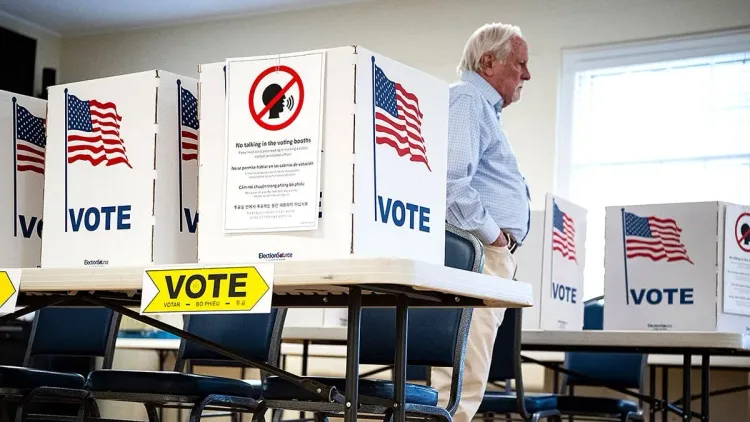
District 4 encompasses Downtown, Northwest and Southwest Portland, along with parts of Southeast. In the November 3, 2026 general election, voters will use ranked choice voting to elect three councilors to four-year terms. The city's election information listed October 14 as the scheduled start of ballot mailing to county residents.
All three incumbents, Mitch Green, Olivia Clark and Eric Zimmerman, are seeking reelection. Street Roots received answers from Green and challengers Matt Schulte, Jeremy Beausoleil Smith, Jayne Cronlund, John McDonald, Jamey Evenstar, Timothy (TJ) Anderson and Josh Leake. Clark, Zimmerman, John J Goldsmith, Eli Arnold and Rachelle A. Dixon did not respond.
Schulte identified affordability as the district's central problem, affecting people seeking housing, families trying to cover expenses and small businesses trying to stay open. His proposed Portland Affordability Rule could link increases in city-controlled fees to growth in the city's median household income. Evenstar likewise put affordability alongside housing stability.
Green focused on preserving existing affordable homes. He warned that expiring affordability covenants, financial pressure on providers to sell and persistent vacancies could push that housing onto the market.
Other candidates emphasized different gaps. Cronlund said the district's vulnerability to fires and earthquakes makes emergency preparedness a priority. McDonald called for challenging what he described as failed leadership at TriMet. Anderson said government has eroded public trust by offering slogans instead of solutions and too often putting power ahead of results. Leake identified the medical, drug and homelessness crisis on city streets, while Smith singled out environmental concerns, particularly the Willamette River.
Who affordable housing serves
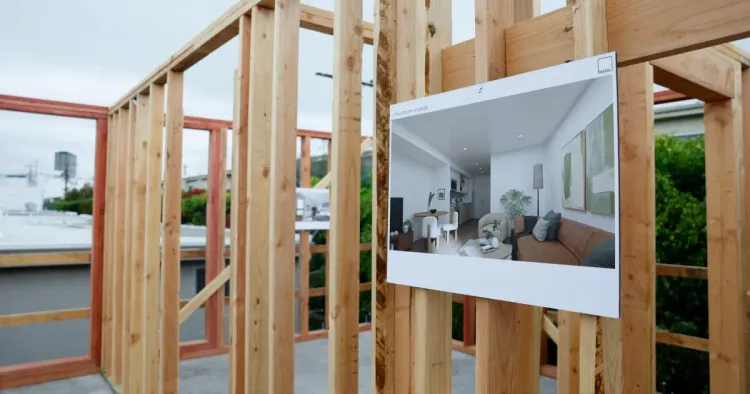
The questionnaire asked whether Portland should change its affordable housing priorities. Street Roots said the city's programs primarily serve people earning 60% to 80% of area median income, or $53,940 to $71,900 for a one-person household, while housing is scarcest below 51% of that benchmark. It also said most residents of affordable housing pay rents that are technically unaffordable.
Schulte favored serving a range of incomes while directing more subsidies and grants to households below 50% of area median income, particularly those below 30%. Smith also supported housing across income levels. He argued against abandoning production for the 60% to 80% group but said the city cannot overlook residents with far lower incomes who are priced out.
Green questioned the way rents are calculated: Using area median income as the benchmark, he said, can allow rent increases to outpace income growth for many tenants. Evenstar noted that the federal Department of Housing and Urban Development sets the formula used to calculate area median income and rent rates. Cronlund said housing serving people below 51% of area median income is the most difficult to maintain and support.
Anderson responded by questioning support for a system whose rents remain unaffordable to its intended residents. Leake's response identified his 20 years of experience in housing finance but offered no further position on the question.
McDonald endorsed the Keep Portland Housed package, which Green co-sponsored. The council approved it on April 16, 2026, through an amendment to the spring Technical Adjustment Ordinance.
According to the city, the package provides $5 million in short-term rental aid for households at risk before eviction, $2 million for tenants already facing eviction and $2 million to help people leaving homelessness move into vacant affordable homes. Another $1.9 million supports eviction defense, including a Right to Counsel pilot.
The package also allocates $8.8 million to stabilize affordable-housing portfolios and buy down debt, plus $800,000 in down payment assistance for tenants. It commits an initial $17.5 million to a social-housing revolving loan fund and directs $5.6 million in Tax Increment Financing to Broadway Corridor Parcel 6 in District 4.
Opposition to sweeps and the limits of the settlement
Street Roots also asked about encampment sweeps, officially called removals by the city, and whether their funding should instead support other homelessness responses. The question described sweeps as costing tens of millions of dollars annually without reducing homelessness and cited research linking repeated removals to higher mortality.
Schulte would allow removals only for immediate safety hazards, and only when people have a safe, dependable destination and continued access to care. He said more than 25% of people affected by sweeps lose contact with a case worker, social worker or service provider. His proposed requirements for city-funded removals include transportation, safeguards for essential possessions and medications, and a plan to preserve those service connections. He also said budgets should account for care after a removal.
Smith rejected sweeps as cruel, ineffective and costly, saying that moving people between blocks does not resolve homelessness. Green similarly opposed the current policy, arguing that it disrupts access to services and exceeds the minimum public right-of-way clearance required under the Tozer settlement.
That settlement followed Tozer et al. v. City of Portland, a lawsuit filed in September 2022 by nine people with mobility or vision disabilities and one caretaker. The plaintiffs alleged violations of the Americans with Disabilities Act and Section 504 of the Rehabilitation Act.
According to the city, the five-year agreement remains effective through June 20, 2028. It requires Portland to operate a campsite reporting system, assess campsites blocking sidewalks and give those sites priority for removal. It neither mandates clearing every sidewalk obstruction nor establishes a specific deadline for removals.
Cronlund described sweeps as disruptive and less than ideal. McDonald objected to how much the city spends on them, while Evenstar opposed the city's current homelessness response. Leake expressed strong opposition to sweeps. Anderson drew on having experienced homelessness and slept on the waterfront, emphasizing the logistical barriers people face as they try to regain stability.
A June 2025 investigation by Street Roots and ProPublica reported that recorded deaths among homeless people in Multnomah County rose fourfold, from 113 in 2019 to more than 450 in 2023. The reporting also found that Portland had conducted 19,000 sweeps since 2021 and dismantled more than 20 encampments a day in 2024.
The investigation cited a 2023 peer-reviewed JAMA study estimating that, among homeless people who inject drugs, those subjected to repeated sweeps face a 10% to 22% greater likelihood of dying from an overdose than those who are not.
Smith's concern about the Willamette
Smith said the council gives too little attention to the environment. He pointed to toxic algae blooms that develop each summer in Ross Island Lagoon and can make the Willamette unsafe for swimming while threatening wildlife and pets.
The blooms originate in a stagnant, man-made inlet created by decades of gravel mining. Oregon State University and the nonprofit Human Access Project have proposed restoring circulation by cutting two channels through the lagoon, each 500 to 1,000 feet wide. The roughly $20 million project would allow river water to flow through and flush out cyanobacteria.
As of June 2026, lagoon owner Ross Island Sand & Gravel owed the Oregon Department of State Lands nearly $14 million in fines for failing to restore the site. A legislative proposal for $1 million in channel-planning funds failed; its sponsors, Democratic Reps. Rob Nosse and Mark Gamba, said they would seek funding again in 2027.