An accusation and a family's response
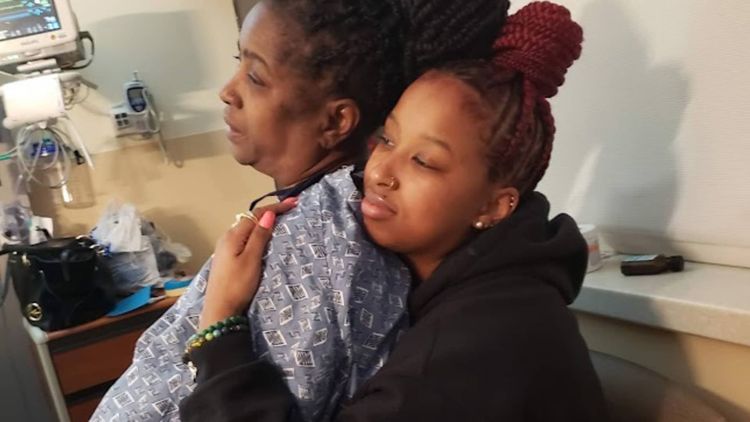
In the ad, a woman identifying herself as Donna Arthur, Acton's mother, accuses the Democratic candidate of dishonesty. "I love my daughter, but when I saw her lying about her opponent—and it's not easy for a mother to say this—but Amy has a serious problem. She is a liar."
The video reached a wide audience on Monday night, October 19, 2026, when Ohio political blogger D.J. Byrnes, known as "The Rooster," published it. Byrnes told CNN that a voter had recorded the video after seeing it as part of a poll. CNN reported that the version initially circulating had no disclaimer identifying who paid for or authorized it, and that AdImpact, which tracks political advertising, did not list it as a paid spot in the race.
Acton's brother, Philip Stearns, challenged the ad by describing the siblings' childhood and their decades-long estrangement from Arthur. He said authorities removed them from her custody after years of documented abuse and neglect. According to Stearns, the relationship broke down after Arthur defended her husband following his arrest for sexually abusing Acton. "Our birth mother stayed married to Amy's rapist until he died," he wrote.
Police and court records obtained by the Associated Press show that Cledith Arthur was arrested in July 1978 and charged with raping his then-12-year-old stepdaughter after Acton's biological father reported him. The alleged abuse took place between December 1976 and April 1978. Arthur pleaded not guilty, and a grand jury indicted him that September. He subsequently missed a court hearing and was a fugitive until at least 1981. He has since died.
Another claim in the ad concerned Acton's account of living in a tent with her family. Al Jazeera reported on October 24 that FactCheck.org had located records connecting her stepfather to the campground she described, contradicting Arthur's assertion that the family never lived there.
Acton's campaign answered with an ad featuring Stearns. He said his sister "got the worst" of their parents' abuse while protecting him. "She was 11 and 12 years old, and to think that is somehow a talking point, shame on Vivek," he said. "The contempt he has for Amy is the contempt he has for Ohio. He's not fit to lead."
Republicans split over the campaign's decision
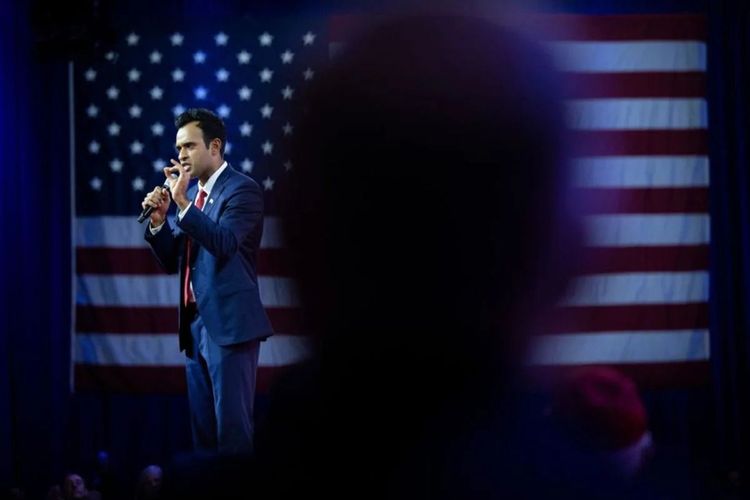
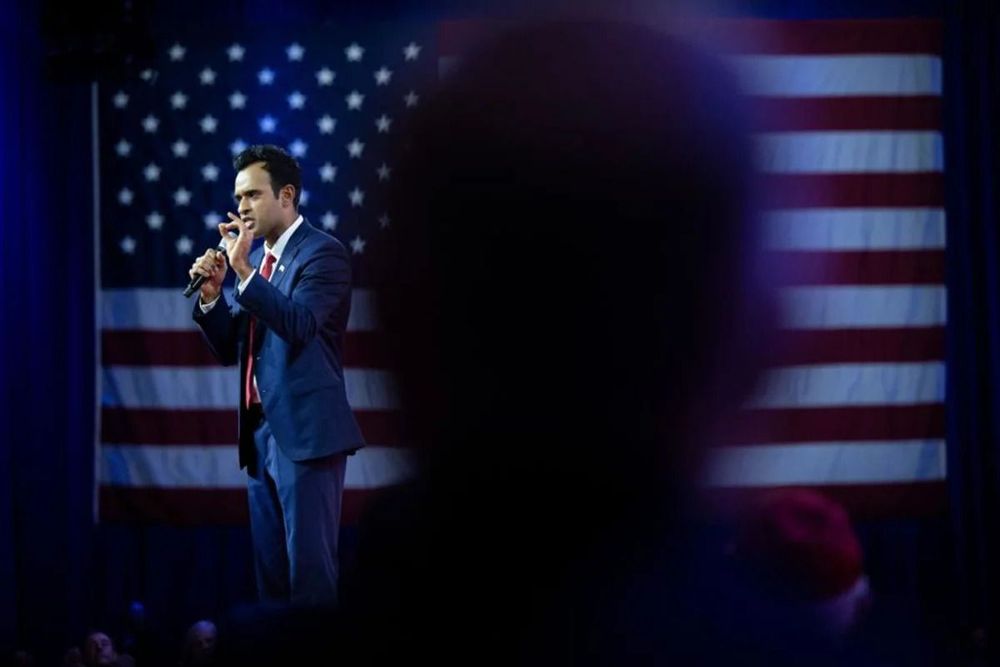
Ramaswamy's campaign refused to withdraw the spot and pledged $4 million to broadcast it before the election. Several prominent Republicans objected, including Ohio Gov. Mike DeWine, who called it "deeply, deeply troubling" and "wrong." Al Jazeera reported that DeWine urged the campaign to pull the ad but kept his endorsement of Ramaswamy.
Other Ohio Republicans also distanced themselves. Sen. Jon Husted said, "I would not have run that ad," while Secretary of State Frank LaRose said he "probably wouldn't run an ad like that," according to CNN. Rep. Nancy Mace, R-S.C., said it would "go down as the most shameful, disgusting, offensive ad this election season."
President Donald Trump, who has endorsed Ramaswamy, defended the decision to keep airing it. At a rally, Trump said Ramaswamy had asked whether he should take the video down and that he responded, "you gotta ride with it." Trump also praised it on Truth Social as "a very powerful Ad" and accused the mainstream media of having "teamed up against (Ramaswamy)."
Asked about the spot outside the White House, Trump said, "if the ad were about my mother, you would love every inch of it." Vice President JD Vance directed his criticism at Republicans opposing the ad, saying he was "disgusted" by them. "Stop whining about an advertisement and go win the race in 13 days," Vance said.
The attention strategy
Communications experts told Forbes that the backlash was delivering attention even as it drew condemnation. Cayce Myers, a Virginia Tech professor of public relations and communication law, described the campaign's approach as a high-risk, high-reward use of "outrage marketing": deliberately provocative advertising designed to generate anger and discussion.
William Brady, an associate psychology professor at Northwestern University, described the spot as one of the most "extreme examples of distracting attention from actual substantive policy discussion" in recent memory. The ad is not expected to attract voters who were not already leaning toward Ramaswamy, but Brady said persuasion was not necessarily the objective. "This is a way to control attention," he said.
Myers pointed to the reach the controversy had given a state campaign without additional advertising costs: "This is a state ad, for a state race, that is now getting national attention and is getting played over and over nationwide—for free."
A rating change in a close race
The Cook Political Report moved the Ohio governor's contest from toss-up to leaning toward Acton on Friday, October 23, citing fallout from the advertisement. Its analysts said the race was already moving in her direction and that the controversy strengthened their assessment.
The backlash also brought Acton financial support. Al Jazeera reported on October 24 that MK Pritzker, wife of Illinois Gov. JB Pritzker, donated $500,000.
An Acton victory would break a long Republican hold on the governor's office. Ohio, formerly considered a swing state, has backed Trump in the past three presidential elections, and Republicans have held the governorship since 2011. According to Al Jazeera, Acton would be Ohio's first Democratic governor in 20 years.
Acton has generally held narrow polling leads in recent months. The New York Times' polling aggregation showed Ramaswamy ahead in two of 10 polls conducted since mid-September. The extent to which the ad controversy has changed voters' views remains unclear.