Six parties, an unresolved candidacy
The G100 brings together the African Democratic Congress (ADC), Nigeria Democratic Congress (NDC), Allied Peoples Movement (APM), Social Democratic Party (SDP), Peoples Redemption Party (PRP) and Peoples Democratic Party (PDP), according to Premium Times, whose reporting was carried by allAfrica.
The parties agreed at an August 31, 2026, summit to prepare five documents governing their cooperation. On October 14, their national chairpersons and secretaries said they had spent roughly two weeks consulting presidential candidates Atiku Abubakar, Peter Obi, Seyi Makinde, Adewole Adebayo and Donald Duke.
The proposed documents cover both the alliance's organization and its governing ambitions: a National Covenant for Democratic Renewal, a National Reform Programme, a Framework for Opposition Unity and a Roadmap to a Common Presidential Candidate. A fifth document, the Single-Term Transition Charter, would set out safeguards for a possible transitional government serving one four-year term.
Their status remained uncertain on October 22, when Premium Times reported that it could not establish whether the documents had been finished, submitted or adopted. G100 coordinator Salihu Lukman acknowledged that mistrust between parties and candidates could block agreement on a single nominee.
That disagreement has already surfaced publicly. NDC vice-presidential candidate Rabiu Kwankwaso urged the ADC's presidential candidate, Abubakar, to stand aside for the NDC's Obi. The ADC campaign council responded by accusing Kwankwaso of damaging opposition unity and serving Tinubu's interests. Rejecting that accusation on October 18, Kwankwaso said, "We will not withdraw our candidature for ADC or any other party."
Another opposition initiative has a stated ideological basis. Accord Party presidential candidate Gbenga Olawepo-Hashim told Vanguard that he, Omoyele Sowore of the African Action Congress and the SDP's Adebayo had signed an agreement in Port Harcourt. He described their outlook as left-center and welfarist, contrasting it with what he called the "extreme conservative" economic and gasoline-subsidy positions of Abubakar and Obi.
Tinubu draws on his coalition experience
Tinubu's own campaign has recruited across party lines. Vanguard reported in October that he had inaugurated a coalition Presidential Campaign Council including Osun Governor Ademola Adeleke of the Accord Party, Anambra Governor Chukwuma Soludo of APGA and Federal Capital Territory Minister Nyesom Wike of the PDP. The report described the APC as assembling its broad campaign team while its opponents were still trying to settle on a common front.
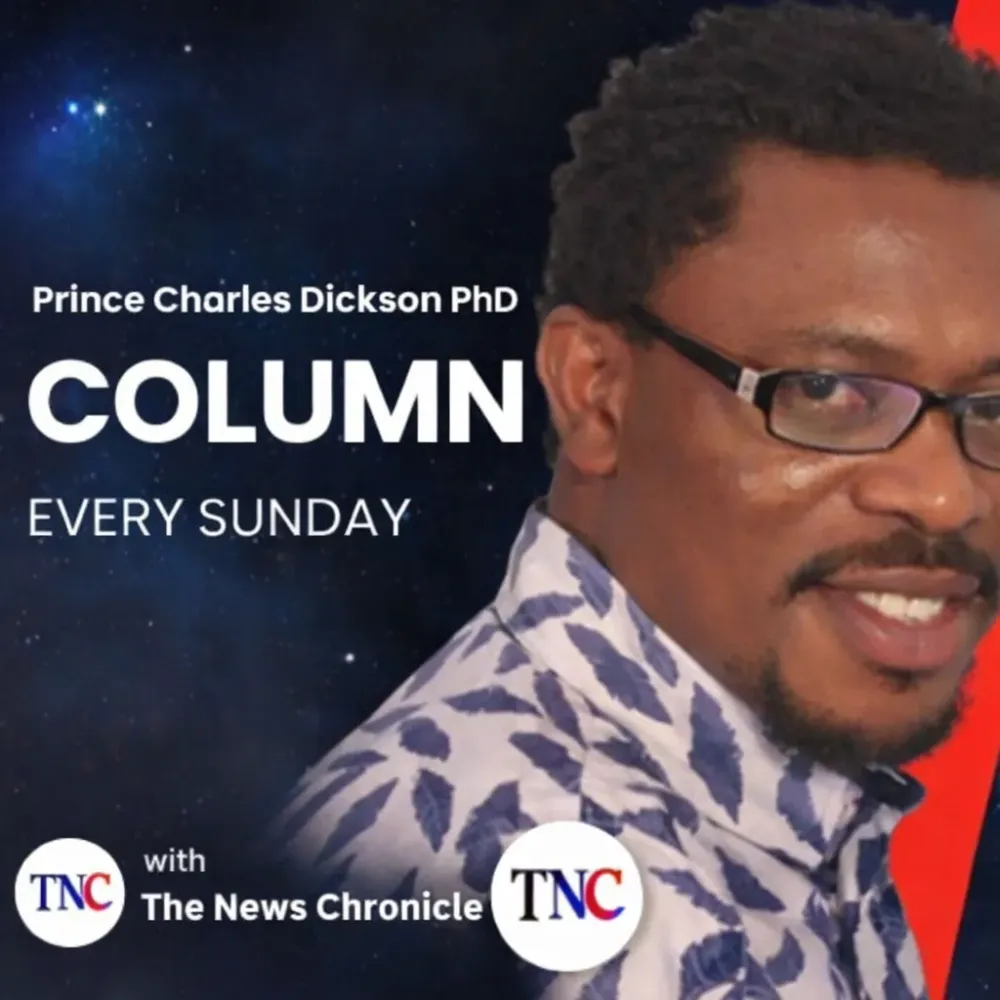
Dickson places those developments against Tinubu's earlier role in helping build the opposition alliance that became the APC and defeated the PDP in 2015. His challengers are now attempting a form of cooperation the president knows well, Dickson argues, though an agreement among political leaders does not necessarily create a wider movement.
That experience does not guarantee Tinubu another term. Dickson cautions the government against reading its rivals' divisions as evidence that Nigerians approve of its performance. The administration still has to account for its decisions and their effects on households.
The economic questions behind the alliances
September 2026 inflation figures illustrate the economic conditions facing voters. The National Bureau of Statistics put headline inflation at 14.63%, down from the previous reading, while annual food inflation was 19.59%—a gap of 4.96 percentage points. On a month-to-month basis, food inflation fell 1.55%.
BusinessDay's coverage of the bureau's data also showed substantial differences among states. Lagos had the highest annual food inflation, at 34.4%, followed by Imo at 33.79% and Ondo at 31.49%. Taraba's rate was -7.47%, while Borno's was 2.18%. Dickson's argument is that a lower national headline rate alone cannot answer households' concerns about food costs.
He applies a similar test to the opposition: identifying hunger does not explain how a government would rebuild purchasing power without creating further fiscal problems. A security platform, in his view, also needs more than condemnation. It should address police accountability, effective intelligence, justice for victims and the conditions that would allow people to farm safely.
Dickson treats the proposed coalition documents as a meaningful starting point, not a completed offer to voters. He calls for explanations of how an opposition government would create jobs, protect farmers, improve schools, make communities safer and audit public spending. Those proposals, he argues, need financing plans and benchmarks for the first 100 days, the first year and a full four-year term.
When political rivals become enemies
The concern running through Dickson's essay is that competition for office is being treated as a struggle to eliminate opponents rather than persuade voters. He draws on former President Olusegun Obasanjo's remarks at the Goodluck Jonathan Foundation Democracy Dialogue in Bauchi on August 11, 2026.
The event's theme was "Beyond Elections: Can Political Parties and the Judiciary Save African Democracy?" According to Punch, participants included former President Goodluck Jonathan, former Vice President Namadi Sambo, Bauchi Governor Bala Mohammed and Peter Obi.
Discussing the Western concept of a loyal opposition, Obasanjo said that opposition is understood as an enemy in many African languages. He asked, "Then do you have a loyal enemy?" His concern was that political competitors are consequently treated as targets for destruction. At the same gathering, he said money and inducements in politics had grown "by leaps and bounds" and lamented that no woman had been elected governor since the Fourth Republic began.
Dickson endorses the warning about hostility but rejects treating Obasanjo's linguistic claim as a universal description of African societies. He points to the continent's traditions of debate, consensus, dissent and accountability. He also argues that political leaders bear responsibility for reshaping democratic institutions to suit themselves, and notes that Obasanjo helped shape the system he now criticizes.
Party switching compounds the problem, Dickson writes: leaders can abruptly rehabilitate former enemies while expecting supporters to maintain animosities that may soon become politically inconvenient. He also criticizes the use of religion, ethnic identity and poverty in campaigning, arguing that none excuses corruption or gives an election winner authority to suppress dissent.
What voters need to hear
Dickson frames his essay with two cultural references. One is Olawale Brymo's 2013 song Down, whose depiction of compromised authority and spectators resonates, he says, with a political system where scandals rarely bring accountability. The other is a cartoon in which a man using crutches kisses the wife of a blind man, while a witness who is deaf and cannot speak must communicate what happened.
For Dickson, the cartoon is not evidence that disability prevents communication: touch, interpretation or an agreed signal can convey the truth. It instead raises questions about whether people will make information accessible and whether its recipient will act. He links that problem to voters who observe political bargaining but still cannot establish what candidates intend to do in office.
His proposed electoral tests concern both power and participation: whether people can vote freely, whether their ballots are counted accurately and honored, and whether institutions act independently. He also asks whether the opposition can win confidence through more than anger and whether the government can answer criticism without branding critics disloyal.
"An election must determine who governs, not who is permitted to belong," Dickson writes. His demand ahead of January is for the governing party to substantiate its record, its challengers to explain a workable alternative, and citizens to insist on evidence from both.