
Nvidia GTC Berlin Keynote: Jensen Huang Puts $50 Billion Price Tag On 1GW AI Factory Amid DSX POD Launch
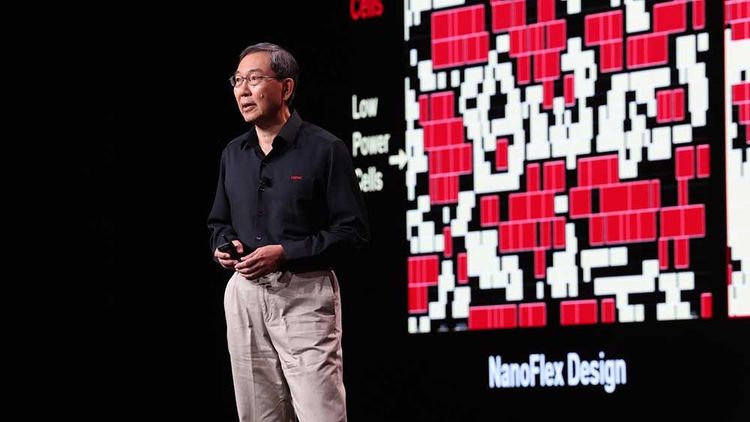
Nvidia CEO Jensen Huang unveiled DSX POD on Wednesday, a new system designed to accelerate the deployment of AI data centers, as the company seeks to address growing concerns about lengthy construction timelines and mounting infrastructure costs. Huang placed the price tag for a 1-gigawatt AI facility at approximately $50 billion during his keynote address at GTC Berlin.
The DSX POD system represents Nvidia's effort to shift more assembly and testing work from construction sites into the supply chain, potentially cutting deployment time at prepared sites from six months to as little as 14 days. The units are expected to become available in early 2027.
Huang emphasized the financial stakes involved in AI infrastructure deployment. According to the CEO, a 1-gigawatt facility can generate about $40 billion in annual revenue, meaning a three-month delay could result in roughly $10 billion in foregone revenue.
10 billion worth of revenues will make anybody anxious,Huang stated during the presentation.
The announcement comes as global AI infrastructure spending is projected to reach $300 billion annually by 2027, with data center construction representing approximately 40-50% of total costs. The scale of investment required for these facilities has particular significance for companies financing expansion through debt markets.
Technical Architecture and Industry Context
DSX POD builds on Nvidia's earlier decision to assemble its NVLink 72 rack-scale computers within the supply chain rather than on construction sites. The previous generation NVLink technology connects up to 576 GPUs in a single cluster using fourth-generation NVLink Switch architecture, which the company announced in March 2024.
The new system extends that approach to integrate computing, networking, storage, software, power and cooling infrastructure into a single reference design.
Great chips alone don't make a great AI factory. NVIDIA DSX has a full-stack AI factory reference architecture, co-innovated with the world's leading infrastructure companies,Huang said.
Traditional data center construction typically requires 18-24 months from groundbreaking to operational status, with equipment installation and testing accounting for 30-40% of that timeline. The modular data center market has grown 35% during 2025-2026, though previous pre-fabricated designs lacked integration with GPU-specific requirements for AI workloads.
The infrastructure demands of such facilities are substantial. A 1-gigawatt data center requires approximately 1.5 million gallons of water per day for cooling, according to data center industry estimates. The global supply of 1-gigawatt power capacity for data centers remains constrained, with utility companies reporting 3-7 year waiting periods for new power connections in major markets as of 2026.
Financial Pressures and Market Dynamics
The timing of Nvidia's announcement reflects mounting financial pressures on AI infrastructure operators. CoreWeave, which raised $7.5 billion in debt financing in 2024 to fund its data center expansion in one of the largest infrastructure debt deals in the technology sector, saw its bond yields approach 15% last week before the company's stock price recovered.
Huang said reducing idle computing capacity during the deployment phase could improve profitability across the industry.
The wasted idle compute, the wasted idle capex will reduce, and everybody becomes more profitable,he explained. The CEO projected that DSX POD could reduce the time between equipment arrival and the start of token production—when AI systems begin generating output that customers use or pay for—from roughly four to five months to about one month.
AI inference workloads, which generate these revenue-producing tokens, are projected to account for 60% of AI computing revenue by 2028 compared to 40% for training workloads, underscoring the economic importance of minimizing deployment delays.
Partnership Network and European Investment
Nvidia is collaborating with a broad group of technology and infrastructure companies on the DSX POD design, including Dell Technologies, Hewlett Packard Enterprise, Lenovo, Vertiv, Schneider Electric, Eaton, Pegatron, Wistron, Foxconn, Crusoe and DayOne. Nvidia supplies the reference architecture while partners build the systems.
Vertiv, one of the key partners, reported a 47% year-over-year increase in AI data center cooling system orders in Q3 2026, citing accelerated deployment schedules as a primary driver of demand.
Huang noted that Nvidia had invested nearly $10 billion in Europe over the past year. The Berlin location for the DSX POD announcement carries additional significance following Germany's September 2026 announcement of a €10 billion AI infrastructure investment plan, representing the largest public AI investment in Europe.
Nvidia shares rose as much as 2% in pre-market trading on Wednesday following the announcement, with retail sentiment around the stock shifting to bullish territory. Shares of neocloud providers CoreWeave, Nebius and IREN also gained between 2% and 3% in early trading.