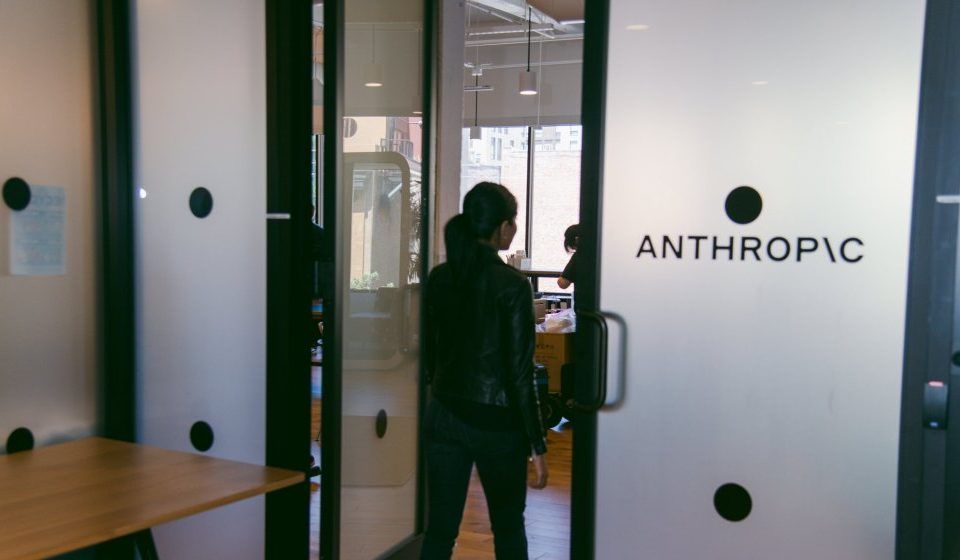
Anthropic offers $200K for a human assistant to manage calendars and emails even as it promotes AI agents to automate office work
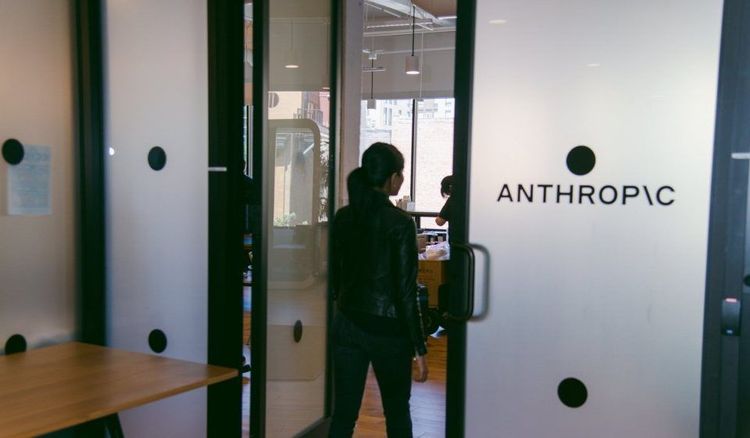
Anthropic, the company behind Claude AI, is offering nearly $200,000 a year for a human assistant to manage calendars, organize travel, and oversee executive emails. Yes, the same company developing AI agents that promise to automate many of those tasks still needs a person to do them.
The irony is hard to miss. As Silicon Valley races to replace routine office work with artificial intelligence, one of the industry's biggest AI developers is willing to pay a six-figure salary for someone to handle the very responsibilities its technology is increasingly being built to perform.
According to an official job posting, Anthropic is recruiting an Administrative Business Partner in London to support senior go-to-market executives. The position pays £145,000 annually, equivalent to roughly $195,000 at recent exchange rates, as reported by CityAM.
The responsibilities read like a checklist of tasks AI companies have spent years promising to automate: managing calendars, organizing meetings, monitoring inboxes, coordinating travel, tracking requests, and handling executive communications.
The person hired will also manage expenses, coordinate internal meetings, welcome visitors, and support executives whose schedules can change with little warning.
Yet Anthropic is promoting Claude as a workplace assistant that can handle many of these administrative duties. Its Google Workspace integrations allow users to work with Gmail and Google Calendar, and its Microsoft 365 tools can help manage emails, calendar events, and other office tasks.
That raises an obvious question: If AI agents can handle office administration, why is one of the companies building them paying nearly $200,000 for a human assistant?
The irony of AI: Anthropic's $200K job reveals what AI still struggles to replace
The answer may have less to do with managing calendars and more to do with managing people.
Anthropic's listing makes clear that the job goes beyond scheduling meetings and answering emails. The company wants someone who can anticipate executives' needs, build relationships, handle sensitive information, and exercise sound judgment when priorities change.
The position also requires a strong awareness of data security and privacy, along with regular in-person attendance at Anthropic's London office.
Those are harder responsibilities to hand over entirely to software.
Speaking to City AM, Anna Bailey, founder of the professional assistant network Pally Talk, pointed to the difference between automating a task and making a business decision.
If AI could replace a great PA, an AI company would be the first to do it. AI can manage a calendar, but it can't read a room or make the judgment call when a deal is on the line.
Her argument gets to the heart of the debate over AI and white-collar employment.
Scheduling a meeting is one thing. Knowing whether that meeting should happen, recognizing when an executive needs to intervene, or deciding how to respond to a sensitive message is another.
For companies handling confidential negotiations, major customers, and business relationships, a mistake can cost far more than an assistant's annual salary.
That distinction may help explain why Anthropic is investing in human administrative support while it develops increasingly autonomous AI systems.
AI companies are learning that automation has limits
Anthropic's hiring decision comes as the broader technology industry pushes AI agents deeper into everyday business operations.
The pitch is straightforward: AI assistants can complete repetitive tasks, cut administrative costs, and let employees spend more time on higher-value work.
But the gap between performing individual tasks and reliably managing an executive's working life remains significant.
A calendar assistant can identify an available time slot. A trusted human assistant may know that a meeting should be postponed, that a particular customer requires personal attention, or that an apparently routine email carries serious business consequences.
Growing evidence suggests those human skills are becoming more valuable as AI adoption increases.
PwC's 2026 Global AI Jobs Barometer, published in June, analyzed more than one billion job advertisements across six continents. The research found that roles requiring greater human expertise alongside AI recorded twice the job growth and 42% faster wage growth than roles where AI primarily made work easier for less experienced employees.
The findings suggest that AI may change the value of administrative work rather than eliminate every role associated with it.
Routine scheduling and email sorting may become cheaper to automate, leaving businesses willing to pay more for people who bring experience, discretion, and independent judgment.
Anthropic's job posting doesn't prove AI agents have failed, nor does it mean the company believes its own technology can't do administrative work.
It does show that one of AI's leading developers still sees enough value in human judgment to pay a substantial premium for it.
And that may be the most revealing part of the story.
Silicon Valley is spending billions teaching AI to work like humans. For now, at least one of its leading AI companies is still willing to pay nearly $200,000 for a human to do the job.