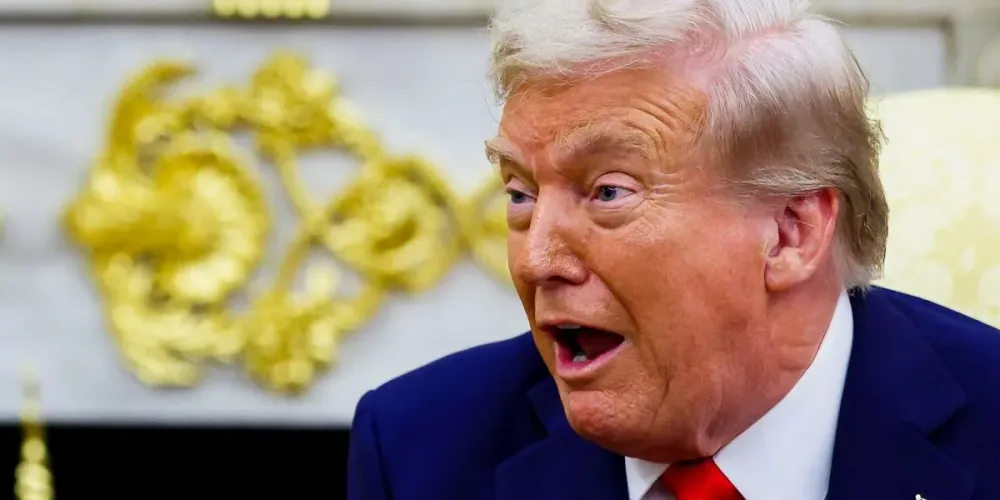
Renovations in the postelection spotlight
Discussing the November 5 signing with CNN's Jake Tapper, Collins emphasized its timing: "It's so notable that this is the first executive order the president has signed since the midterm elections." The document Trump signed was a proclamation establishing the "Oval Office National Monument."
Collins counted three events devoted to Trump's construction and renovation projects that week. His first appearance following Tuesday's election defeats was a Wednesday visit to the White House ballroom construction site. "And so it just kind of shows you where the president's mindset is in all of this," she said.
She contrasted that focus with the concerns of Republicans seeking leadership after their historic midterm defeats. "A lot of them are voicing anger about how he's handled the economy and the future of the Iran war, which right now has no end in sight," Collins said.
Access to the signing was also restricted. According to HuffPost, the White House barred CNN, which was scheduled to provide the day's shared television pool coverage, from the ceremony. As a result, none of the five networks had audio or video of Trump's remarks. Collins also described the exclusion on X, saying CNN had been prevented from entering the Oval Office event.
Protection for the rooms, with room to redecorate
The proclamation, dated November 5, 2026, invokes the Antiquities Act to establish the monument, according to the White House's Presidential Actions text. It covers the Oval Office, Room 110; the Outer Oval Office, Rooms 106 and 108; and the Cabinet Room, Room 105. The designated boundaries encompass the smallest area compatible with proper care and management.
Responsibility for managing the monument and preparing a management plan falls to the interior secretary through the National Park Service. Before any action that would substantially alter or demolish it, the proclamation requires documentation, review and consideration of alternatives.
Those provisions do not bar a president from redecorating or choosing furnishings. The document also preserves presidential authority to make routine operational and security changes, provided they do not substantially impair the monument's historic structure or architectural character.
Trump said his administration would send the proclamation to Congress for ratification. He also said major changes to the Oval Office and Cabinet Room would need congressional approval, CNN Politics reported.
Tapper asked whether Trump intended to keep a successor from removing the gold decorations he had added to the Oval Office. Collins said Trump appeared intent on preserving his changes but questioned whether the proclamation would survive legal scrutiny or whether another president could reverse it. "Yeah, that's exactly what will happen," Tapper replied.
The ballroom project's separate court fight
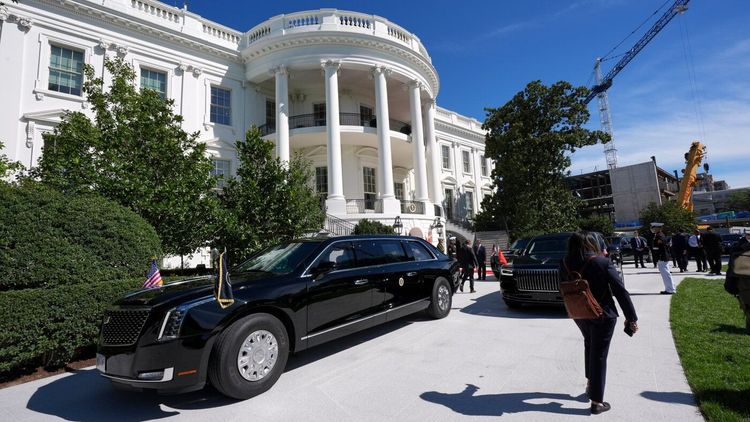
The construction site Trump visited on November 4 is a roughly $400 million, 90,000-square-foot ballroom project occupying the site of the demolished East Wing, according to BBC News.
That project had already been the subject of a Supreme Court decision. On August 31, 2026, the justices voted 5-4 to allow construction to proceed, blocking lower-court rulings that would have stopped work on the above-ground portion.
Chief Justice John Roberts dissented. He wrote that construction is "likely unlawful" because Congress had not approved the project.