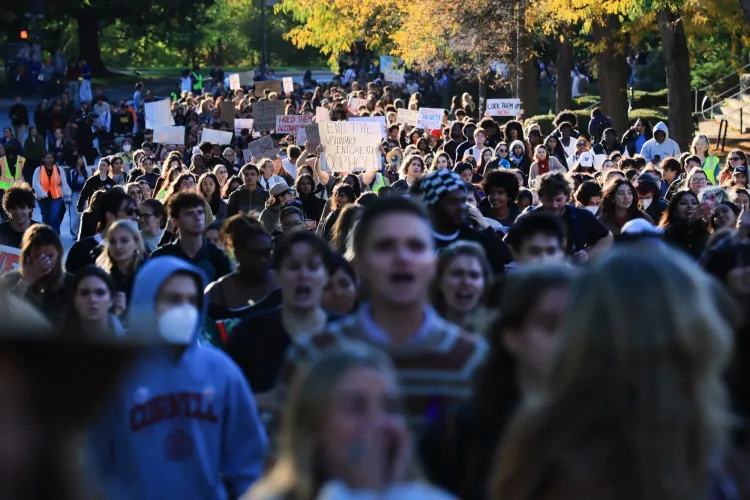
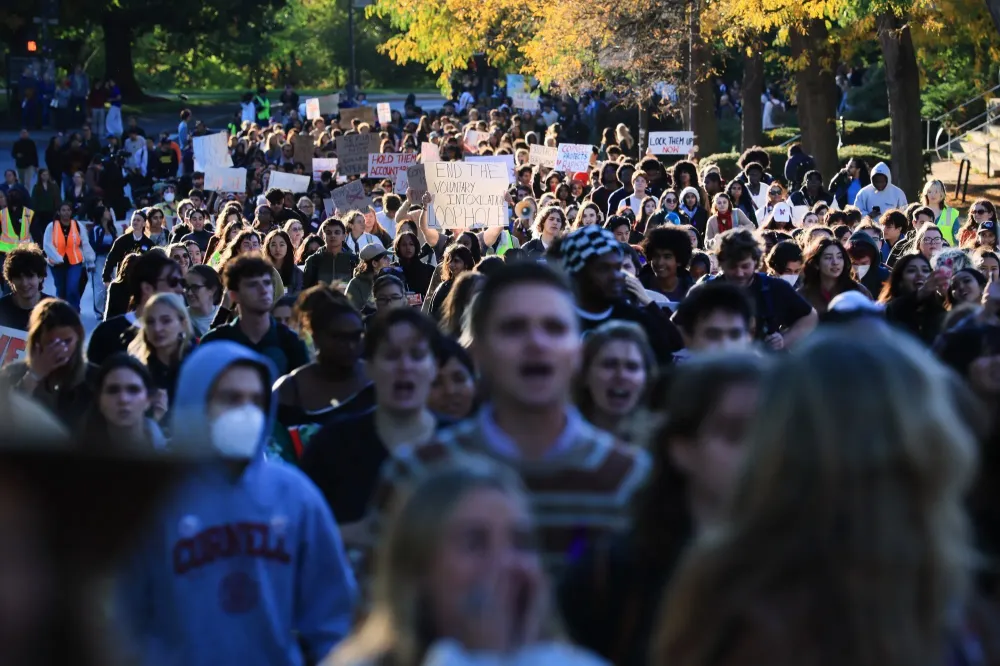
Cornell faces scrutiny over its response
The allegations became the focus of a national debate after a woman identified as Jane Doe sued seven former Chi Phi fraternity members. Students and faculty at colleges around the country have since urged restrictions on Greek life.
Doe filed the 101-page civil complaint in New York County on Sept. 16, 2026. She alleges that, at the fraternity house on the night of Oct. 19-20, 2024, she was given alcohol, pressured to snort a substance described as ketamine and gang-raped while "incapable of consent."
Cornell conducted a monthslong Title IX investigation. Records obtained by The New York Times show that two accused students were expelled, two received suspensions and probation, and two were assigned "reflection" papers and bystander training. A seventh man, who had already graduated, was barred from campus.
In October, Cornell suspended fraternity social events through the end of the academic year. The university said the restrictions "will provide time for a thorough review of fraternity life at Cornell to determine whether and how it can safely continue." It also promised to expand campus programs addressing sexual assault and alcohol and drug abuse.
The university hired former U.S. Deputy Attorney General Sally Yates to independently examine its response to Doe's initial report in 2024 and its procedures for handling similar reports from other students.
A separate state investigation is also underway. Gov. Kathy Hochul appointed New York Attorney General Letitia James as special prosecutor on Oct. 1, saying she had "lost faith" in Tompkins County District Attorney Matthew Van Houten's ability to conduct the investigation. On Nov. 4, James selected Jacqueline Kelly as outside counsel to lead the inquiry with a team from the attorney general's office and Boies Schiller Flexner. Kelly previously led the Civil Rights Unit in the U.S. Attorney's Office for the Southern District of New York.
On Nov. 6, Cornell's Faculty Senate voted 75-50 to declare "no confidence" in senior university leaders, including President Michael Kotlikoff, over their handling of the case. Five senators abstained and five did not vote. The resolution is symbolic: The senate cannot remove administrators. Cornell's Board of Trustees said it continued to support Kotlikoff and his administration as the right leaders to address the issue.
Swarthmore's experience after banning Greek life
At Swarthmore College in Pennsylvania, eliminating fraternities did not end reports of sexual assault. Although the annual average of reported assaults has fallen since its 2019 ban, federal data still places the college's reported sexual-crime rate per student above that of most U.S. colleges.
The ban followed years of complaints. A 2014 Philadelphia magazine article carried the title "Rape Happens Here." Then, in 2019, leaked Phi Psi documents revealed references to a date rape drug and an upstairs bedroom members called the "rape attic."
Students staged protests, including a four-day sit-in at Phi Psi that lasted until the chapter voted to dissolve. Delta Upsilon, the college's only other fraternity, decided to close that same night. Swarthmore's president subsequently prohibited fraternities and sororities, a policy that remains in place.
Swarthmore spokesman Andy Hirsch said the ban came from a task force recommendation and that the task force's work had begun well before the documents became public.
"People think that because it's a small liberal arts college that doesn't have frats, that there's a certain element of safety or insulation from these problems," said Patricia Quimby-Moro, a junior who founded a group supporting survivors. "But they still definitely happen."
Survey results offer another view of the campus. In the spring 2025 National College Health Assessment, 4.7 percent of Swarthmore students reported sexual touching without consent during the preceding 12 months, compared with 4.9 percent nationally. Experts caution that reported crime statistics do not fully measure safety: Some assaults are never reported, and students' willingness to report can differ across schools.
What restrictions and crime counts can show
Complete fraternity bans remain uncommon. More than a dozen universities, however, have imposed restrictions on Greek life in recent years following reports of hazing or sexual assault. They include Northwestern University, the University of Southern California and the University of Utah.
Michael Topper, an assistant professor of economics at California State Polytechnic University at Pomona, examined more than 40 temporary restrictions on fraternity social events involving alcohol between 2014 and 2019. Weekend alcohol violations and sexual assaults declined while the restrictions were in force, then rose again when they ended.
"It's kind of like putting a Band-Aid over it," Topper said. "We don't really see any change in behavior after the moratorium is over."
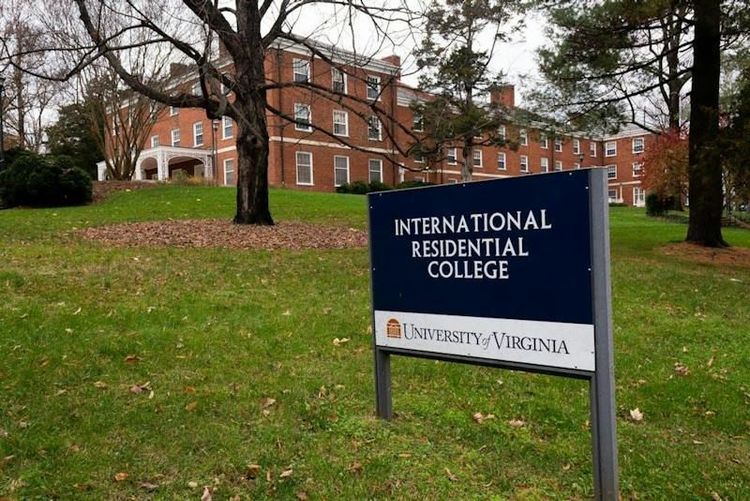
Utah's experience illustrates the different circumstances behind fraternity sanctions and campus crime totals. Its Sigma Nu chapter closed in 2025 largely because of hazing. Kappa Sigma lost its chapter in 2022 after a reported sexual assault at a September 2021 "wine Wednesday" event at its house; the chapter regained university recognition in 2024.
The University of Utah recorded 146 reported rapes in its 2024 Clery Act data, the largest count at any U.S. college that year. The university attributed 110 of those reports to one "multiple-month relationship plagued by interpersonal violence." The total fell to 23 in 2025. A separate housing-crime report required by the Utah Legislature found that none of those 23 occurred at a fraternity or sorority.
Fraternity advocates dispute the idea that Greek organizations should bear sole responsibility for campus sexual assault. The North American Interfraternity Conference, representing fraternities with more than 6,000 chapters, said its recent analysis of federal crime data found similar sexual-assault rates at schools with fraternities and those without Greek organizations. "There is no correlation," said conference President Jud Horras.
Other researchers point to evidence involving both fraternity culture and drinking. Julia O'Connor, an assistant professor at the University of Utah College of Social Work, cited studies linking fraternity membership with perpetration of sexual violence. Among them was a 2013 Clemson University study associating membership with higher-risk drinking, which can in turn lead to greater sexual aggression.
Research on smaller colleges also found higher average sexual-assault rates at schools with fraternities and fewer alcohol restrictions. "Alcohol policy was the strongest significant factor. Greek life was a close second," said study co-author Jason Wollschleger, a sociology professor at Whitworth University. He said it was "pretty safe" to expect that eliminating Greek life would reduce assaults, particularly alongside restrictions on drinking.
Ending university recognition can also make oversight harder, said Dennis Gregory, an associate professor emeritus of higher education at Old Dominion University. Fraternities may keep operating as private clubs off campus, leaving administrators, students and families with less information. Sexual assaults at unrecognized fraternities typically do not appear in the university's public crime statistics, he noted.
Changing more than fraternity policy
Wesleyan University paired changes to residential fraternities with wider reforms. After a 2014 survey found students felt "less safe" at fraternities than elsewhere on campus, and students and faculty pressed for action, the Connecticut university gave residential chapters three years to admit women or surrender their houses.
Psi Upsilon admitted women. Another fraternity relinquished its housing, while the university closed a third after a student suffered serious injuries. Reported sexual assaults declined from 45 in 2014 to zero in 2025.
That decline occurred alongside other changes, not just the fraternity policy. Wesleyan revised its alcohol and sexual-assault policies, expanded sexual-violence education and survivor services, and changed how it handled reports.
O'Connor said eliminating fraternities might help but was unlikely, by itself, to eliminate or substantially reduce sexual assault. Experts and advocates call for measures that discourage heavy drinking and drug use, strengthen education, encourage bystanders to intervene and make it easier for survivors to report.
Stevan Veldkamp, executive director of Penn State's Timothy J. Piazza Center for Fraternity and Sorority Research, said the campuses appearing to make the strongest progress use a comprehensive approach rather than depend on one policy or program. He called for ongoing prevention training, stronger reporting and support systems, efforts to reduce high-risk drinking and changes in campus culture.
Veldkamp said fraternities draw scrutiny because they often host a disproportionate share of gatherings involving alcohol and large groups of students. But he suspects that removing fraternities without broader changes would move the problem elsewhere: "It's displacement rather than prevention."
Support beyond the ban
Swarthmore says its work has continued since 2019. The college has expanded orientation education on consent and boundaries, sought to simplify reporting and hired a "restorative practitioner" to help resolve sexual-assault complaints. It also plans to hire another staff member to support survivors of sexual violence.
Quimby-Moro founded the Swarthmore Survivors Collective last year. After discovering an earlier Survivors Week in the college archives, she and classmates revived it last spring with a film screening, an open mic night and a clothesline where students hung ribbons bearing messages and colors representing their connections to sexual assault. The ribbons became so numerous that the line sagged.
She said renewed discussion following the Cornell allegations was welcome, but she hoped it would produce lasting changes in how colleges prevent assaults and support survivors.