A drone helps guide the rescue
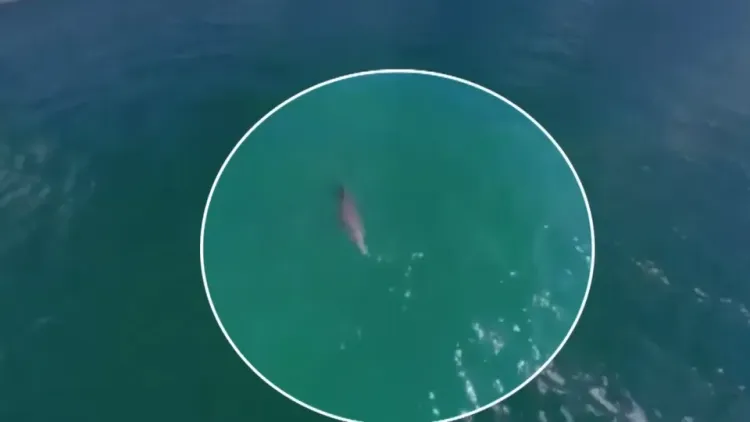
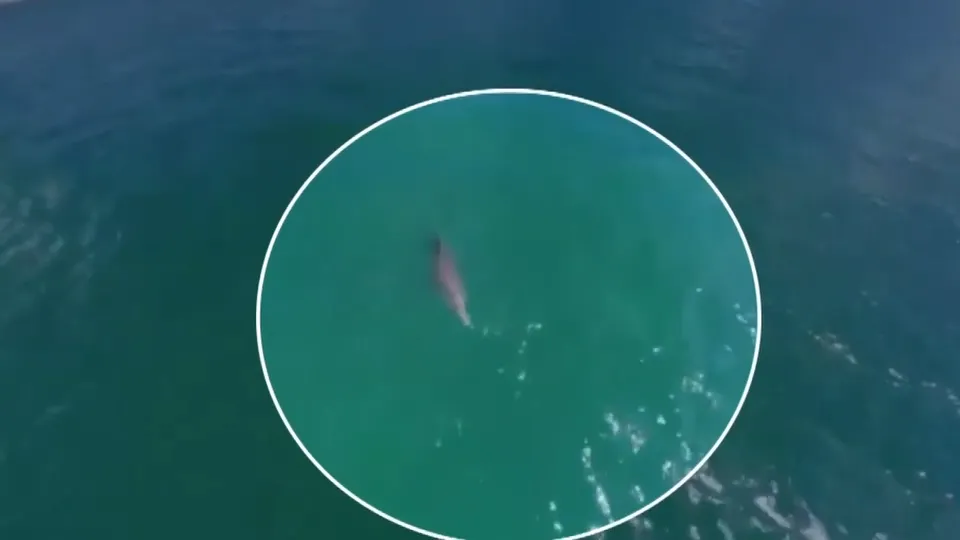
Ahmed Raul Perez's wife first noticed the dolphin through their apartment window on October 28. Perez told 7News that they are animal lovers and wanted a closer look because its behavior seemed unusual. He sent up a drone and saw something around its tail.
Speaking in Spanish, Perez described the dolphin's head bobbing above the surface while its tail remained underwater. The footage appeared to show netting around the tail, leaving the animal struggling to stay afloat. The couple called 911.
Marine patrol units from North Bay Village and the Miami-Dade Sheriff's Office arrived in Biscayne Bay within minutes. Perez said the dolphin was visible only from above, so he used his drone to direct officers in their boats toward it. Other neighbors also helped.
Several marine patrol officers then entered the water and removed the netting. Perez captured the dolphin swimming into deeper water and said he became teary-eyed with happiness. He believed the weight pulling the animal down could have caused it to die without intervention.
Earlier entanglements in local waters
Officers have freed a dolphin from a net in the area before. In December 2021, Miami-Dade Marine Patrol Officer Nelson Silva rescued a juvenile dolphin in the Intracoastal Waterway near Miami's Shorecrest area. Body-camera footage became public in January 2022.
Another Biscayne Bay rescue, in December 2020, involved two men on personal watercraft. They freed a dolphin whose tail was wrapped in thick nylon rope connected to what appeared to be a crab trap or cage. Afterward, NOAA southeast region marine mammal stranding coordinator Blair Mase warned that such rescues are dangerous and urged people to contact the stranding hotline or enforcement before intervening.
NOAA Fisheries' July 2025 assessment of the Biscayne Bay Stock of common bottlenose dolphins also records fishing-gear entanglements during 2018-2022. Two dolphins suffered serious injuries in trap/pot gear in 2020: one was freed from commercial blue crab gear and the other from unidentified gear. Both were released alive but considered seriously injured. A dolphin entangled in a gillnet in 2021 was also released alive.
Risks to dolphins and guidance for the public
The World Wildlife Fund identifies entanglement in fishing nets, known as "bycatch," as the leading cause of death for dolphins, small whales and porpoises. A dolphin caught in a net can suffocate if it cannot reach the surface to breathe or sustain injuries while trying to escape.
NOAA's July 2025 assessment puts the best abundance estimate for the Biscayne Bay Stock at 241 common bottlenose dolphins, with a 95% confidence interval of 224-261. That estimate comes from a fall 2019 photo-identification capture-recapture survey, not a current count.
The report designates the stock as "strategic" under the U.S. Marine Mammal Protection Act because human-caused mortality and serious injury is very likely above its Potential Biological Removal level of 1.7.
NOAA Fisheries asks anyone who sees an entangled marine mammal to report it immediately to a 24-hour regional stranding hotline. The number cited for the Southeast region is 1-877-942-5343. Only experienced responders authorized by NOAA Fisheries should approach closely or attempt to free an entangled marine mammal, the agency says.