Federal judge rules Pentagon's action against Anthropic was illegal retaliation
A federal judge has determined that the Pentagon acted unlawfully when it designated artificial intelligence company Anthropic as a supply chain risk earlier this year, ruling that the government's actions constituted illegal retaliation for the company's criticism of Defense Department AI policies.
U.S. District Judge Rita Lin, who was confirmed to the bench by the Senate in September 2023, issued a 59-page written order Thursday night concluding that the Pentagon's measures against Anthropic "were based on a desire to make a public example out of Anthropic for its 'arrogance' in criticizing the government, not based on any articulable basis to believe that Anthropic would actually sabotage its model."
Origins of the dispute
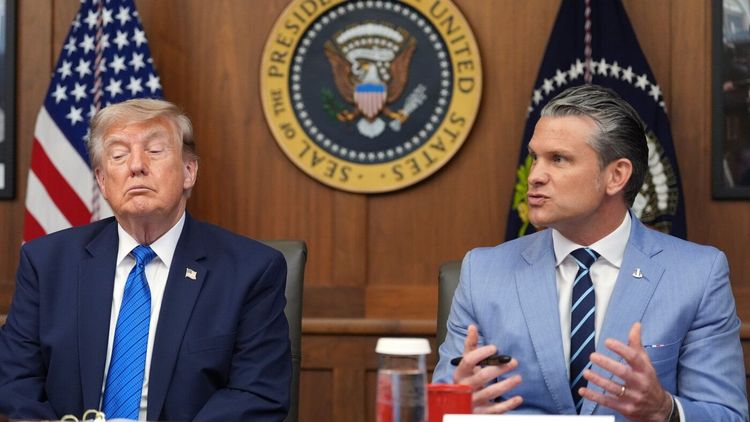
The dispute originated from Anthropic's July 2025 contract with the Pentagon, which made the company's Claude model the first frontier AI system approved for use on classified government networks under a two-year agreement with a $200 million ceiling. The relationship deteriorated in February when President Donald Trump and Defense Secretary Pete Hegseth accused Anthropic of endangering national security after CEO Dario Amodei refused to allow unrestricted military use of the company's technology, citing concerns about mass surveillance and autonomous armed drones.
The Pentagon invoked the Federal Acquisition Supply Chain Security Act of 2018 and set a deadline of 5:01 p.m. on Friday, February 27, 2026, for Anthropic to accept the government's terms. When the company declined, Trump ordered all federal agencies to cease using Anthropic's technology. The designation marked an unprecedented action, as the supply chain risk label had previously been reserved exclusively for companies believed to be connected to foreign adversaries.
Judge's ruling
Lin wrote that neither the Constitution nor federal statute permits the government to "impose sweeping penalties based principally on Anthropic's critique of the Administration's views." The judge, a Biden appointee, noted that the case raised concerns "at odds to me with the First Amendment" and said the evidentiary record had "gotten worse for the government" as proceedings continued.
Anthropic filed suit against the Pentagon in March, characterizing the government's actions as an "unlawful campaign of retaliation." Lin had previously issued a preliminary injunction that month, temporarily blocking enforcement of the supply chain risk designation in a 43-page ruling that found the government's measures violated Anthropic's First Amendment and due process rights.
OpenAI deal and industry response
The same day the Trump administration banned Anthropic, OpenAI announced a deal with the Pentagon to deploy its AI systems in classified military environments. OpenAI stated that its contract included protections against domestic mass surveillance and autonomous weapons, claims that sparked industry debate about competitive dynamics and differential treatment of AI companies.
The controversy prompted broader tech industry response, with more than 300 Google employees and over 60 OpenAI employees signing an open letter supporting Anthropic's position and urging their employers to refuse unrestricted military use of AI technology. Senator Chris Coons, Ranking Member of the Senate Appropriations Subcommittee on Defense, released a statement February 27 criticizing the administration's decision and asserting that Anthropic's policies protect Americans' constitutional rights.
Outlook
An Anthropic spokesperson welcomed the ruling, stating the company remains "focused on working productively with the government to harness AI for our national security so all Americans benefit from this technology." The White House did not immediately respond to requests for comment. Department of Justice lawyers are expected to appeal the decision.
Both Anthropic and OpenAI filed confidentially for initial public offerings in June 2026, with Anthropic submitting on June 1 at a reported private valuation of $965 billion, followed by OpenAI's filing on June 8. Anthropic also maintains a separate pending case in the federal appeals court in Washington, D.C., challenging a different Pentagon rule related to supply chain risk designations.