
Lawmakers contest the DOJ's position
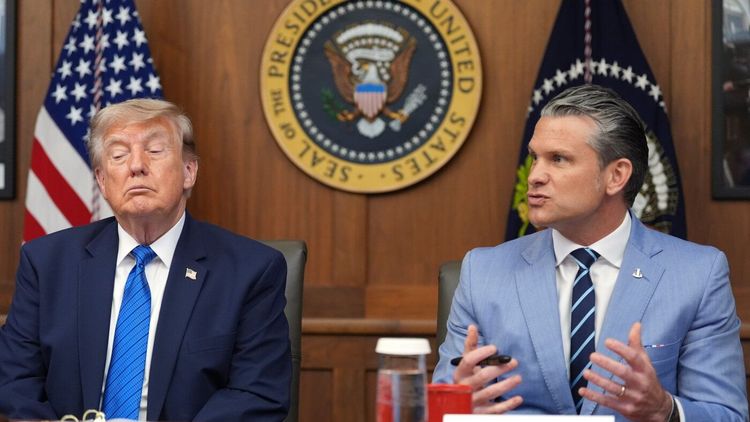
The lawmakers submitted an amicus brief in In re OpenAI, Inc. Copyright Infringement Litigation in the U.S. District Court for the Southern District of New York, according to an October 30, 2026, press release from Nadler's office.
Their challenge follows the Justice Department's September 1, 2026, intervention. According to Nadler's office, the department filed a statement of interest backing the AI companies and warned that restricting their access to copyrighted texts would threaten AI development and national security. The office also said the filing reportedly surprised the government's own copyright and patent experts.
The lawmakers wrote that "National security is not a fair use factor under the Copyright Act" and that treating it as one "would be to add to the Copyright Act a national security exception that Congress did not enact."
The litigation and the brief's signatories
The consolidated litigation includes allegations that OpenAI and Microsoft used journalism from The New York Times without permission to develop products that compete with the newspaper. According to the Wikimedia Foundation, the multidistrict proceeding brings together 12 lawsuits against OpenAI. The best-known case, The New York Times Co. v. Microsoft and OpenAI, began with the Times' 2023 lawsuit.
All three lawmakers hold ranking-member roles within the House Judiciary Committee. Raskin is the full committee's ranking member; Nadler holds that position on the Subcommittee on the Administrative State, Regulatory Reform, and Antitrust; and Johnson holds it on the Subcommittee on Courts, Intellectual Property, Artificial Intelligence, and the Internet.
Other briefs address training and licensing
The Future of Music Coalition described a new amicus brief in the OpenAI litigation as fully supporting creators. In the coalition's account, the brief recognizes the importance of fair use but argues that unlicensed training does not qualify.
The Wikimedia Foundation offered a different position in its own amicus brief, filed in the same case on October 30, 2026. It argues that using copyrighted material to train models should qualify as fair use, while retrieval-augmented generation (RAG) and similar "grounding" techniques should not. For those uses, the foundation says publishers' licensing terms should be respected.