A second national security conviction
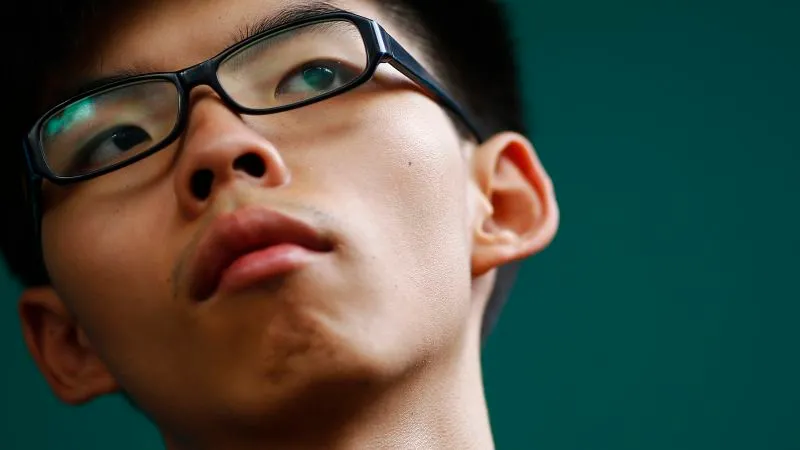
High Court Judge William Tam handed down the sentence following Wong's guilty plea in September over the 2020 sanctions campaign. Wong is already serving four years and eight months after pleading guilty in the 2024 subversion trial known as the Hong Kong 47 case. He is the only person in that group to have been charged twice under the National Security Law.
Once a teenage figurehead of Hong Kong's pro-democracy movement, Wong first went to prison at 23. By Thursday's sentencing, he had spent almost six years in jail and had marked his 30th birthday behind bars the previous month.
The law sets a prison term of three to 10 years for foreign collusion, rising to between 10 years and life when an offense is deemed to be of a "grave nature." Defense lawyer Derek Chan sought a term within the three-to-10-year range, asking the court to consider Wong's time in custody and leave him some hope.
The sanctions campaign
The prosecution's account described an international lobbying effort that began before Beijing imposed the National Security Law in 2020 and continued afterward. Wong pleaded guilty to conspiring with other activists to seek sanctions that year.
Fellow activist Nathan Law, who went into exile in 2020, was charged alongside Wong. Prosecutors alleged that the two had agreed around 2016 to pursue democratic self-determination through international lobbying.
According to prosecutors, the effort to secure sanctions from the United States and other countries involved social media campaigns and meetings with American politicians. Those politicians included former House Speaker Nancy Pelosi and Marco Rubio, then a senator and now US secretary of state.
Prosecutors said the lobbying did not stop when the security law took effect. The United States imposed sanctions on more than a dozen officials from Hong Kong and China after 2020.
Dispute over the security law
Beijing introduced the law after mass pro-democracy protests, often marked by violence, swept Hong Kong in 2019. It strengthened Beijing's control over the former British colony and brought a crackdown on dissent, closures of outspoken news outlets and the disbanding of civic groups.
The Chinese and Hong Kong governments credit the law with restoring stability. Rights groups say it has suppressed dissent and put people at risk for criticizing the government. Chinese leaders have previously described Wong and other activists as "separatists."
Responding to international criticism of Wong's prosecution in September, a Hong Kong government spokesperson said: "The lawful exercise of free speech must not be conflated with taking actions to collude with a foreign country to impose 'sanctions' to harm one's own country."
Eric Lai, a research fellow at Georgetown Center for Asian Law, offered a different assessment: "NSL charges can be repeatedly weaponized to keep a specific political prisoner in jail, if the government deems necessary."
Former Apple Daily publisher Jimmy Lai also faced foreign-collusion charges. He was convicted of collusion in December and subsequently received a 22-year prison sentence.
Documentary faces scrutiny
Wong was also the subject of official scrutiny outside the courtroom in September 2026. A pro-Beijing newspaper accused a 2017 Netflix documentary about him of "beautifying" his crimes, and Hong Kong's security bureau said the government was taking follow-up action. The film subsequently reached the top of Netflix's popular chart in Hong Kong.