Trump cuts to science advisory boards have long-lasting consequences, researchers say
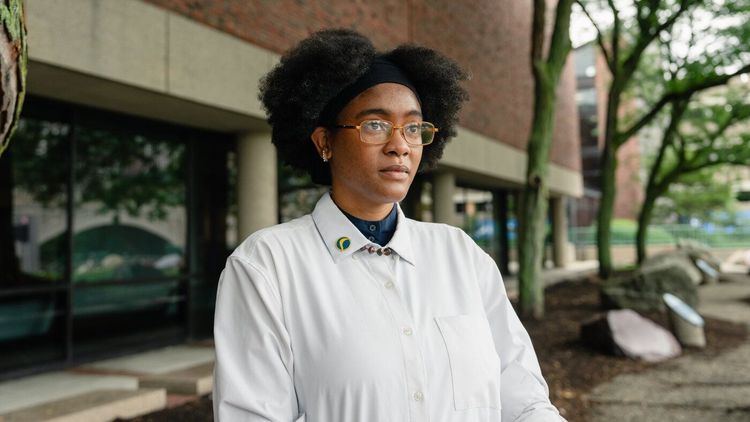
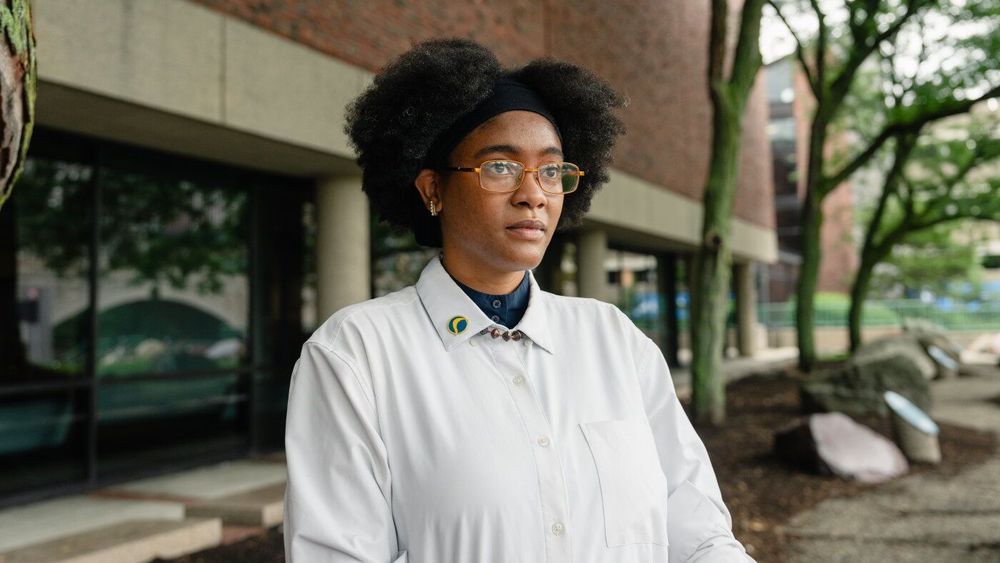
When Netia McCray joined a federal advisory committee on long COVID in 2025, she saw an opportunity to transform her personal struggle with the debilitating condition into meaningful change. Diagnosed early in the pandemic and living with persistent fatigue, heart palpitations and breathing difficulties, the 36-year-old hoped her experience could help the estimated 45 to 48 million Americans affected by the disease.
Her tenure lasted only months. An email arrived announcing the committee's immediate termination.
McCray's group is among more than 100 science-focused federal committees dissolved under the second Trump administration, according to an analysis published in the journal Nature. Public Citizen, an advocacy organization, reports that more than a quarter of healthcare-related committees have been shut down as of March this year.
The cuts have removed hundreds of experts from positions advising on critical issues ranging from infectious disease control to space exploration. Participants and advocates say the consequences will echo through federal agencies for years.
A cross-section of expertise disbanded
The long COVID committee brought together 14 specialists from fields including public health, pulmonology and critical care. Among them was Dr. Alexandra Yonts, a pediatrician at Children's National Hospital in Washington, D.C., who treats one of the few specialized clinics in the country for children with long COVID. Patients travel long distances to see her, yet treatment options remain frustratingly limited.
The committee never held a single meeting.
Decades of structured consultation
The practice of convening outside experts to advise federal agencies was formalized through the Federal Advisory Committee Act, enacted in 1972 and effective from January 1973. The law established procedures for open meetings, public involvement and reporting, ensuring that expert advice would remain objective and accessible. These committees draw members from Congress, the White House and executive agencies, typically recruiting business leaders, state and local officials, and other qualified individuals who are not full-time federal employees.
Current committees address topics from astrophysics to vaccine schedules, cancer screening intervals to asteroid deflection strategies. The Union of Concerned Scientists counts 150 terminated advisory committees at science agencies in 2025 alone.
White House officials did not respond to requests about specific terminations but stated in a release that dissolved committees were deemed "redundant, unnecessary, or ineffective."
Science advocacy groups counter that these bodies provide diverse, independent perspectives no single organization can match. "What advisory committees can do is give a diversity of viewpoints and an independence of viewpoints that no one organization will ever have," says Russ Paulsen, President and CEO of Research!America.
Real-world insights from the field
Infectious disease researcher Hilary Babcock served on the Healthcare Infection Control Practices Advisory Committee, known as HICPAC, before its termination. The 14-member body, composed of non-federal employees appointed by the Secretary of Health and Human Services, brought expertise in infectious diseases, infection prevention, healthcare epidemiology and related fields.
Babcock emphasizes that federal officials understand published research but may lack practical insight into implementing findings in actual healthcare settings. "They don't necessarily understand intuitively what it means to try to operationalize findings from literature into guidance," she says.
One pressing concern is Candida auris, a drug-resistant fungus that can survive on healthcare facility surfaces and cause deadly infections. Cases surged from approximately 48 in 2016 to 6,304 clinical cases in 2024, though the CDC notes the rate of increase has slowed since 2022. As of July 2026, 3,437 clinical cases have been reported across 27 states, with California recording 873 cases—roughly one-quarter of the national total.
The fungus spreads between patients and resists certain antifungal treatments, requiring specific disinfection protocols for eradication. Babcock worries the pathogen is not receiving adequate attention without committee oversight. "There is some sort of interim guidance around Candida auris from the CDC, but we're not getting updated guidance," she says.
Scott Roberts, an infectious disease physician at Yale who has treated Candida auris patients, fears that without federal guidance, doctors will rely on inconsistent protocols, particularly at smaller or rural facilities. "Losing a federal advisory committee on this is only going to make the problem worse," Roberts says.
Independent voices and accountability
Carrie Wolinetz, who worked with advisory committees during her years as a National Institutes of Health official, found them invaluable for policy development. "They would bring up real-world issues that I—from within government—would not necessarily have thought of," says Wolinetz, who now works in healthcare policy and advocacy outside government.
Juan Meza, a professor of applied mathematics at the University of California, Merced, recalls serving on a committee that advised Department of Energy leadership against a supercomputer investment. "The fact that we were supposed to be independent, I think gave us a certain amount of leeway to say, 'No. We've gotta go with what we think is right,'" Meza says. Leadership reluctantly followed their recommendation.
Even when recommendations go unheeded, committees create important transparency, according to Kelly Holley-Bockelmann, an astrophysics professor who served on the Astrophysics Advisory Committee before its termination. "There were a couple times where we offered expertise that was not listened to," Holley-Bockelmann says, "But nonetheless, we felt it was really important to get it down on record."
NASA characterized the astrophysics committee termination as a "restructuring," stating in a release that several committees were merged and that the agency "has remained committed to continuing to engage with the science community in a variety of ways."
Amanda Hendrix, CEO of the Planetary Science Institute and former member of the NASA Advisory Council, says the previous structure allowed space agency leaders to "hear almost directly from the community." The advisory groups historically helped set NASA priorities and pushed the agency to explain its investment decisions.
"I felt like the interactions with NASA folks at the different committee levels was very useful and important for the community," Hendrix says. "So it's really disappointing that that's all gone now."
The terminations represent the loss of what Hendrix calls a rare governmental tool for accountability and transparency. Michael Abrams, a health researcher at Public Citizen who published a report on terminated committees, describes them as connective tissue facilitating effective governance. "The beauty of FACA is that it brings brilliant minds together for issues of the day, and allows them to openly adjudicate and to prioritize with limited resources how to get to next steps," Abrams says.
For McCray, who runs a nonprofit helping high school students access STEM opportunities, the dissolution of the long COVID committee meant the end of channeling her experience into solutions. The condition affects an estimated 14 percent of Americans who have reported suffering symptoms at some point. "Something that could benefit so many individuals like myself and my community," she says of the work she had hoped to contribute.