Transparency divide emerges as Nepal reports flood casualties while China restricts information
A stark information divide has emerged in the aftermath of catastrophic flash floods that struck the Nepal-China border on August 26, 2026. While Nepalese authorities have maintained transparency in identifying victims and updating casualty figures, Chinese restrictions on media access and digital censorship have left critical questions unanswered about the disaster's true toll in Tibet.
The floods were triggered by a glacier collapse on Langtang Lirung mountain at 5,200 meters altitude, registering as a magnitude 5.2 seismic event detected by seismometers worldwide at 02:52 UTC on August 26. The resulting deluge struck along a 72-kilometer stretch of the Trishuli River, with floodwaters rising by roughly 30 feet in 30 minutes downstream and reaching 230 feet above normal levels in mountain gorges. The torrent destroyed the strategically important Gyirong checkpoint on the China-Nepal border.
Contrasting casualty reports
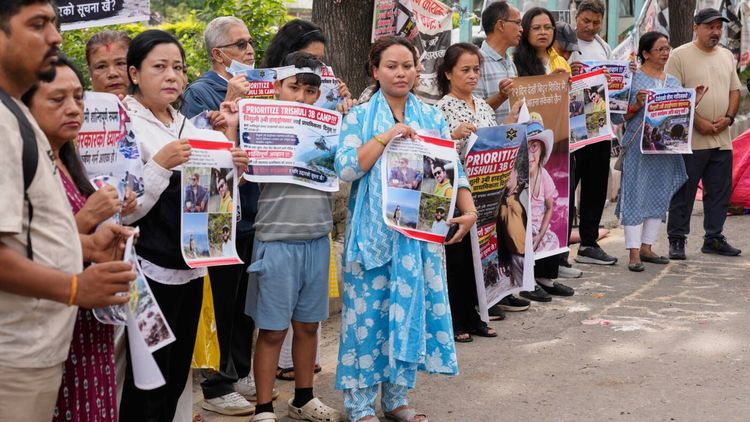
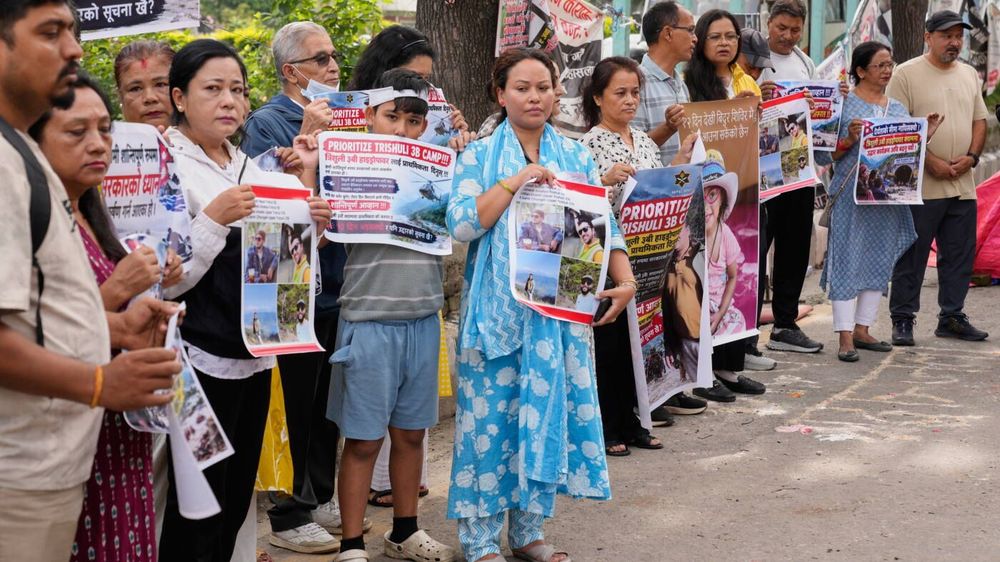
Nepal has reported over 1,300 dead and nearly 5,000 missing, with nearly 1.6 million people affected according to the National Disaster Risk Reduction and Management Authority. Among the missing are over 900 workers on hydropower projects. In contrast, China reports over 40 dead and more than 500 missing. Shortly after the disaster, Nepalese authorities released detailed lists of names, ages and nationalities of hundreds of missing foreigners. Chinese authorities took five days to disclose that 261 missing foreigners come from 23 countries.
The Gyirong border crossing accounted for 30% of all Nepal-China trade before the disaster, and more than 100,000 people had crossed in the first half of 2026, with significant daily traffic related to commerce and pilgrimage tours to Mount Kailash. This explains why so many foreign nationals were caught in the floods.
Restricted access to Tibet
Rights groups monitoring the disaster relief say the lack of independent access to Gyirong County in Tibet is striking.
"This is in contrast to the Nepal side of the border where there was immediate access given for journalists, for other observers, for international humanitarian relief organizations,"said Ryan Fioresi of the International Campaign for Tibet.
Tibet Autonomous Region is the only territory in the People's Republic of China where foreign visitors, including diplomats, journalists, researchers and tourists, face extraordinary access restrictions requiring special permits beyond Chinese visas. Foreign journalists and diplomats cannot apply for Tibet Travel Permits for tourism purposes and must seek approval through the China Foreign Affairs Office. According to the Foreign Correspondents' Club of China, more than a dozen foreign correspondents applied for permission to enter Tibet to cover the disaster aftermath, but none has been approved as of early September. Human Rights Watch reports that independent foreign media access to Tibet has been denied since 2007.
The U.S. Embassy in Beijing reported that Chinese traffic authorities closed all arterial roads into Gyirong County for a minimum of seven days after the floods, with roads, electrical power and cellular service out of service, preventing travelers from contacting family members.
Media coverage differences
To report on rescue efforts in Nepal, international media were able to check in with aid agencies on the ground and speak with rescue pilots. Nepal's police, disaster management authority and tourism board have provided regular updates on social media. In China, however, the government restricts foreign journalists from entering the politically sensitive region.
It took more than a week of repeated requests from multiple international media outlets before the Chinese government allowed foreign journalists in Tibet, and access was limited to a small number of outlets in a carefully arranged visit.
"Xinhua and CCTV have total information dominance,"said David Bandurski in Taipei with the China Media Project, which monitors news censorship in China. These outlets are expected to "guide public opinion," he said, adding that controls have tightened to "unprecedented" levels over the last decade.
Impact on affected communities
The International Campaign for Tibet claims at least 300 homes were destroyed in Gyirong County. Fioresi said Tibetans in the worst affected areas were relocated to "tightly controlled holding areas" where "their communications with the outside world have been extremely limited and curtailed," hampering local rescue efforts.
China's foreign ministry spokesperson Guo Jiakun denied China was understating casualty numbers, saying China has been "open, transparent and timely in information release." He denied that China deletes videos and first-hand accounts online, though many videos circulating widely after the floods were actively deleted, according to Bandurski. Chinese police recently penalized 10 people for spreading what they called misinformation about the floods.
Rose Luqiu, an associate professor of journalism at Hong Kong Baptist University who studies Chinese propaganda and censorship, noted that commercial outlets like the Beijing News and Southern Weekly attempted limited reporting.
"They tried to interview tourists. Not victims or those directly impacted in the local villages but they're trying to provide some more information,"she said.
Shift from past disaster coverage
This contrasts sharply with the 2008 Sichuan earthquake, when various Chinese media outlets sent hundreds of journalists to the scene "in direct violation of an explicit ban from the central propaganda department of the Communist Party," Bandurski said. This time, the Southern Metropolis Daily, known for investigative journalism, ran only one front page cover on the floods in the days after the disaster—an article reprinted from the official Xinhua news agency.
Chinese state media have sent journalists with rescue teams, sometimes hiking overnight at high altitudes to reach the worst affected area at the Gyirong-Rasuwa border crossing. However, their coverage focuses primarily on rescue teams, logistics and government response rather than victims and affected communities.
History and ongoing risk
The region's vulnerability to such disasters is well documented. A similar glacial lake outburst flood occurred on July 8, 2025, destroying the Friendship Bridge at the border crossing and killing nine people. After that disaster, Chinese authorities in Gyirong County updated emergency plans, built flood walls, dikes and channels, and trained officials in glacial lake defense. Despite these preventive measures, the 2026 disaster proved far more devastating.
The International Centre for Integrated Mountain Development and the United Nations Development Programme have identified 3,624 glacial lakes across Nepal, India and Tibet, with 47 classified as potentially dangerous and at risk of bursting, including 21 in Nepal. The extreme force of the August floods carried victims' bodies 240 kilometers downstream into neighboring India, requiring flood warnings for communities along rivers in multiple Nepali districts including Rasuwa, Nuwakot, Dhading, Gorkha and Chitwan.