California's announcement and its legal limits
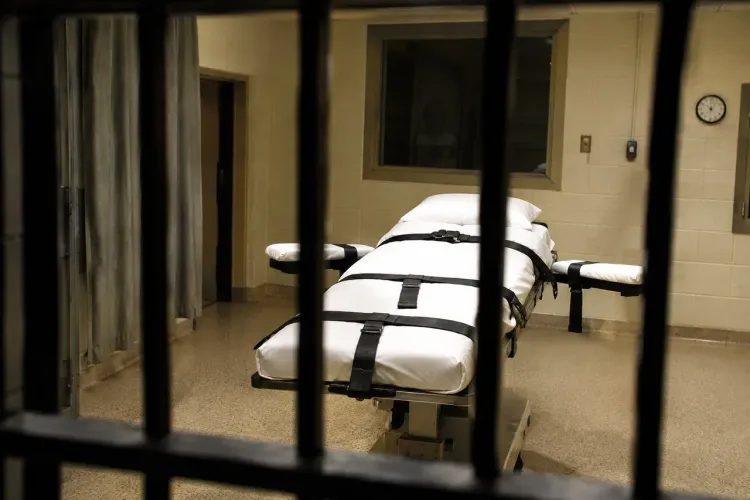
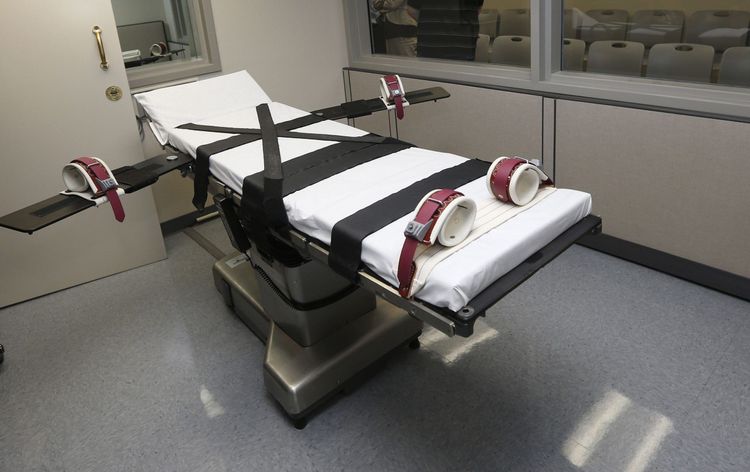
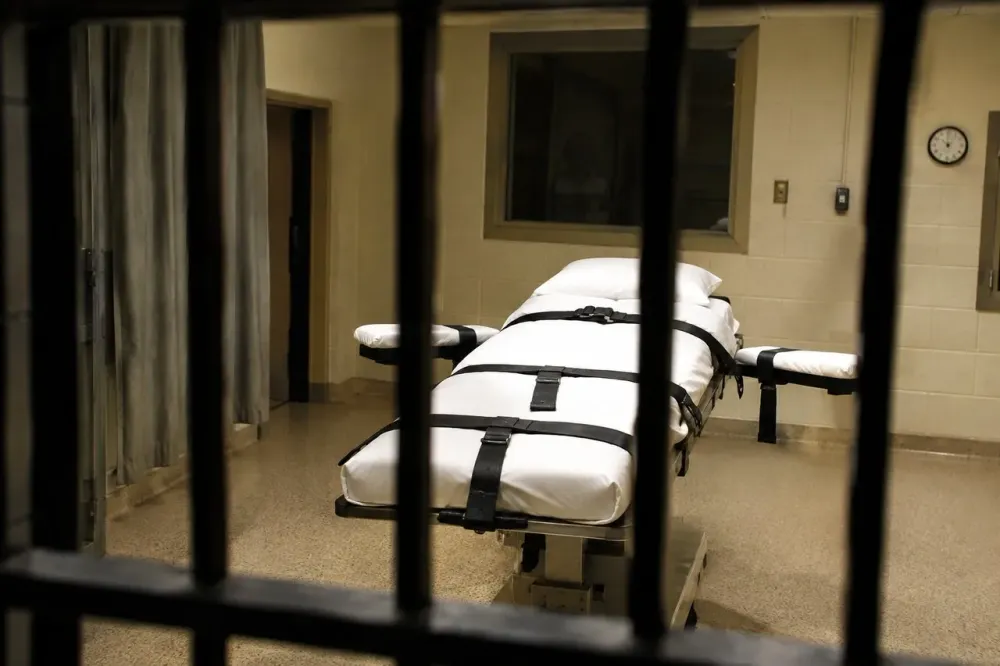
Newsom's decision would change the sentences of prisoners whose executions have already been on hold for years. California's last execution was in 2006, and Newsom has maintained a moratorium since 2019. That moratorium stopped executions but left the death sentences intact.
Under California's constitution, the governor cannot act alone in 382 of the cases, roughly 70% of the total. Those prisoners have more than one felony conviction, so their commutations require review and approval by the state Supreme Court. The remaining sentences can be commuted through Newsom's clemency authority alone.
"I am taking this action because I firmly believe that execution with state approval is incompatible with California's values, undermines the foundations of our legal system, and diminishes us all," Newsom wrote in an open letter, according to the EFE news agency.
The New York Times characterized the announcement as the largest mass commutation of death sentences in modern American history. The previous comparison was Illinois Gov. George Ryan's commutation of 167 death sentences in 2003.
Support and opposition in California
The American Civil Liberties Union welcomed Newsom's decision as "a historic step towards ending the death penalty in California and across the country." Opponents included the Criminal Justice Legal Foundation, Crime Survivors and the California District Attorneys Association, which argued that the move would hurt victims' families and undermine decisions by voters and the courts.
Los Angeles County District Attorney Nathan Hochman pointed to two ballot initiatives in which Californians rejected abolishing capital punishment and chose to retain it for the most serious crimes. He said his office would continue reviewing every case eligible for the death penalty.
Figures from the Death Penalty Information Center show that California has executed 13 people since 1976. The state imposed five death sentences in 2025, compared with 42 in 1999. As of April 2026, defendants of color accounted for 68% of those under a death sentence in California.
Florida reaches 19 executions
Florida accounted for 19 of the 35 U.S. executions carried out in 2026 through November 5, according to EFE. Its execution of Jesse Guardado tied the state's annual record, set in 2025 under Republican Gov. Ron DeSantis.
Guardado, 64, was pronounced dead at 6:13 p.m. local time at the state prison in Starke. His death sentence stemmed from the 2004 stabbing death of Jackie Malone, 75, who had helped him secure work and housing after he left prison. Before receiving the lethal injection, he apologized to her family and his own.
The Associated Press reported that a federal appeals court concluded in 2024 that Guardado had received a "full and fair" hearing in the penalty phase of his case. On the afternoon of his execution, the U.S. Supreme Court rejected his final appeal without comment.
DeSantis, whose term ends in January 2027, had signed warrants for two additional executions later in 2026, according to the Associated Press. If carried out, they would push Florida beyond its record of 19.
Indiana executes Weisheit after clemency and court requests fail
The day's first execution took place shortly after midnight at Indiana State Prison. Jeffrey Weisheit was pronounced dead at 12:45 a.m. local time, according to EFE, for setting a fire in 2010 that killed his girlfriend's children, ages 8 and 5.
Weisheit had acknowledged killing the children in the Evansville-area house fire, the Associated Press reported. Gov. Mike Braun rejected his request to replace the death sentence with life imprisonment.
The Indiana Supreme Court also declined to intervene the night before the execution. Two of its five justices favored a 10-day delay to obtain more information about the lethal-injection drugs, which came from a pharmacy facing a disciplinary hearing.
Alabama executes Taylor following dispute over method
Alabama pronounced Michael Taylor, 54, dead at 6:10 p.m. local time at the William C. Holman Correctional Facility in Atmore. He had been sentenced to death for killing Ivan Moore, 83, and Lucille Moore, 79, during a 1991 robbery at their home.
Taylor was 19 when he beat the couple to death with a metal bar in Gadsden, Alabama. According to the Associated Press, police arrested him with the victims' Cadillac in Birmingham, an hour away.
His lawyers sought a commutation to life imprisonment and challenged the switch in execution methods. Taylor had previously selected nitrogen, but a judge ruled that procedure unconstitutional, and the state used lethal injection instead.
Death-penalty opponents also asked Gov. Kay Ivey to reduce his sentence, citing his youth and immaturity at the time of the killings. She declined.
Execution methods remain under scrutiny
November 5 marked the second day in 2026 on which three people were executed in the United States. Before this year, the most recent such day was in January 2010, according to EFE.
The executions and California's announcement came amid disputes over execution methods and conditions. EFE reported that Christa Pike survived two doses of pentobarbital during a failed execution in Tennessee. Separately, a planned live broadcast of the firing-squad execution of soldier Nidal Malik Hasan was canceled. Both cases have intensified debate over how the United States carries out the death penalty.