Fear rises, but the approach stays long term
CNN's Fear & Greed Index has hovered in the "fear" or "extreme fear" categories for most of the past two months. The gauge draws on seven indicators, among them market momentum, stock price strength and volatility.
Investing News Network reported that the index fell from 46 to 18 in the week ending October 16, 2026. Through October 20, its average for 201 trading days was 43.78, with readings ranging from 14 to 71. It had not reached extreme greed on any trading day this year.
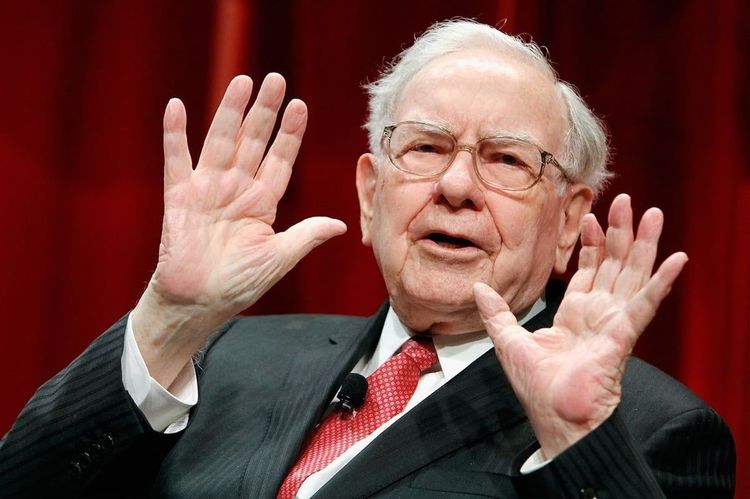
Buffett's response to the temptation to stay out of the market was captured in a 2016 CNBC interview: "The money is made in investments by investing, and by owning good companies for long periods of time." That approach emphasizes participation and patience, not chasing whichever growth stock is attracting the most attention.
The qualities behind that approach include reliable financial results, a durable competitive advantage, capable and honest management, and a reasonable purchase price. But Buffett has not suggested that most investors should evaluate and select businesses themselves.
An index fund instead of individual stock picks
In a 2017 CNBC interview, Buffett said, "The trick is not to pick the right company. The trick is to essentially buy all the big companies through the S&P 500 and to do it consistently."
Funds such as the Vanguard S&P 500 ETF and the State Street SPDR Portfolio S&P 500 ETF provide that route without requiring investors to assess each company's management. Within the index, companies that maintain large market capitalizations receive greater weight; those that lose ground can shrink in weight and eventually be replaced.
Patience also comes with a qualification. In his 1989 letter to Berkshire Hathaway shareholders, Buffett described his "favorite holding period" as "forever," but only for "outstanding businesses with outstanding managements." He was not prescribing indefinite ownership of every stock.
Many investors instead buy following sharp price increases and sell after declines. That pattern runs counter to Buffett's approach and helps explain why the average investor falls short of the market.
The historical case for staying invested
Across 20-year holding periods, the S&P 500 and its predecessor indexes have consistently produced positive total returns. Purchases immediately before the crashes of 1929, 2000 and 2008 also eventually became profitable for investors who held long enough.
Research from J.P. Morgan Asset Management illustrates the cost of missing strong trading sessions. For the 20 years ending February 28, 2025, an S&P 500 portfolio that remained fully invested earned an annualized 10.60%. Missing the 10 best days reduced that figure to 6.37%; missing the best 20 brought it down to 3.69%, and missing the best 30 left 1.53%.
The strongest sessions were often close to the weakest ones: seven of the 10 best days fell within 15 days of the 10 worst. That proximity is an important part of the study's evidence against trying to time an exit and return.
Berkshire's results provide another long-term example. Its cumulative gain from 1964 through 2024 was 5,502,284%. CNBC separately reported a compounded annual shareholder return of 19.7% during Buffett's tenure, almost twice the S&P 500's return.
Berkshire's cash holdings and leadership transition
Buffett's emphasis on long-term ownership was not an instruction to keep every dollar in stocks at all times. During several of his last quarters leading Berkshire, he sold more stocks than he bought. A shortage of attractively priced opportunities also led him to build a substantial cash reserve.
At the end of 2025, Berkshire held $373.3 billion in cash and cash equivalents, which Yahoo Finance described as the biggest corporate cash hoard in American business history. The balance reached roughly $397 billion in the first quarter of 2026 before falling to $365.5 billion by June 30 as Greg Abel, the new CEO, began putting capital to work.
Abel succeeded Buffett as CEO on January 1, 2026. Buffett later relinquished the chairmanship on September 18, becoming chairman emeritus while retaining his board seat. Under Berkshire's long-standing succession plan, his son Howard Buffett, a director since 1993, became non-executive chairman.
Buffett nevertheless continued to influence investment decisions after leaving the CEO role. In July, he told CNBC that he had driven Berkshire's investment in Alphabet. Following a $10 billion private stock purchase in June, Alphabet ranked third among Berkshire's stock holdings, behind Apple and American Express.
Berkshire's long record has not prevented periods of weaker performance. As of September 18, its shares had gained just 1% in 2026, compared with a rise of more than 11% for the S&P 500. CNBC cited higher oil prices and investors' preference for faster-growing parts of the market as partial explanations.
For investors using an S&P 500 fund, Buffett's 2017 CNBC recommendation was explicit: "Keep buying it [the S&P 500] through thick and thin -- and especially through thin."