Ethiopia and Tigray edge toward renewed conflict as fragile peace unravels
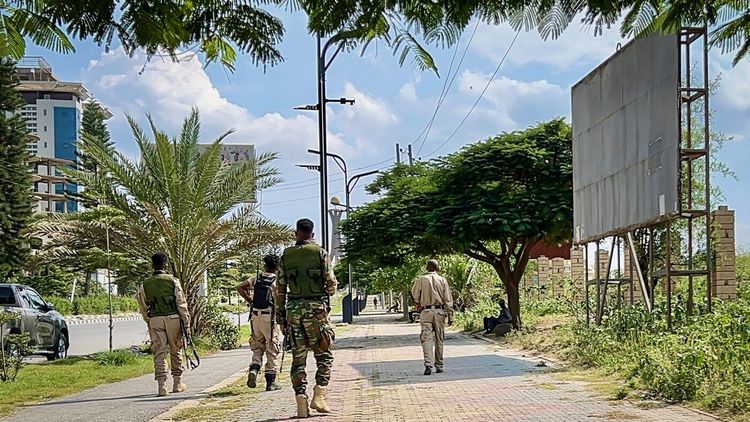
Ethiopia appears to be sliding back toward large-scale conflict in its northern Tigray region, with government forces and Tigrayan authorities trading accusations of launching new military offensives that threaten to shatter a fragile peace established less than four years ago.
Tigrayan forces seized control of airports across the region this week, prompting Ethiopian Airlines to suspend all flights to Tigray. Fighting has now spread beyond the region into neighboring Afar and Amhara, according to both Ethiopian officials and Tigrayan leaders.
Getachew Reda, an adviser to Prime Minister Abiy Ahmed, accused Tigrayan forces of mounting an "all-out offensive" against federal positions. The Tigray People's Liberation Front, which controls the region, maintains its forces acted defensively in response to attacks by government troops and recent drone strikes targeting TPLF officials.
The escalation follows months of deteriorating relations over territorial disputes, political authority, and the implementation of the Pretoria Agreement, the peace deal signed on November 2, 2022, in South Africa's capital. That agreement, reached after ten days of talks mediated by the African Union with backing from the United States, United Nations, and regional bodies, called for the disarmament of Tigrayan forces within 30 days, restoration of federal authority, and unfettered humanitarian access. A follow-up implementation agreement signed in Nairobi on November 12, 2022, outlined specific modalities including the withdrawal of Eritrean and Amhara forces from Tigray.
According to the Armed Conflict Location and Event Data Project, Ethiopian forces have conducted multiple drone strikes in recent months targeting Tigrayan positions and TPLF officials, with attacks concentrated in the capital Mekelle and southern Tigray.
The TPLF announced Sunday it had formed an alliance with six other armed and political groups seeking to remove Prime Minister Abiy Ahmed's government and establish a transitional administration in Ethiopia.
The previous war between federal forces and the TPLF, which raged from 2020 to 2022, ranks among the deadliest conflicts in recent global history. Estimates of the death toll vary significantly, with peer-reviewed studies documenting over 102,000 deaths and the Uppsala Conflict Data Program recording more than 100,000 battle-related fatalities in 2022 alone. When accounting for indirect deaths from conflict-induced famine and lack of healthcare, some estimates range from 300,000 to 600,000 lives lost. The humanitarian catastrophe left approximately 13 million people requiring food assistance.
Complex regional dynamics
Tigray, Ethiopia's northernmost region bordering Eritrea, is home to most of the country's Tigrayan population. Though Tigrayans represent roughly 6 percent of Ethiopia's approximately 139 million people, they have wielded considerable influence in national politics. Tigrayan forces helped topple a military regime in 1991, and TPLF leader Meles Zenawi governed Ethiopia until his death in 2012.
Tensions between the federal government and Tigray intensified in May when the TPLF reasserted control over the regional government after years of administration under an interim authority created by the peace agreement.
The situation is further complicated by Eritrea's shifting allegiances. During the 2020-2022 war, Eritrean forces fought alongside Ethiopian federal troops and Amhara regional forces against the TPLF. However, Eritrea was not party to the Pretoria Agreement, and despite provisions requiring withdrawal, Eritrean forces never fully left northern territories previously controlled by Tigray. Relations between Ethiopia and Eritrea have since deteriorated, with some reports suggesting Eritrea now backs TPLF factions.
Ethiopia has been landlocked since Eritrea gained independence in 1993, making port access a persistent source of tension between the two nations.
International response
The renewed fighting prompted urgent diplomatic appeals. African Union Commission Chairperson Mahmoud Ali Youssouf called for "immediate de-escalation" and urged both parties to resume negotiations. Former Nigerian president Olusegun Obasanjo, who mediated the original Pretoria talks, has been mentioned as a potential facilitator for renewed dialogue.
Ervin J. Massinga, the United States ambassador to Ethiopia, condemned what he described as the TPLF's "poor decision to launch a large-scale offensive," characterizing it as an "unwinnable fight."
The International Crisis Group's Horn of Africa director, Alan Boswell, warned that the federal government now faces a critical decision point.
The very big question next is how will the federal government respond? With total all out war? Or will we see a more measured response that tries to contain this and prevent a return to total war in Tigray?
The crisis unfolds as the broader Horn of Africa region grapples with multiple conflicts, including a three-year war in neighboring Sudan. Ethiopia itself continues to face fighting in the Amhara and Oromia regions. Boswell cautioned that the conflict could easily expand beyond Tigray's borders, particularly given the region's proximity to Eritrea, raising the prospect of direct confrontation between Ethiopia and its northern neighbor.