
O Be Wise
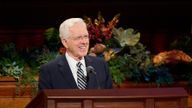
Addressing his congregation with what he described as a sense of duty rather than celebration, a religious leader issued an unequivocal condemnation of gambling, calling the practice morally wrong and destructive to spiritual well-being. Drawing a parallel to former President Calvin Coolidge's terse summary of a sermon about sin—"He was against it"—the speaker declared his position equally clear.
The Digital Transformation of Gambling
The warning comes as gambling has undergone a dramatic transformation in recent years. What once required a trip to a casino, racetrack, or lottery kiosk has become an activity available continuously and privately through smartphones. This shift has fueled an explosion in participation, with worldwide surveys indicating that 46 percent of adults—approximately 2.3 billion people—gambled in the past year. The global gambling industry generated an estimated $758 billion in revenue in 2025, money that represents customers' collective losses.
The growth has been driven primarily by three online markets: sports betting on scores and statistics, online casino games such as slots and poker, and prediction markets that allow wagers on virtually any outcome, from elections to natural disasters. Following the Supreme Court's 2018 decision to overturn the Professional and Amateur Sports Protection Act, more than 35 U.S. states have legalized sports betting in some form. Mobile devices now account for approximately 78 to 80 percent of online sports betting traffic, with mobile gambling representing about 53 percent of all online gambling revenue. Sports betting alone controls roughly 52 percent of all online gambling wagers, with live in-play betting—which occurs during games—representing up to 65 percent of the sports betting market.
Young People at Disproportionate Risk
Young people face disproportionate risk, the speaker emphasized. Among teenagers and young adults, impulsivity and peer influence combine with early exposure, easy access, and aggressive marketing to create particular vulnerability. In the United States, 36 percent of boys aged 11 to 17 reported gambling last year, rising from 32 percent at age 11 to 49 percent at age 17. The demographic most affected by gambling addiction is young men ages 18 to 24, who experience addiction at a rate of 7.1 percent. Nearly half of all men ages 18 to 49 now have at least one online sportsbook account.
Research shows youth have problem gambling rates several times higher than adults, with studies indicating 10 to 15 percent of young people have significant gambling problems compared to fewer than 4 percent of adults. Young people are approximately four times more at risk for developing pathological gambling than their adult counterparts. The National Council on Problem Gambling estimated that the national risk for gambling addiction increased by nearly one-third between 2018 and 2021, with a significant percentage of the rise attributable to men between 18 and 24.
The speaker quoted a journalist who conducted a monthslong experiment with sports gambling, noting that while only 2 to 5 percent of gamblers develop compulsive behaviors,
that small percentage becomes a very large number when tens of millions of people suddenly have casinos in their pockets.The journalist concluded that society is making "an enormously risky bet" that the social ills historically associated with gambling can somehow be kept in check this time.
Prediction Markets and Regulatory Concerns
Prediction markets present additional concerns. Unlike traditional sports betting, which requires participants to be 21 in most states, these platforms—regulated by the federal Commodity Futures Trading Commission rather than state gambling authorities—allow 18-year-olds to participate. Platforms like Kalshi and Polymarket can operate in all 50 states under federal oversight, a regulatory structure that has prompted lawsuits from multiple states including Kentucky, Connecticut, and Washington, which argue these platforms constitute illegal gambling that should fall under state regulation.
The financial stakes are substantial. U.S. commercial gaming revenue reached $72.04 billion in 2024, with sports betting generating approximately $15 billion and online casino-style gaming producing nearly $10 billion with annual growth above 28 percent.
The Moral Problem at the Heart of Gambling
Beyond the statistics, the speaker focused on what he called the central moral problem: gambling is built on the desire to obtain something for nothing, with any gain necessarily coming at others' expense.
It's hard to reconcile that with the commandment to love our neighbor as ourselves,he stated. The practice leads people away from what he termed "the giving path of Christ" and toward "the taking path of the adversary."
Invoking the Apostle Paul's teaching about avoiding actions that might lead weaker believers into temptation, the speaker urged those who might consider themselves strong enough to gamble casually to abstain anyway.
Since your recreational gambling may lead a weaker brother or sister into temptation, just don't do it. Every soul is precious.
A Call to Righteousness
The address concluded with a plea to use the time and resources that might otherwise go to gambling for productive pursuits instead. Quoting scripture, the speaker called on listeners to "be anxiously engaged in a good cause" and "bring to pass much righteousness." He emphasized that a life well-lived involves contributing to others' well-being, supporting work rather than idle pursuits, and doing better without requiring others to do worse.
"I pray that you will not treat gambling lightly," he concluded, ending with words from the prophet Jacob:
O be wise; what can I say more?