Brazil's Presidential Race Hinges on Beef Prices and Economic Anxiety
RIO DE JANEIRO — When Brazilians cast their ballots in Sunday's presidential election, they won't just be choosing between competing visions on security, foreign policy, and the environment. They'll also be rendering a verdict on their ability to afford life's essentials—and in this beef-loving nation, few indicators matter more than the price of picanha.
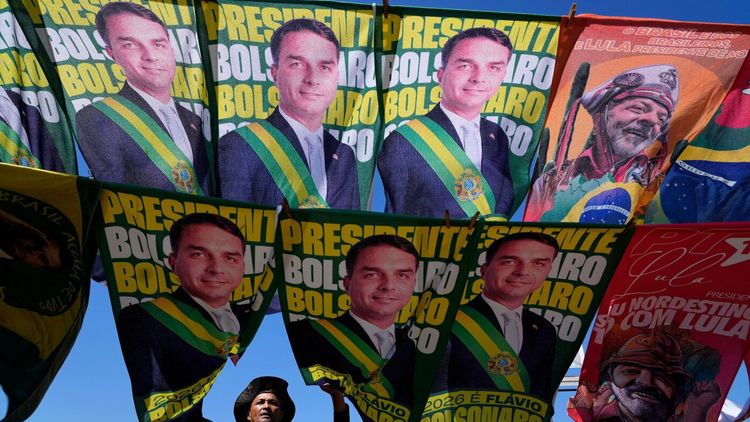
The prized top sirloin cap steak has become a barometer of economic prosperity since President Luiz Inácio Lula da Silva promised four years ago that Brazilians would once again afford the cut if he took office. Now seeking reelection in what polls suggest is a tight race against Senator Flávio Bolsonaro, Lula faces voters grappling with a disconnect between official economic data and their daily financial struggles.
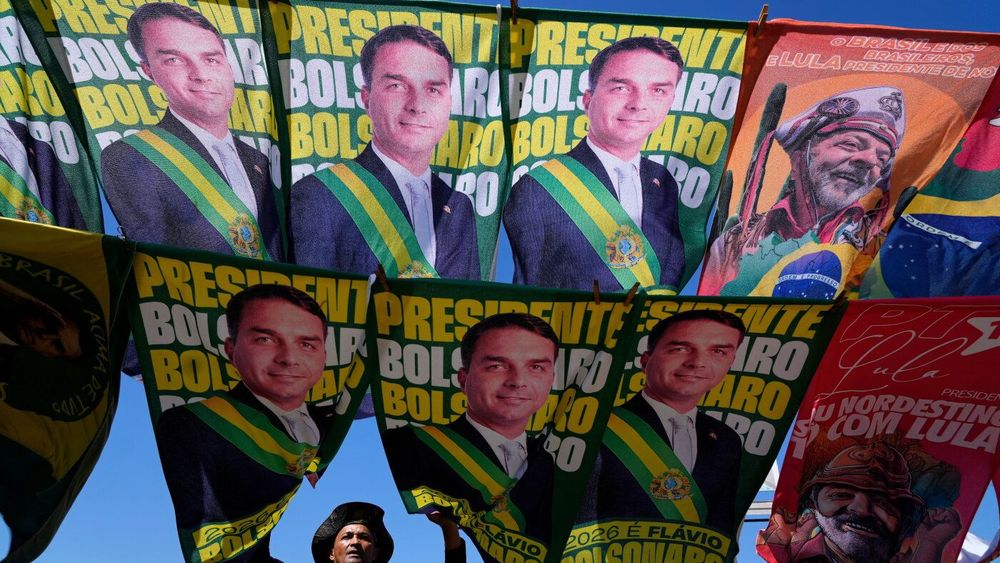
Bolsonaro, 45, has served as a federal senator for Rio de Janeiro since 2019 and has never held executive office. He became his party's standard-bearer after his father, former far-right President Jair Bolsonaro, was convicted by the Supreme Federal Court for attempting a coup d'état and arrested in August 2025. The elder Bolsonaro is currently serving a 27-year prison sentence.
Recent polling shows only 10 percent of Brazilians feel their income has grown faster than living costs over the past year—a perception that reflects the financial pressure many households face despite economic growth during Lula's tenure.
The Picanha Problem
Marcella Pirozzi, 44, co-owner of a Rio de Janeiro barbecue catering company, has adjusted her business strategy around Brazil's economic reality. She now only attempts to sell picanha in wealthy neighborhoods, where clients can afford premium cuts.
"We don't get hired to cater events very often due to meat prices," Pirozzi explained. In working-class areas, customers have become "more conservative" with their spending.
Arthur Guedes, 37, who runs a butcher shop on Rio's north side, has similarly scaled back picanha expectations. Instead, he focuses on more accessible products like hamburger patties—a shift that reflects broader affordability concerns among his working-class clientele.
Brazil is the world's largest beef exporter, shipping 3.01 million tonnes in 2023 from a national cattle herd of 238.62 million head. Yet domestic consumers increasingly struggle to afford the cuts that once symbolized middle-class prosperity.
Economic Growth Meets Debt Crisis
After Lula took office, public spending fueled accelerated economic growth, though momentum has recently slowed. During his first three years in office, average wages outpaced inflation—a statistic that should signal economic health.
But household finances tell a more troubling story. By July 2026, a record 82 percent of Brazilian households carried some form of debt, with credit cards accounting for more than 85 percent of that burden. The debt crisis hits hardest among lower-income families, with 84.9 percent of households earning up to three minimum wages reporting outstanding debt, compared to 72 percent among higher-earning households.
Brazilians are devoting an ever-larger share of income to debt service. In April 2026, households spent 29.7 percent of their income on non-mortgage debt payments—up 1.9 percentage points year-over-year. This burden reflects punishing interest rates, with unsecured credit carrying an average annual rate of 61.5 percent, alongside factors including a boom in sports gambling and easy access to credit lines.
Laura Carvalho, an economist at the University of São Paulo, argues Brazil is experiencing what Americans call a "vibecession"—an economy not technically in recession but feeling unaffordable to ordinary citizens.
"People look at the price increase and they blame whoever is in government," Carvalho said, noting the gap between economic indicators and public perception may stem from mental comparisons to Lula's earlier presidency in the 2000s, when Brazil's economy boomed dramatically and many families could afford refrigerators and air travel for the first time.
Today's economy faces price shocks absent during that earlier era: the pandemic, the war in Ukraine, and escalating Middle East tensions. In July 2026, the United States imposed 25 percent tariffs on many Brazilian goods under Section 301 of the Trade Act—a move that puzzled observers given the U.S. trade surplus with Brazil exceeded $14 billion in 2025. The tariffs exempted key consumer staples including coffee and beef.
Competing Economic Visions
Bolsonaro has seized on affordability concerns, publishing a supermarket video where he denounces high prices—making sure to name-check picanha. However, he has offered limited detail about his own economic proposals beyond broad arguments that cutting taxes and government spending will boost growth. One of his top advisers has praised the policies of libertarian Argentine President Javier Milei, whose programs have reduced inflation but increased poverty.
Lula, meanwhile, has downplayed concerns about Brazil's national debt sustainability. In recent days, he announced measures meant to address household indebtedness, including a debt restructuring program and a ban on online betting.
If no candidate receives a majority of valid votes Sunday, a runoff election will be held on October 25.
Guedes, the butcher shop owner, remains undecided just days before voting begins. "I don't see clear strategies from the candidates for how to improve the country," he said.
Pirozzi has made her choice. "I'm ready for a change," she said, confirming she will vote for Bolsonaro.
Carvalho notes that Brazil's economic anxieties reflect a global pattern. "You have incumbents everywhere that are suffering the effects of the price increases of the different shocks," she said—a reminder that the question facing Brazilian voters Sunday extends far beyond their borders: In uncertain economic times, who gets blamed, and who offers credible solutions?