Academic standards and a broader mission
"Work is mission. Work is purpose," Zuschlag said. "Work is restorative for me."
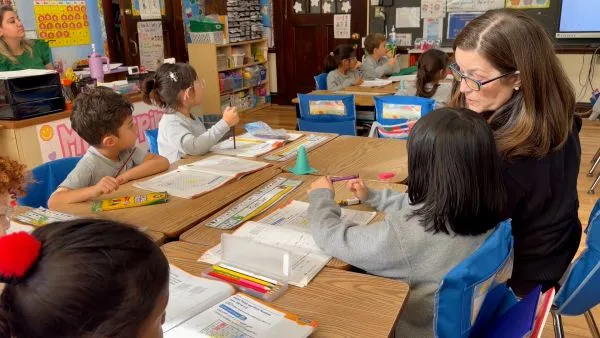
Cancer has not changed the expectations she sets for the academy's 338 students, from nursery through eighth grade. She describes her approach as running a tight ship, with an emphasis on academic achievement, kindness and character. The school reports 100% proficiency on key state tests, but Zuschlag places citizenship at the center of its work.
"We are an academic institution, but our primary mission is growing children into good citizens," she said.
The school dates to September 1928, when it opened under pastor Rev. Joseph R. McLaughlin with 211 pupils in the first five grades. Construction had begun that January 5. A history published by the Sisters, Servants of the Immaculate Heart of Mary, the congregation that originally staffed the school, records enrollment reaching an over-capacity peak of 859 in the 1955-1956 school year.
That history also describes an ethnically and culturally diverse student body, including many children whose parents work at the United Nations in New York City.
Treatment and repeated diagnoses
Zuschlag received her first breast cancer diagnosis in 2011. Five distinct re-diagnoses and multiple treatments have followed, as the disease spread to her bones and spine.
Earlier treatments caused her to develop Horner syndrome, a rare neurological condition involving damage to the sympathetic nerve pathway connecting the brain with the eye and face on one side. According to Mayo Clinic, typical signs include a smaller pupil, a drooping eyelid and reduced sweating on the affected side of the face. There is no treatment specifically for the syndrome, though addressing its underlying cause may restore nerve function.
She now takes oral chemotherapy. Among its side effects is hand-foot syndrome, which affects circulation in the extremities and leaves her skin severely dry, painful and cracked.
"When you are an advanced cancer patient, you continue to be a cancer patient," Zuschlag said. "There is no cure, but there is maintaining within the disease and thriving within the disease. That's very different than a diagnosis years ago, and it's because of research and how far science has come."
Breast cancer has five main stages, from zero through four. Zuschlag uses her own description, "past Stage 4," to convey that her disease has spread to multiple sites, including her bones. She noted that "people who are in the battle don't really use those terminologies anymore."
"My doctors don't get overwhelmed, but as a patient, you do," she said. "I've learned over five re-diagnoses that (a new one) doesn't automatically mean time is up."
"When it appears again, it's humbling. Then you get back on your horse and keep working."
The national picture
Her experience comes into focus as Breast Cancer Awareness Month draws to a close. Breast cancer is the most common cancer among women worldwide. The Breast Cancer Research Foundation estimates 324,580 U.S. diagnoses annually, including approximately 321,910 women and 2,670 men with invasive breast cancer.
The National Cancer Institute estimates that metastatic disease eventually develops in about 20% to 30% of women initially diagnosed with early-stage breast cancer. In the United States, 5% to 6% of women newly diagnosed with breast cancer already have de novo metastatic, or stage IV, disease when it is detected.
For U.S. women with metastatic breast cancer, the institute reports a five-year relative survival rate of 31%.
The children who keep her going
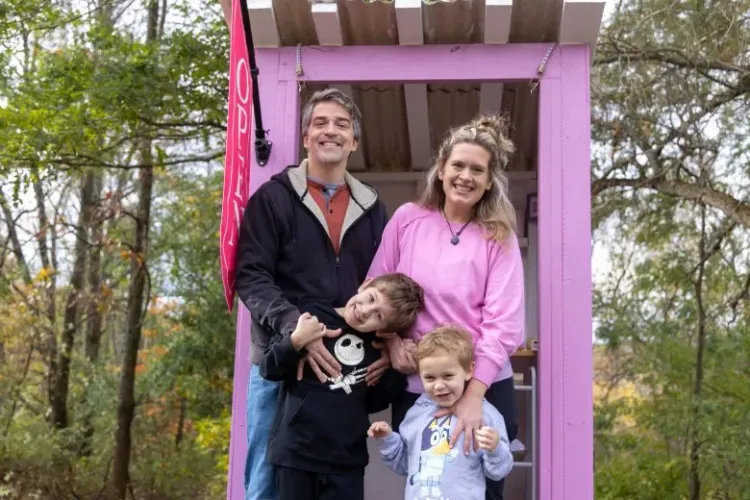
Zuschlag says her motivation comes from what she can give the children who depend on her: her own three children and the 338 students at the academy. Rather than centering her prayers on prolonging her life, she asks that those who need her be cared for.
"It was just really 'make sure people who need me most will be OK, if it is my time to be called,'" she said. "So, I am glad that it hasn't been called yet."