Teen Awakens During Her Own Funeral
A 15-year-old girl from rural Guatemala startled mourners when she regained consciousness and sat up inside her casket during her own funeral, hours after her father had declared her dead without medical confirmation.
Yuleidy Ixcotoyac was traveling with her father, Abraham, an evangelical pastor, to an emergency medical center on the morning of Saturday, October 10, when she suddenly lost consciousness in their car. Abraham pulled over immediately and checked for breathing and pulse, concluding that his daughter had died.
"I pulled over, parked my car, and went to her and saw the situation that she had simply ceased to exist," Abraham told a local outlet. "She died on the way."
The family proceeded to organize a funeral without obtaining medical confirmation of death or securing a death certificate. In Guatemala, death certificates are issued by RENAP, the national civil registry, and require a medical report of death, the deceased's identity document, and identification from the person registering the death. None of these procedures were followed in this case.
The wake was held at the family's home in El Jocote in Sacapulas, Quiché, beginning around 2:30 p.m. the same day. Sacapulas, located in the El Quiché department, is a predominantly rural municipality with a 2018 census population of 52,620, only 12,225 of whom lived in the urban area.
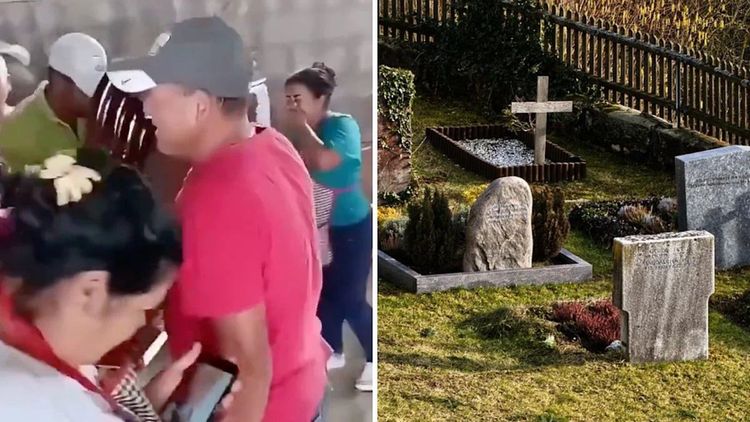
As family members gathered around the casket to mourn, Yuleidy's mother, Lesvia Ríos, was crying over her daughter when she noticed movement inside. In a moment captured on video that has since circulated widely, Yuleidy opened her eyes and sat up when the casket lid was removed, leaving those present stunned.
"I kept saying she was alive, that she wasn't dead," Ríos told local media. "When I was crying on top of her casket, we opened the window, and she was moving. She was waking up, and suddenly she got up."
In the viral footage, relieved family members quickly helped Yuleidy out of the casket and handed her a glass of water, while other guests could be heard shouting "Hallelujah!"
Yuleidy described her experience before losing consciousness: "My heart started hurting really badly. It felt heavy, and then I blacked out, like I fainted. I have no way to thank God for everything he has done in my life. It was a miracle."
Rapid Funeral Customs and Healthcare Challenges
The incident highlights both traditional funeral practices and healthcare access challenges in rural Guatemala. According to Guatemalan law, burials must occur within 24 hours of death when bodies are not embalmed. Because embalming is costly and often unavailable in rural areas, families frequently hold funerals within hours of a perceived death.
Infrastructure limitations contribute to these rapid arrangements. Cold storage facilities are not available in most places outside Guatemala City, and morgues may not meet international standards for body preservation, according to the UK Foreign Office.
Healthcare access presents additional challenges in rural Guatemala. While the country's constitution guarantees universal healthcare, comprehensive medical care remains difficult to obtain in rural areas, where public hospitals and clinics are often underfunded and lack basic medical supplies and equipment. Indigenous communities, which make up nearly half of Guatemala's population, face even greater obstacles due to poverty, geographic isolation, and limited access to healthcare facilities.
Medical Context for Misdiagnosis
Medical experts note that certain conditions can make diagnosing death difficult without proper equipment. Before modern medical technology, determining death relied solely on observing breathing and pulse—indicators that may disappear or become severely weakened during certain medical episodes.
Conditions exist that can cause a person to appear deceased. Medical literature describes states of severely reduced responsiveness and breathing that can be so shallow they are difficult to detect without diagnostic tools, making misdiagnosis more likely in settings lacking medical equipment.
While such incidents are rare today due to modern diagnostics, historical documentation shows that cases of apparent death were reported more frequently in previous centuries, particularly in areas without access to medical professionals or equipment.
Health authorities in Guatemala have not yet commented on the incident. Yuleidy is reportedly recovering at home with her family, who remain grateful that the funeral did not proceed to burial.