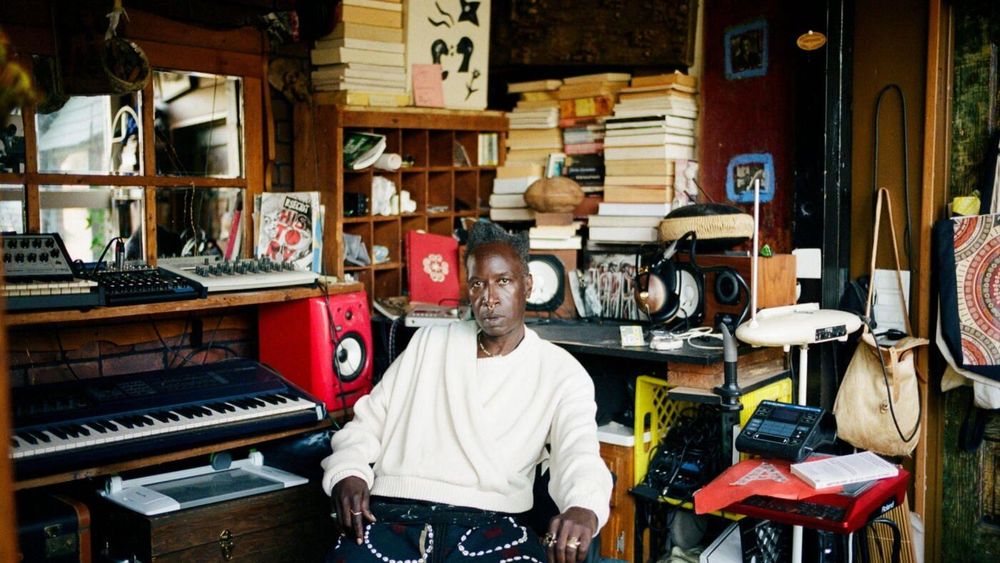
Saul Williams opens a portal between politics and possibility
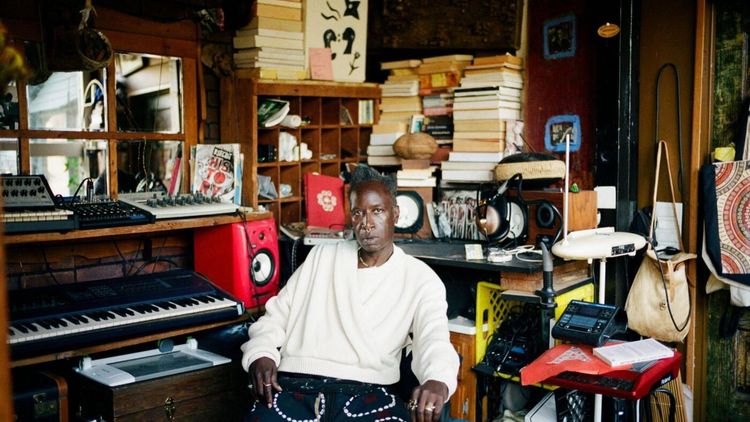
It's difficult to picture Saul Williams as anything but the fully realized cosmic force who emerged at the close of the 1990s. A modern mystic channeling something both sacred and sharply sociocritical, Williams seemed to arrive on the cultural scene already complete.
His first major public exposure came through performances at small venues where he commanded audiences in near-darkness. Before winning the Nuyorican Poets Café Grand Slam Championship in 1996, Williams had already developed the intense performance style that would define his career. That championship victory helped propel him toward co-writing and starring in Slam, the independent film that captured both the Grand Jury Prize at Sundance and the Caméra d'Or at the 1998 Cannes Film Festival, along with the Audience Award at Cannes.
Nearly three decades later, Williams continues evolving. Following his role in the record-breaking film Sinners—which earned 16 Academy Award nominations, the most in Oscar history, and won four including Best Actor for Michael B. Jordan—and his Grammy-nominated spoken word album Saul Williams Meets Carlos Niño & Friends At Treepeople, the artist is releasing both an album and a book this fall.
A Conscious Shift
Leap Life, his first solo album in over ten years and a return to Big Dada, the label that originally launched his solo career, represents what Williams calls
a conscious decision that it was time to shift gears.After years of using social media to advocate for Palestinian freedom, he grew weary of condensing complex thoughts into captions. The album features collaborations with Kamasi Washington, Georgia Anne Muldrow, Moor Mother, Gonjasufi, Surya Botofasina, and Massive Attack's Robert Del Naja, who contributed to three tracks.
His book, Songs My Mother Taught Me: Why the Artist Must Take Sides, scheduled for publication on September 18, 2026 as part of Haymarket Books' Vanguard Series, offers the most straightforward prose of his career. It traces his journey from the son of activist parents raised in a drafty 27-room house in Newburgh, New York—where his father served as founding pastor at the Baptist Temple—to becoming what he now calls an investigative poet.
Williams holds a Bachelor of Arts in acting and philosophy from Morehouse College and a Master of Fine Arts in acting from NYU's Tisch School of the Arts, credentials that inform his multidisciplinary approach. His portrayal of preacher Jedidiah Moore in Sinners drew directly from this background, creating a personal connection to the role.
Calling on Our Greatest Selves
We are at a point of confrontation and a point when things must turn,Williams explains.
Part of that turn relies on us and how awakened we are to the moment.His Grammy-nominated album with Carlos Niño was captured in a single December 2024 performance at an outdoor Los Angeles amphitheater with no rehearsal or preparation, embodying the spontaneity Williams values.
Leap Life functions as both figurative and literal expression of ancestral connection, a ceremonial meditation meant to reconnect listeners to enduring strength. The album addresses indigenous peoples and descendants of American slavery specifically, but speaks more broadly to all living under what Williams repeatedly calls empire.
When asked about danger, Williams sees potential for better futures.
I don't know if it's the song that crumbles empires,he says.
The song has a potential to crumble whatever has been built inside of the individual, so that they can break down whatever barriers are there. So that then they can be mobilized to participate with a growing community in crumbling that empire.
The Unveiling
Williams describes the last three years as particularly startling, when he realized people he considered allies—some who had championed and published his work—embraced levels of hypocrisy he found glaring.
There are people who will never enter my personal space again,he states.
His familiarity with Paul Robeson's story, particularly his blacklisting during the Red Scare, prepared Williams for potential consequences of outspokenness. When Secretary of State Marco Rubio recently indicated that people identifying as anti-capitalists would be labeled domestic terrorists, Williams recognized historical patterns.
According to my beliefs—because I definitely identify as anti-capitalist and anti-fascist—I am already a domestic terrorist according to that,he notes.
Music as Weapon
On "The Dagger," Williams declares that music is the weapon. Yet he acknowledges hip-hop has been weaponized against Black communities. Revolutionary music creates cycles, he observes, pointing to movements every 20 years: the Harlem Renaissance, the Beatnik movement, the Black Arts Movement, then his own emergence.
When discussion turns to Jay-Z's recent celebration, Williams doesn't hold back. He references a 2014 Breakfast Club interview where he criticized Jay-Z's lyric "I can't help the poor if I'm one of them," responding,
Thank god Harriet Tubman didn't think that way.That interview was later removed from online platforms. Williams received an email from Jay-Z, forwarded by Charlamagne tha God with the rapper's address blacked out, suggesting they shouldn't publicly criticize each other given their standing in the community.
What are we doing here?Williams asks about the celebration.
It's not even a whitewashing of history; it's like a money-washing of history.
Beyond Empire
Having performed in over 30 countries and at over 300 universities, from the White House and Sydney Opera House to community centers and prisons worldwide, Williams maintains an international perspective. He points to countries recently attacked by the United States—Iran, Venezuela, Cuba—noting they have significantly higher literacy rates than America.
I would just like to see us outlive our hypocrisies,he says. Williams advocates for indigenous sovereignty as the path to solving ecological questions, arguing Western civilization is fundamentally rooted in Black death and indigenous erasure. He's unafraid to experiment with collapse from within.
Danger is at hand. But the idea of collapse from the inside—the role that we can play—that is not the danger. That is only a danger to the capitalist core of this country.
His work seeks what he calls life hacks through art: shortcuts to unraveling indoctrination, ways to harmonize audiences toward collective action.
How do we inspire artists to be excited about making songs that contribute to our overall progression as human beings, as a society, as a people?he asks.
Williams remains uncynical despite threats he recognizes. Where others see danger, he identifies possibility—not built on false hope, but grounded in land and people. His current work represents the culmination of a career spent welcoming new challenges, now fully embracing the role of investigative poet: someone willing to look unflinchingly at power and imagine what exists beyond it.