
Creator of 'Dolly Parton's America' podcast discusses her life and legacy
Dolly Parton, the legendary country music singer and cultural icon, died Tuesday in Nashville at age 80 after a brief battle with cancer, according to statements from her publicist and family. The news prompted reflection on her extraordinary life and legacy from those who knew her best.
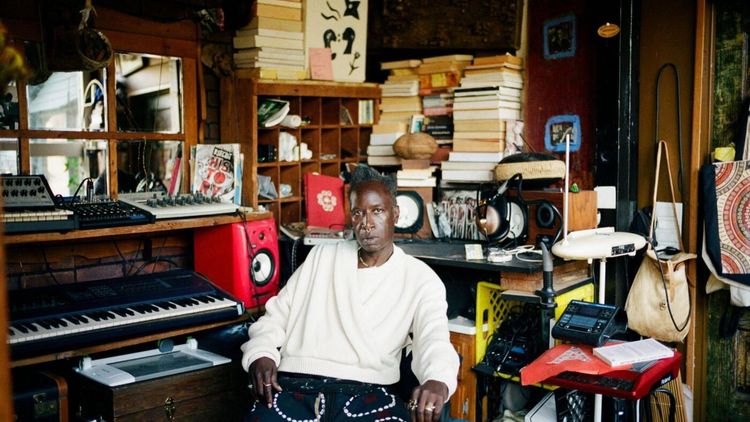
Jad Abumrad, Distinguished Research Professor at Vanderbilt University and creator of the George Foster Peabody Award-winning podcast 'Dolly Parton's America,' spoke about his experiences interviewing and spending time with Parton for the acclaimed series, which won the prestigious broadcasting honor in 2020.
"She was funny, a million jokes, just otherworldly charisma," Abumrad recalled. "I remember her laugh, all the bracelets she would have on that would jingle that she would sometimes use to create a beat and break into a song in the middle of a question."
Abumrad gained unique access to Parton through an unexpected connection: his father, Naji Abumrad, a surgeon and professor at Vanderbilt University Medical Center, had befriended the star after she survived a minor traffic accident. This relationship opened doors for the journalist to conduct extensive interviews that would become the foundation of his podcast.
From Regional Star to Global Icon
Parton's rise from humble Appalachian beginnings to international stardom reflected both exceptional talent and perfect timing. She joined The Porter Wagoner Show in 1967 at age 21, working alongside the established star for seven years before departing in 1974 to pursue her solo career. The split proved contentious and led to legal disputes, but it also inspired one of her most enduring compositions.
"I Will Always Love You," written as a farewell to Wagoner, topped the Billboard Hot Country charts and became one of the defining songs of her career. The track captured the complex emotions of leaving a partnership that had launched her career while seeking independence as an artist.
"She has a very particular alchemy in terms of just what she's able to capture about Tennessee and Nashville," Abumrad explained. "She's the songwriter of people who have been displaced and have left home."
That universal appeal extended far beyond American borders. Academic research documents that Parton's records have been among the most sought-after country music in rural Zimbabwe since at least the 1990s, part of a broader popularity across the African continent that spans decades.
Authenticity Through Artifice
Parton possessed a rare ability to maintain genuine connection with audiences despite her larger-than-life persona. She openly acknowledged the constructed nature of her image while somehow remaining completely authentic.
"She sort of owns the artifice in a way that feels utterly authentic," Abumrad observed. This paradox defined much of her public presence and contributed to her enduring appeal across diverse audiences.
Beyond music, Parton built an extensive business empire that included hotels, truck stops, the Dollywood theme park, a museum, Broadway productions, and bestselling novels. Her Imagination Library, one of her major philanthropic initiatives, has distributed more than 300 million books to children worldwide.
"I don't know that anyone has made more of their story than Dolly Parton," Abumrad said. "She does it in a way that never feels crass, although it is absolutely commercialism, but somehow still feels authentic."
Personal Loss and Final Chapter
Parton's husband, Carl Dean, died in March 2025 at age 82 after 58 years of marriage. She spoke publicly about the emotional toll of his loss on her health, describing herself as "worn down and worn out" by grief. Their famously private relationship had been one of the constants in her turbulent public life.
Abumrad, who joined Vanderbilt's faculty in April 2022 after retiring from his groundbreaking work on Radiolab, reflected on the mystery that remained even after extensive research. A MacArthur Fellow honored for innovation in audio storytelling and winner of three Peabody Awards, he had spent more time studying Parton's life than perhaps any other journalist.
"After spending so much time with her, I got to see her in social situations," he said. "The effect that Dolly Parton has on a small group of people is extraordinary. She changes rooms so profoundly."
Yet despite that intimate access and years of analysis, Abumrad acknowledged that something essential about Parton eluded complete understanding. "There's a little bit of mystery there," he said, perhaps the greatest testament to an artist who remained genuinely herself while becoming everything to everyone.