San Francisco's Plunging Car Crime: Examining Flock Safety's Role in the Dramatic Decline
In August 2022, a reporter's truck was stolen in San Francisco—the third time in a year his vehicle had been targeted. At the time, the Bay Area ranked among the worst regions in the nation for car theft, with the San Francisco-Oakland-Fremont metro area recording approximately 764 vehicle thefts per 100,000 residents.
Four years later, the city has experienced a remarkable turnaround. Car thefts have fallen nearly 59%, and car break-ins have dropped more than 82%, according to an analysis of San Francisco Police Department crime data comparing January through August 2026 with the same period in 2022.
City officials attribute much of this success to AI-powered license plate cameras manufactured by Flock Safety, a surveillance technology company founded in 2017 by Garrett Langley, Matt Feury, and Paige Todd. Langley launched the company after experiencing a property crime in Atlanta where police couldn't help due to lack of evidence.
But as San Francisco celebrates its crime reduction, a national backlash against Flock is intensifying. At least 30 U.S. cities and counties—including Austin, Denver, Santa Cruz, Cambridge, Eugene, and Flagstaff—have canceled, suspended, or refused to renew their Flock Safety contracts since the beginning of 2025, with much of the activity concentrated in early 2026.
A City Transforms Its Approach to Crime
San Francisco's crime problem reached crisis levels in 2022. The city recorded 7,729 car thefts that year, continuing an upward trend from 4,934 in 2018. Despite recovering about 75% of stolen vehicles, the arrest rate stood at just 6%.
The political response was swift. In June 2022, voters recalled District Attorney Chesa Boudin over concerns about his prosecution approach. His replacement, Brooke Jenkins, took a more aggressive stance on criminal cases.
"I still remember four years ago when our city was, quite frankly, a public safety disaster. We were the headlines on Fox News and every other channel for our city being lawless and out of control."
In March 2024, San Francisco voters approved Proposition E with approximately 54% support in a low-turnout election where just 46.58% of registered voters participated. The measure made it easier for police to use drones and high-tech surveillance cameras.
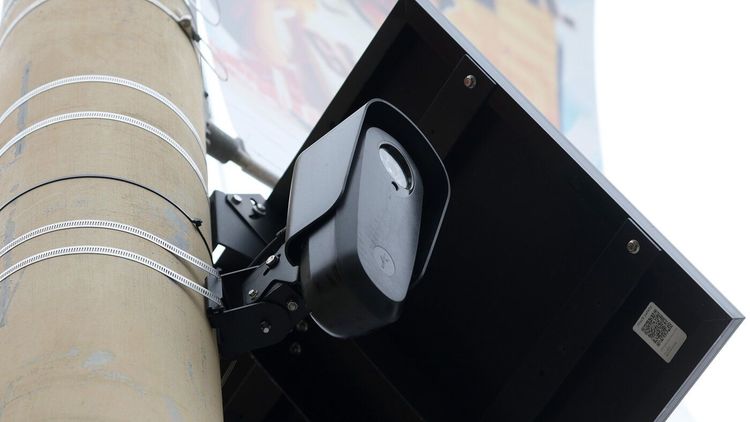
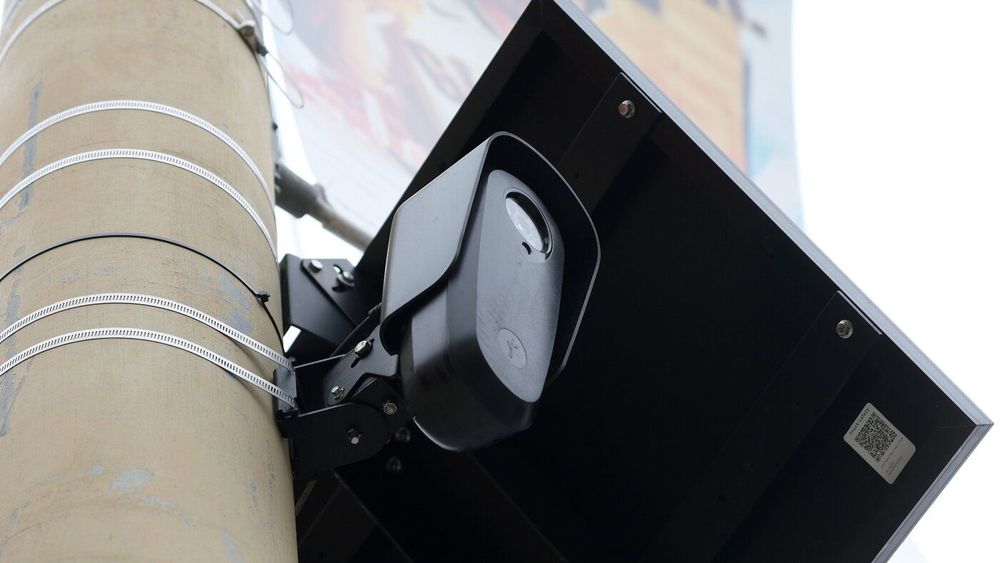
That same month, the SFPD began installing Flock cameras at strategic locations. These automated license plate readers photograph passing vehicles, with AI software scanning their plates and identifying details like make, color, body style, roof racks, and bumper stickers. The system catalogs these images into a searchable database, allowing investigators to track when and where vehicles appeared, even without visible plates.
An SFPD spokesperson stated the technology has been "instrumental in driving down crime," enabling officers to "identify crime vehicles with precision" and solve cases that were previously challenging, particularly auto burglaries.
Evidence and Questions About Effectiveness
License plate reader technology isn't new. Automated license plate readers were first used by U.S. Border Patrol in the late 1990s, and police departments began adopting the technology more widely in the 2000s. However, Flock's AI-powered network represents a significant evolution from earlier car-mounted systems.
The most comprehensive study of Flock's impact comes from University of South Carolina researchers Ian Adams and Scott Mourtgos, who analyzed data from 216 law enforcement agencies. They found that deploying Flock cameras was associated with an 11% drop in car thefts in the first year.
The study hasn't been peer-reviewed and isn't a randomized controlled trial. Isolating Flock's specific contribution remains difficult, especially in San Francisco, where multiple factors could explain the decline: a new district attorney, increased police patrols, drone deployment, and a broader national drop in crime as pandemic conditions eased.
The researchers used a "difference-in-differences" method to account for competing explanations, comparing trends in places with and without Flock cameras. They also conducted additional tests, including comparing vehicle theft with other property crimes like shoplifting that cameras are less likely to prevent.
"I think it's very suggestive that they were responsible at least for a good portion of that 11%," Mourtgos says.
The study didn't examine Flock's effect on car break-ins, which have dropped even more dramatically in San Francisco than thefts. Police say the cameras help them identify and arrest repeat offenders responsible for many break-ins, though large gaps exist in residential coverage areas where many such crimes occur.
Privacy Concerns and Documented Abuses
An estimated 94,000 automated license plate readers now operate across the United States. Flock Safety alone has deployed more than 120,000 cameras scanning approximately 20 billion license plates per month across over 5,000 communities.
The American Civil Liberties Union launched a campaign earlier this year called "Get The Flock Out!" Chad Marlow, a senior policy counsel at the ACLU, argues that even if the systems reduce crime, they create constitutional problems by tracking people's movements without any suspicion of wrongdoing.
Around 75% of Flock law enforcement customers have opted to share their data with participating agencies nationwide, effectively creating a quasi-national database that authorities can use to track vehicle movements across jurisdictions.
Documented cases of abuse have emerged nationwide. The Washington Post reported in August that at least 50 law enforcement officers have been charged or accused of using license plate readers for unauthorized purposes, including stalking women. Flock's system was involved in 46 of those cases.
At a recent Senate hearing, Lindsey Isaacs testified about spending 13 days in jail after investigators wrongly linked her vehicle to a fatal hit-and-run, relying partly on Flock camera images. The camera had photographed her car, but investigators incorrectly concluded it was the one involved in the crash.
Marlow warns the technology could be used against vulnerable populations.
"It can be used to go after any vulnerable group or any group that the government agency that controls the data or can access the data wants to go after," he says, citing concerns about tracking immigrants, people seeking abortion care, gun owners, and political protesters.
San Francisco's Own Data Breaches
San Francisco's safeguards have already failed multiple times. In September 2025, The San Francisco Standard reported that SFPD had allowed out-of-state police agencies to conduct more than 1.6 million illegal searches of the city's license plate reader database, including at least 19 marked as related to U.S. Immigration and Customs Enforcement. California law prohibits sharing such data with federal and out-of-state agencies.
In June 2026, the department disclosed another breach: an internal audit found 299 improper searches by analysts working through a California law enforcement partner on behalf of federal and out-of-state agencies.
The city's Human Rights Commission investigated and released findings this week, determining that Flock had enabled nationwide access to SFPD records "without SFPD's knowledge or intent." The commission recommended stronger safeguards and oversight.
A Test Case for Balancing Security and Privacy
While dozens of cities have abandoned Flock, some have simply switched to competitors. Denver removed all 110 Flock cameras when its contract expired in March 2026 and replaced them with approximately 50 Axon cameras under stricter data controls. Los Angeles also uses Axon's competing surveillance system.
San Francisco is taking a different approach. Mayor Daniel Lurie announced new rules this week, including removing the city's license plate data from the platform after 30 days. Police can retain records for up to a year, but need an active criminal investigation and leadership approval to access older records.
District Attorney Jenkins is working with California Assemblymember Matt Haney on state legislation that would impose criminal penalties on officers and officials who knowingly misuse license plate reader data or share it without authorization.
"I was motivated by the fact that I didn't wanna see us lose the opportunity to use this technology. And if we don't put the correct safeguards in place, then the people are going to say, 'Then you shouldn't be allowed to use it.'"
Polling in July showed that greater use of surveillance technology remains popular in San Francisco, suggesting public support for the city's approach. Whether San Francisco can successfully balance crime fighting with civil liberties protection could influence how cities nationwide handle similar surveillance systems.
In a statement, Flock Safety spokesperson Paris Lewbel said searches of the system "leave an audit record showing who searched, when and why." By the end of 2026, the company will require law enforcement customers to use case codes for searches, with exceptions for emergencies, and will implement tools to flag unusual searches and automatically suspend users whose activity meets criteria for abnormal use.
The question remains: can cities harness powerful surveillance technology to fight crime without sacrificing the constitutional rights and liberties that define democratic society? San Francisco's experiment may provide answers that resonate far beyond its borders.