Crisis drives federal intervention
The cuts stem from a new federal plan for managing the Colorado River, which supplies water to approximately 40 million people and 5 million acres of farmland across seven states and Mexico. After more than 26 years of drought combined with climate change effects, the nation's two largest reservoirs have reached critical levels. As of August 2026, Lake Powell sat at just 22% full while Lake Mead reached 27% capacity, with their combined water level hitting a historic low not seen since 1957.
The seven states that depend on the river spent years attempting to negotiate a solution but failed to reach consensus. This forced federal authorities to impose their own management strategy, which includes mandatory reductions of 27% to Arizona's Colorado River supplies annually through 2028, with potential for steeper cuts afterward.
The crisis reflects a fundamental imbalance in the river system. Over the past 26 years, average flow has been just 12.2 million acre-feet, well below the 16.5 million acre-feet that states and Mexico have agreed to share on paper, creating a structural deficit of approximately 4.3 million acre-feet annually. Since 2000, flows have shrunk by 20% compared with 20th-century levels, while climate change has made severe drought years 14 times more likely in the Upper Colorado River Basin.
Scientists characterize the current situation as a "hot drought," distinct from previous dry periods. Rising temperatures have increased evaporative demand by 5% between 1980 and 2022, with projections showing potential increases of 8-17% by 2050.
Central Arizona bears the burden
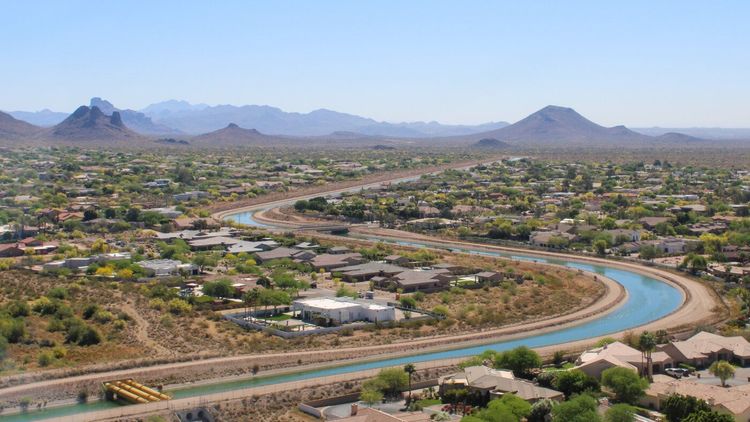
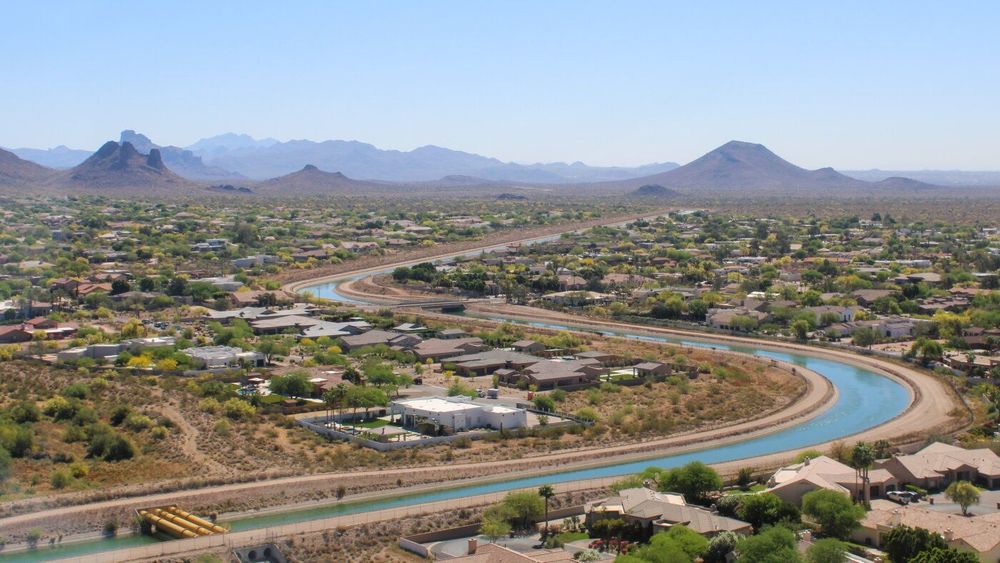
The Central Arizona Project, a 336-mile canal and pump system that carries Colorado River water across the desert to Phoenix and Tucson, will absorb the heaviest impact. The massive infrastructure project, which began construction in 1973 and was completed in 1993 after 20 years of work, cost more than $4 billion and stands as the most expensive Bureau of Reclamation project ever built. Colorado River water accounts for 40% of Phoenix's total supply.
"The cuts that we're talking about today will not threaten water deliveries to homes. There will never be a moment where you go into your house, you turn on your faucet and no water comes out the other side."
However, Wilson acknowledged that maintaining reliable service will come at a steep price. "All those solutions are here, and we know what they are, and we're working on implementing them," he said. "They are going to be very expensive. And ultimately, our customers are going to be the ones who have to pay that bill."
Decades of preparation
Water managers across the Phoenix metropolitan area say they can weather the cuts because they have diversified their water portfolios over many decades. When Colorado River supplies fall short, they can draw more heavily from alternative sources, particularly the Salt and Verde River system and groundwater reserves.
The Salt River, which flows through Phoenix, has been harnessed for water supply since the early 1900s. Roosevelt Dam, completed in 1911 at a height of 280 feet, was one of the largest masonry dams in the world at the time. A $430 million modernization project in the 1990s raised the dam's height and increased its storage capacity by 20%. Today, the Salt and Verde Rivers supply approximately 58% of Phoenix's water.
More recently, Phoenix invested $300 million to build a drought pipeline, completed in early 2023, which carries water from the south side of the city to the north. Before this infrastructure existed, north Phoenix relied heavily on Colorado River water. The pipeline now allows the city to redirect legally protected Salt River water to serve more than 400,000 northern residents.
Doug Dunham, associate director of water resources for EPCOR USA, a private utility serving the Anthem community north of Phoenix, said companies have been planning for this scenario for years. "This isn't new headlines to us," Dunham said. "Across the Valley, across the state, from Tucson on up, there have been people who've been thinking about this and planning for these kinds of things for a long time."
EPCOR has built a system of interconnected pipes linking disparate treatment plants, allowing the company to shift supplies when one source falls short. The company also leases access to Colorado River water from the Ak-Chin Indian Community, whose water rights carry deep legal protections and would only face cuts under much more severe reduction scenarios.
Costly upgrades ahead
Despite extensive preparation, water managers acknowledge that future adaptation measures will be even more expensive. Wilson said upcoming projects will likely cost billions rather than hundreds of millions of dollars, with those expenses ultimately passed to customers through higher water rates.
Gilbert has already experienced this financial reality. The town gets roughly 41% of its water from the Colorado River and will lose 20% of that allocation under the new cuts. To prepare, Gilbert fast-tracked construction of wells to access groundwater and rebuilt its largest water treatment plant. The accelerated timeline, combined with years of deferred rate increases, resulted in water bills roughly doubling since 2024.
Lauren Hixson, Gilbert's water resources manager, said the steep increases caught many residents off guard. "I think we did our best to get the message out ahead of time, but a lot of people aren't paying attention until it actually takes place," she said. "Then they see the bill, and they're like, 'Wait, why?'"
Kathryn Sorensen, director of research at the Kyl Center for Water Policy at Arizona State University, views higher rates as more than just a funding mechanism. She argues that price signals effectively reduce consumption without mandatory restrictions. Phoenix has reduced peak summer water use by approximately 40% since the 1980s, and Sorensen credits rate structures as a major factor.
"Many decades ago, something like 80% of single-family homes had majority grass landscaping. Today, within the boundaries of the city of Phoenix, that's less than 10%. There are these kind of hardcore advocates that just want a lawn. That's not against the law in Phoenix, but trust me, they pay through the nose for that lawn."
Uncertainty remains
While cities have developed robust backup plans, significant uncertainty clouds the long-term outlook. The federal plan gives authorities power to cut water for Arizona, California and Nevada by up to 40% starting as soon as 2028. The current 27% reduction for Arizona carries no guarantee of permanence, with rules requiring renegotiation every two years until 2036.
"Those kinds of things take many years to get off the ground and into operating conditions. So these short two-year cycles are going to be very, very challenging."
Additional uncertainty surrounds the Arizona Water Banking Authority, established in 1996, which has stored more than 4.4 million acre-feet of Colorado River water underground through 2024, with nearly 75% concentrated in just seven facilities. Cities expected to access these reserves as a one-to-one replacement for lost Colorado River supplies, but the Water Bank initially resisted, arguing for a more conservative approach to preserve long-term reserves.
After public dispute, the Water Bank agreed to provide cities with 100% replacement for their cuts, but only for one year. This leaves a major question mark over a key component of many cities' adaptation strategies.
Smaller communities face even greater challenges. Cave Creek, a town northeast of Phoenix that gets approximately 95% of its water from the Colorado River, is scrambling to arrange exchange deals with neighboring cities. A consultant told local media in April that these arrangements would provide only five to eight years of alternatives before permanent solutions become necessary.
Betting on the future
In Phoenix, a construction crane towers over the Cave Creek Water Reclamation Plant, representing the city's major investment in long-term water security. Officials are building a facility to convert sewage into safe drinking water, a technology that would make Phoenix the first city in Arizona to deliver recycled water directly to homes and businesses.
The project, expected to begin operations in early 2029, carries an estimated construction cost exceeding $359 million, with annual operating expenses of $8.5 million. By 2033, Phoenix plans to bring an even larger recycling facility online through a partnership with Mesa, Glendale and EPCOR.
Wilson said these investments will make the city "more and more drought-proof" for future generations. He also called on federal authorities to help finance such projects, arguing that Washington's decision to place the burden of cuts entirely on Arizona, California and Nevada creates an obligation to assist with adaptation costs.
"The federal government made a choice to place this burden entirely on us, and in making that choice, I think they also made a second choice, which is that they're going to need to step up and step in to be able to help offset some of these costs moving forward."