The proposed wage schedule
The Oakland Living Wage for All Act of 2026 qualified after Alameda County elections officials verified that its petition had enough valid signatures, according to the San Francisco Inquirer. The initiative would bring the city's minimum wage to $30 an hour by July 1, 2037, with earlier deadlines for larger employers.
ABC7 News reported that large employers would have to meet the $30 threshold by 2030, followed by medium-sized employers in 2035 and small employers in 2037.
Oakland's hourly minimum stood at $17.34 during the October 2026 debate. ABC7 put the corresponding rates at $18.45 in San Jose and $19.61 in San Francisco, noting that each city makes annual inflation adjustments. Under existing law, no city in Alameda County is projected to reach $30 an hour before 2032, according to a county study cited by the San Francisco Inquirer.
What the council can decide
The committee's vote sends the initiative forward but does not enact the wage increase. KALW reported that council members could approve it directly, send it to voters or seek an economic impact study before deciding.
According to the San Francisco Inquirer, California Elections Code Section 9215 allows the council to adopt the initiative "without alteration" or put it before voters. The election could be the next general municipal election, on November 7, 2028, or a special election held 88 to 103 days after the council calls it.
The council can also request a report on the initiative's effects under Section 9212. That report would be due within 30 days; commissioning it would postpone the decision, not eliminate the need to choose between adoption and an election.
Organizers point to living costs
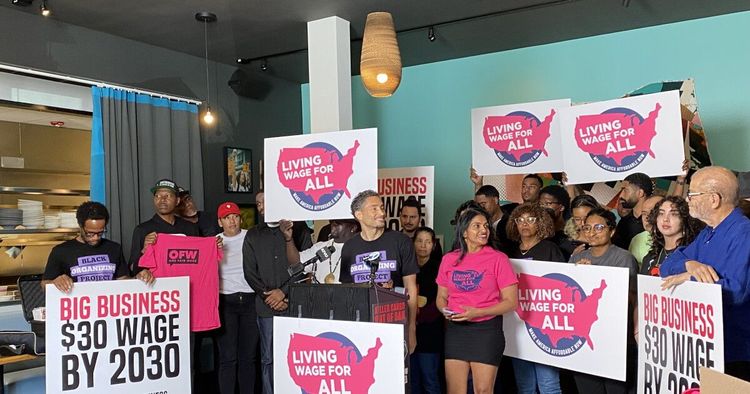
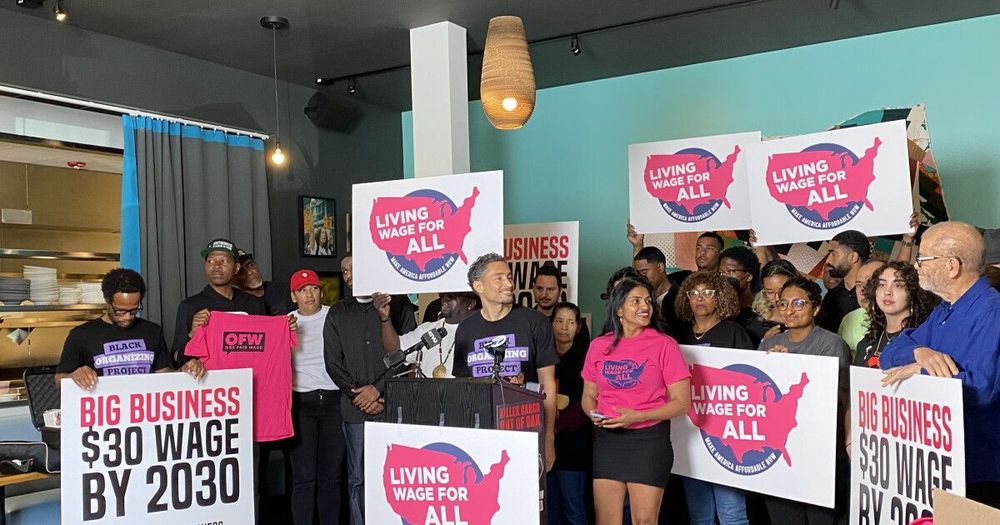
The Living Wage for All Coalition is leading the push in Oakland. The Black Organizing Project also helped lead the effort, KALW reported. Its communications manager, Keala Uchoa, described how rising costs had affected her family.
"The cost of living is astronomical," Uchoa said. "It is just completely out of pace with wages that have remained stagnant for decades. I've watched every single one of my family members be displaced here because of the rising cost of living. Enough is enough. We need it now."
The coalition brings together more than 100 civil rights, faith and labor organizations as part of the national One Fair Wage campaign, according to the San Francisco Inquirer. One Fair Wage president Saru Jayaraman has said the coalition is discussing similar proposals with council members in Berkeley and Emeryville.
Alameda County's parallel proposal
A similar county initiative is already slated for the March 2028 ballot, though organizers want an earlier special election, KALW reported. Its path included a 3-2 vote by the Alameda County Board of Supervisors in August 2026 to commission an economic study instead of acting immediately, leaving the proposal off the November 2026 ballot, according to the San Francisco Inquirer.
Supervisors set the March 2028 election date on September 15, 2026. They also directed a committee led by Supervisor Nate Miley, with Supervisor Lena Tam among its members, to explore a competing countermeasure.
The county analysis came from BAE Economics. Paul Peninger, whose firm conducted the work for supervisors, estimated that the measure could cost county government between $33 million and $34.3 million annually, the Inquirer reported.
Peninger said tax revenue tied to higher wages and consumer spending could offset part of that cost. His estimate also excluded potential savings if fewer residents became eligible for assistance programs such as CalFresh and Medi-Cal.