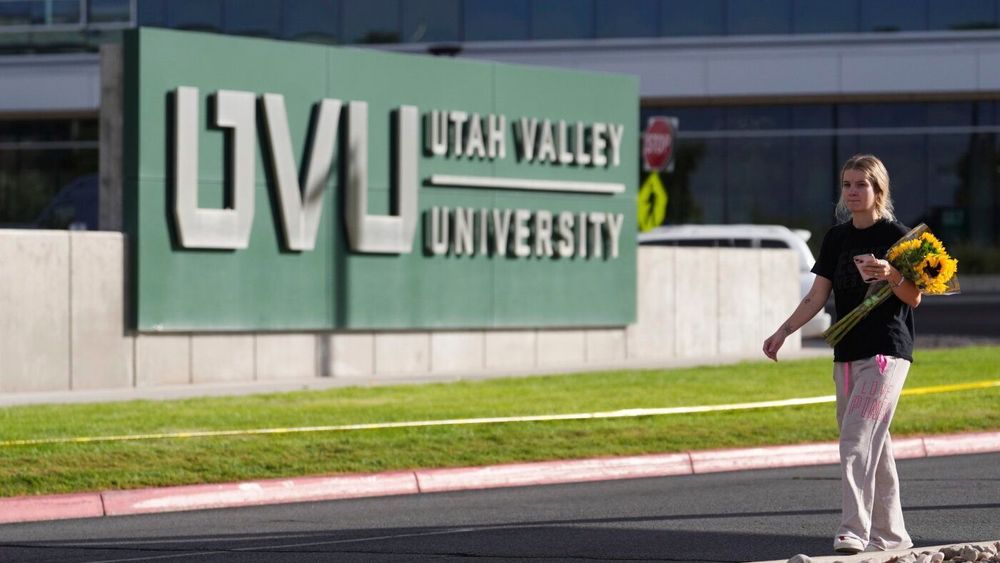
Nearly 200 witnesses to Charlie Kirk shooting apply for victims' benefits in Utah
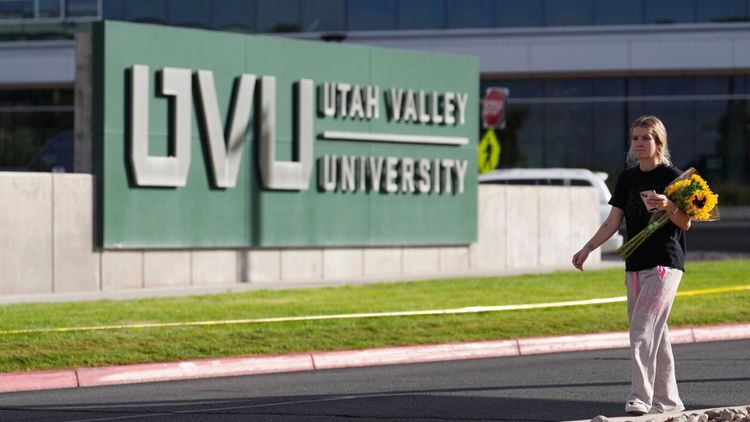
Hazel Kynaston had never heard of Charlie Kirk before September 10, 2025. The Utah Valley University senior only knew that thousands of students had gathered during lunch break to watch the conservative activist answer questions in one of his signature open forums.
She worked her way through the dense crowd of approximately 6,000 people, securing a spot near the front just moments before Kirk's body suddenly seized and collapsed from his stool. A single shot from a high-powered hunting rifle, fired from about 150 yards away, had struck him.
"I didn't know a person could bleed like that," Kynaston recalled, her voice trembling as she described the brief, stunned silence before panic erupted.
Now, Kynaston is among hundreds of witnesses seeking state assistance to cope with the trauma. According to Utah Office for Victims of Crime Director Chyleen Richey, approximately 500 witnesses initially approached her office seeking compensation for mental health services in the days following the shooting. To date, 173 have formally applied for benefits.
Determining eligibility
The office faces the complex task of establishing what Richey calls a "zone of danger" to determine benefit eligibility. Working with the FBI, officials designated the rows closest to Kirk during the shooting as the primary zone, meaning witnesses positioned at the front of the crowd with direct views may receive different benefits than those further back with obstructed sightlines.
Qualified victims receive up to 25 mental health counseling sessions through the program. While exact costs for this incident remain unclear, the office received $24.4 million in combined federal and state funding during fiscal year 2025 and distributed nearly $7 million to crime victims across Utah.
The shooting's unique characteristics complicate the trauma response. Unlike many violent crimes, Kirk's death occurred on camera, with hundreds of angles appearing on social media and television within minutes. This constant media presence forces witnesses to repeatedly relive the event.
Political and environmental triggers
James Densley, department chair of the School of Criminology and Criminal Justice at Metro State University in Minnesota and deputy director of the Violence Prevention Project Research Center, notes several factors distinguish this case from similar incidents. The global media attention and political undertones create additional layers of trauma.
"The people who were traumatized that day then have to watch strangers online fight about whether the death mattered or not, and that ordinary mourning that we would do doesn't work in those conditions," Densley explained.
For Kynaston, the online discourse proved particularly distressing, as did returning daily to the campus where the shooting occurred. Walking the same paths she had used to flee that day became a source of ongoing anxiety.
"The most impactful part of it was the fact that I had to go back every day to school," she said. "All those memories that are associated with feeling completely exposed and unsafe."
Treatment and recovery
Through the victims' compensation program, Kynaston began eye movement desensitization and reprocessing therapy, which uses guided eye movements to process traumatic memories. She reports the treatment has already helped her manage debilitating flashbacks triggered by her environment.
Densley believes the mental health impact may take considerable time to fully emerge, particularly among a crowd that skewed conservative and male—demographic groups statistically less likely to acknowledge psychological struggles. He suspects those seeking compensation represent only a fraction of those affected.
"That number is not a measure of the extent of the harm," he said. "It's really just a measure of those who've been able to navigate the legal system to file a claim."
Legal proceedings
The question of victimology has emerged as a central issue in the case against Tyler Robinson, the man accused of killing Kirk. Prosecutors are pursuing the death penalty, but defense attorneys argued on August 12 that capital punishment should be removed from consideration because the bullet "hit the intended target" and endangered no one else.
This argument challenges a key element of the prosecution's case. The charges against Robinson include aggravated murder and six additional counts, with prosecutors citing the potential harm to other people as an aggravating factor justifying capital punishment.
Robinson has not yet entered a plea. A hearing to determine whether sufficient evidence exists to proceed to trial is scheduled for September 1.